
As we come to the end of the year, many of us are looking for ways to replenish our energy, connect with loved ones, and find joy in the simple things in life. Water has always been a source of healing, connection, fun and meaning. How can we draw on the power of water as we take a break this summer?
Approaching the holiday season, many Australians are rummaging through the bottom drawer for rumpled bathers and colourful towels. Summer, for many of us is about surf and sand, rivers and lakes, dams and swimming pools.
If you live in a colder part of the world, water is probably still central to your holiday season plans, whether it’s making snow angels, drinking steaming cups of tea, or listening to the rain on the roof.
Why are we so drawn to water?
Is it because water is full of emotions? Constantly changing—from solid, liquid, to gas, from gentle to raging— water can be easily drawn on as a metaphor for feelings and life challenges.
Is it because our need for water is something that connects every living thing so it has become a symbol of interconnectedness, growth, and renewal?
Is it because water is a source of beauty and intrigue, with poets and artists endlessly fascinated by its nuances and hidden depths?
There are so many reasons we might link water with our wellbeing and sense of connection to the world. Perhaps, most fundamentally, we are between 50-75% water ourselves (depending on our age and gender). Our bodies are linked to all other ‘bodies’ of water in the world, due to the tidal pull of the moon and the fact that water is also essential to most animals and plants.
The idea that we are made of water becomes tangible when we breathe on a cold morning—our breath full of moisture. Or when we sweat in the heat.
We can only survive for a short time without water. In many ways, then, our sense of existential fragility arises out of our relationship with water.
Let’s explore what water means for us as humans in a bit more depth.
Water as emotion
We often use water metaphors to describe emotions.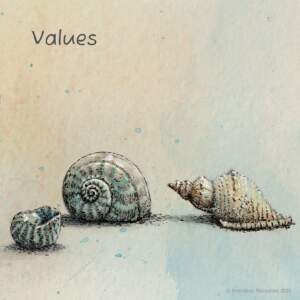
Roaring oceans, raging rivers, rips that drag us under, storms, soaring, pounding surf, reflect our intense or powerful emotions.
Calm forest pools, trickling water features, misty mornings, represent peace, calm and tranquillity. We may use a soundtrack of the ocean or rain to lull ourselves to sleep.
Rainy days are often described as miserable. Dark clouds are often used to describe depression or sadness. When we can’t get our thoughts together, we describe our brains as being foggy. When we feel stuck or overwhelmed, we may describe ourselves as stagnating, wading through mud, or drowning.
The phrase ‘cold as ice’ is often used to describe someone who lacks empathy.
Water is capable of great patience, for example, it can carve canyons, ravines and river valleys. And is there anything more marvellous than the way stalactites and stalagmites are formed by water droplets over tens of thousands, or even millions, of years?
In a very physical sense, when we are feeling emotional, tears appear—of sadness, laughter, anger or pain.
We also talk about feelings as coming in waves, ebbing and flowing.
No matter our culture or geographical location, we all have a relationship with water. You might try to explore the symbolism of water yourself or with clients or students, as a creative activity in a classroom, or as a personal reflective activity.
You could ask (yourself or others):
- If you were to describe what kind of body of water you are right now, what would it be (a gathering storm, a gentle river, a drought-struck dam, a frozen lake, an ocean current)?
- What would you like to be (a pond full of water lilies, a white-water river, a glacier, a small stream)?
- Would being around water help you create a sense of wellbeing?
- How might you spend some time around water this holiday season
 Water as healing
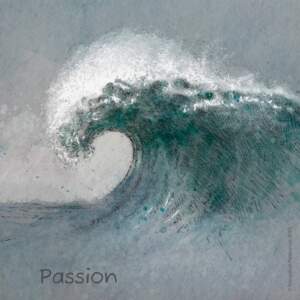 Water as healing
While spending time in green spaces has been shown to improve mental health and wellbeing, there is more and more research into the impact of blue spaces on wellness.
Elle Hunt argues in her article in The Guardian titled, ‘Blue spaces: why time spent near water is the secret of happiness’,
‘The benefits of “blue space”—the sea and coastline, but also rivers, lakes, canals, waterfalls, even fountains—are less well publicised, yet the science has been consistent for at least a decade: being by water is good for body and mind.’
Referring to research by White, she notes,
‘… time in and around aquatic environments has consistently been shown to lead to significantly higher benefits, in inducing positive mood and reducing negative mood and stress, than green space does.’
There is an increasing body of research in this space, which is both fascinating and hopeful.
All over the world, mineral springs have long been seen as places of healing. From Egypt’s Bahariya Oasis to Pamukkale in Türkiye (a UNESCO World Heritage Site, people have been using hot springs for healing for millennia. We also use water for healing in simple ways, like putting an ice pack on a sprained ankle, using ice baths after sport, or sitting in steaming saunas that relax tight muscles and release toxins.
The sound of water has also long been associated with contributing to a calming, meditative state of mind. For example we listen to the sound of waves to help us sleep, and the gentle patter of rain is often described as peaceful and cosy.
On the flip side, dehydration, i.e. a lack of water, has been linked to lack of energy, increased irritability, headaches, low mood, anxiety and it can even impact on brain structure and function in people with long term dehydration.
In an article in The Conversation, titled, Water really can provide some relief from anxiety and help us see the glass half full, they summarise research in the field of nutritional psychology, noting:
‘Overall, negative emotions such as anger, hostility, confusion and tension as well as fatigue were found to increase with dehydration.’
Dehydration has also been linked to lower serotonin uptake and increased cortisol levels, both of which can contribute to increased anxiety. Even mild dehydration (1–2%) can impair concentration, memory, and mood. It has also been linked to poorer sleep.
The good news is that the research also finds that increasing water intake, no mater how much you normally drink can increase a sense of wellbeing.
Of course, for millions of people around the world, poor water quality can be a source of diseases such as cholera, diarrhoea, dysentery, hepatitis A, typhoid and polio.
According to the World Health Organization,
- In 2021, over 2 billion people lived in water-stressed countries, which is expected to be exacerbated in some regions as result of climate change and population growth (1).
- In 2022, globally, at least 1.7 billion people used a drinking water source contaminated with faeces.
With so many people in the world not having access to good quality drinking water, water is also a social justice issue
Water as connection
Rivers, oceans, lakes, and other bodies of water can be understood as connectors between communities and geographical locations. In fact, for thousands of years, our maps used to be based on waterways rather than land routes.
In Robert MacFarlane’s wonderful book, The Old Ways, he invites us to re-imagine the history of Europe…
‘…blank out the land interiors of these countries—consider them featureless, as you might previously have considered the sea. Instead, populate the western and northern waters with paths and tracks, a travel system that joins port to port, island to island, headland to headland, river mouth, to river mouth. The sea has become the land…’
Various consequences follow from this way of thinking. We no longer imagine land borders or nation states, since communities are connected via water rather than land. He also notes that these old ‘sea roads are dissolving paths whose passage leave no trace beyond a wake…’ even if the road has been a sea route for 5000 years, which means they are ephemeral, like a ghost network connecting the world.
Nowhere is our socio-cultural dependence on water more evident than in Egypt. All culture and community is along the Nile, as it has been for thousands of year. According to National Geographic, the entire Nile River basin—made up of interconnected streams, lakes and rivers—threads its way through 11 African countries. Being the last country on the river, Egyptians are dependent on good relationships with all of these countries for water, food, and continued existence.
The Social Life of Water, edited by John Richard Wagner, describes how every community organises itself in relation to water. Humans need a stable source of water for drinking, growing, hygiene, social gatherings, food, supporting livestock, fishing. From ancient times, water has been central in our communities. In contemporary society, water has become a commodity that is becoming more scarce in many parts of the world. In others, they risk being overwhelmed by rising waters, unseasonal storms, and wild weather resulting from climate change.
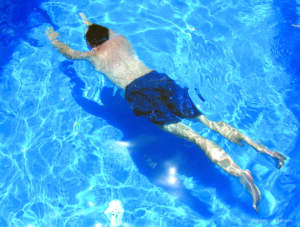
Immersing ourselves in water can also generate a sense of connection to the natural world. When we are submerged, our whole body is being held by the water – it lifts us up, surrounds us, skin on skin. This can feel nurturing and deeply connecting. The dampening of sound under water can create a sense of womblike peace and serenity.
Water as spirit
 Water as spirit
Many religions and spiritual systems see water as sacred.
For example. First Nations Australians have always treasured, sacred for a respected the value of water:
‘Water is core to life for Aboriginal and Torres Strait Islander peoples. Protecting and managing water is a custodial and intergenerational responsibility. If the cultural and spiritual values of water are sustained by providing water that is sufficient in both quantity and quality, then many other components of Indigenous life will be healthy.
‘Cultural and spiritual values may relate to a range of uses and issues, including spiritual relationships, language, song lines, stories, sacred places, customary use, the plants and animals associated with water, drinking water, and recreational or commercial activities.’
At the Indigenous Climate Hub, they say:
‘Water is more than a chemical compound of hydrogen and oxygen; it is the essence of life itself. Indigenous cultures worldwide, especially those residing along the interior rivers, bays, lakes and coastal regions, have long recognized water as a living entity imbued with spirit, agency, and autonomy. This understanding transcends metaphor—it is rooted in an intimate observation of nature and a profound respect for water’s role as the life-giver and decision-maker for all beings on Mother Earth.’
The wonderful First Nations poet and biologist, Robin Wall Kimmerer, describes how, for First Nations peoples of North America, including her own Citizen Potawatomi Nation, many words that are nouns (or things) in English, are actually verbs (or actions) in her native language, especially water. In her deeply poetic and soulful book, Braiding Sweetgrass, she says,
‘A bay is a noun only if water is dead. When bay is a noun, it is defined by humans, trapped between its shores and contained by the word. But the verb wiikwegamaa—to be a bay—releases the water from bondage and lets it live. “To be a bay” holds the wonder that, for this moment, the living water has decided to shelter itself between these shores, conversing with cedar roots and a flock of baby mergansers. Because it could do otherwise—become a stream or an ocean or a waterfall, and there are verbs for that, too. To be a hill, to be a sandy beach, to be a Saturday, all are possible verbs in a world where everything is alive.
‘Water, land, and even a day, the language a mirror for seeing the animacy of the world, the life that pulses through all things, through pines and nuthatches and mushrooms. This is the language I hear in the woods; this is the language that lets us speak of what wells up all around us.[…] This is the grammar of animacy.’
Taoism often uses the image of water to describe the passing of time and the ephemeral nature of reality. As Lau Tzu describes:
‘Water is fluid, soft, and yielding. But water will wear away rock, which is rigid and cannot yield. As a rule, whatever is fluid, soft, and yielding will overcome whatever is rigid and hard. This is another paradox: what is soft is strong.’
Water also has sacred symbolic dimensions in Christianity, Islam, Hinduism, and Buddhism.
Thinking about your spiritual tradition, what does water represent?
Water as a source of mystery and awe
Our oceans contain some of the last unmapped environments on Earth. As of June 2025 27.3% of the global seafloor had been mapped. As such, oceans are liminal, largely unknown places.
They are mysterious, full of alien entities, light-generating sci fi creatures that feel like dream creatures. This can generate a sense of fear, wonder, curiosity, and awe.
The oceans also cover around 70% of the earth, which means we actually know very little about our planet, despite our sense that as humans that we are knowledgeable, informed, scientific, beings.
Looking out over the ocean from high places or a plane can induce a sense of awe. Awe is an emotion that encourages us to see our smallness and fragility, which can, in turn, create a sense of perspective, humility and gratitude. Experiences of awe have been shown to increase our wellbeing in a range of ways.
Seek out some awe during the holiday season and notice how your mood changes.
How to draw on water’s nuanced and powerful qualities this holiday season
This holiday season, maybe carve out some time to spend in your favourite manifestation of water. Sit under a sprinkler on a hot day; go for a paddle in a canoe; relax on a lilo, a tube, or just in floaties; sit on a river bank and go fishing; have a gelato or a water gun fight; dig your toes in sand and let seawater tickle through your toes; or dive into the shocking cold of a swimming pool. If you’re in the northern hemisphere, build a snow man, take a hot bath, or jump in some winter puddles.
Here are a few other ideas for reconnecting with water:
- Go snorkelling, scuba diving, in a glass bottom boat or to an aquarium and be awed by the creatures that live beneath the ocean.
- Staring at water can have the same calming effect as staring at fire. Find a mesmerising body of water—maybe a small waterfall, a pond, or a water feature in a garden—and take some time to sit and absorb the sounds of the water. Meditate on the animals that depend on it, and notice your own breath gently coming and going. Try to connect with your heartbeat—how do the rhythms of your heart connect with the rhythms of the water?
- Go to a mineral spring and soak in their healing waters.
- Spend some time in a hot tub, hot shower, or sauna.
- Get a fishtank. Research has shown that being around these small aquatic spaces has positive impacts on people in aged care facilities.
- Hike to a high point at dawn or dusk and marvel at the vastness and beauty of the ocean.
- Watch birds playing in a birdbath – enjoy their joy and irreverence.
- Feel invigorated! Alternating between hot and cold water can give bring you alive—as Scandinavians have known for centuries, with their sauna then cold plunge. In Australia, you may get a similar experience at the southern beaches in summer, when on a 40-degree day, you jump into the freezing Antarctic waters of the ocean.
- Observe droplets of water on a flower or insects flitting across a pond – noticing the micro can help us appreciate the small moments of wonder all around us, which can increase our sense of connectedness and joy.
- Make a conscious decision to focus on staying hydrated—you might be surprised how it lifts your mood and energy levels.
- Go to a stream and meditate on how the water moves around obstacles. It isn’t judgemental, it is flexible. How could you be less judgemental, go with the flow, move around immovable object?
How will you enjoy water this holiday season?
By Sue King-Smith
