‘Did you know there are animals in your head? There’s a Guard Dog, a Wise Owl, a Sifting Sooty and an Elephant!’
This is the opening line of an award-winning podcast which teaches children how their brains work and helps them navigate the sometimes tricky world of mental health and wellbeing.
Created by dynamo team, Kristina Freeman and Alice Peel, and their creative team, the Grow Your Mind podcast is full of relatable scenarios, songs, and great tips for kids.
Kristina and Alice bring many years of experience in public health, education and social work to the podcast, and it shows. The episodes are thoughtful and evidence-informed, but allow children to develop a language for their feelings, thoughts, and body signals in a natural and explorative way.
‘We use neuroscience and storytelling to create innovative and engaging mental health strategies to enhance the social and emotional wellbeing of children, educators and families.’
But the most engaging and unique aspect of this podcast is that it is voiced by children, specifically the 12-year-old experts (students) of Ms Thea’s class.
The students bring to life stories across a range of topics, from belonging to gender, consent to climate change, relationships to emotional regulation. Drawing on the quirky animal characters they use to describe the different parts of the brain (for example, the Guard Dog representing the amygdala, Wise Owl representing the prefrontal cortex, and Elephant as the hippocampus) the children navigate common challenges, finding common ground, understanding, and connection with others along the way.
With a focus gratitude, compassion, mindfulness, physical exercise, and character strengths, the five seasons of the Grow Your Mind podcast explore the nuanced and complex terrain of mental health in subtle and engaging ways.
Grow Your Mind is a social enterprise, who also run programs in schools and offer a range of resources on their website, including a fabulous book by Alice called, How to be a Fantastic Sensational Good-Enough Kid.
This podcast is well worth a listen if you are a teacher, parent, psychologist, or social worker looking for a way to explore mental health with the children in your life. Highly recommended!
The first thing Tham Fuyana wants to do in a therapy room isn’t diagnose. It’s witness.
‘People want to be seen,’ he says. ‘My job is to hold a space where someone can be seen through their own lens—how they want to be seen.’
It sounds simple. It rarely is.
For Black, Indigenous and People of Colour (BIPOC) negotiating Australia’s mental health system, the practical task of finding a therapist who ‘gets it’ can feel like threading a needle blindfolded—juggling waitlists and costs while also scanning for someone who can recognise the weight of migration files, microaggressions, language gaps, and the subtle armour a person wears to survive any given week.
Tham was born in Zimbabwe, grew up in the UK, and now lives in Australia. Throughout his professional life, in both Australia and abroad, he’s worked with people from diverse ethical and cultural backgrounds.
‘What many people are looking for in a therapist is not just competence but kinship,’ he explains. ‘It’s about finding someone who can relate to your unique lived experiences—your intersectionalities—and walk with you there.’
The invisible labour before the first session
If you’ve ever had to preface your pain with a primer on your culture, you know the extra labour BIPOC clients carry into therapy. Tham has lived that dynamic across continents.
‘I grew up with a script,’ he says. ‘Everywhere I went: Hi, my name is Tham. I’m from Zimbabwe. This is why I’m here. People were curious. Over time, you internalise the need to explain yourself before you can be yourself.’
That same dynamic follows clients through clinic doors. A session can easily tip from healing into education—the client teaching the clinician what racism feels like in the body, why certain words land heavy, how the immigration office lives in their nightmares.
‘With a BIPOC therapist, some of that explaining eases,’ Tham says. ‘There’s a shared shorthand. You can get deeper, faster.’
The armour that keeps you safe—and alone
Ask Tham what he sees most often and he doesn’t hesitate: armour.
‘As a Black man, you learn early to be overly polite, to never give anyone in power a reason to label you “aggressive”,’ he says.
He recalls being stopped and searched many times growing up in the UK—none of his white friends were searched once.
‘That teaches you to defend your existence,’ Tham says. ‘The armour helps you survive outside. But inside relationships, it can suffocate connection.’
Tham knows that vulnerability can come at a price when safety is conditional. If we take our armour off, who will hold us?
‘Many clients don’t have places to put that stress, so the body wears it,’ he says, ‘invoking that familiar trauma lesson: the body keeps the score. Over years, constant vigilance turns into a baseline.
‘People tell me, It’s nothing, we’re used to this. My work is to honour the survival while making room for softness—without asking anyone to surrender what keeps them safe.’
We listen for the dangers armour can bring—especially in love. The task is helping people choose when to wear it, and when to rest. — Tham Fuyana
Intersectionality is contextual
In classrooms and clinics, ‘intersectionality’ can read like a Western academic buzz word. But as Tham knows, the lived reality is messier.
‘In the West, race often becomes the primary identity marker. But in many African contexts, your second name—your tribe, your language—says more about where you belong,’ he notes.
‘Diaspora changes the calculus. People who might be divided at home find solidarity here under the banner “women of colour” or “African”. Both can be true.’
That nuance matters when choosing a therapist. Clients might want someone who shares racial identity but not gender, or vice versa.
‘Listen to both voices,’ Tham insists. ‘If your culture says, “I only discuss this with women,” honour that. If race-based understanding feels paramount, honour that. Start where you’ll feel most heard.’
Systems teach us where we do—and don’t—belong
Mistrust of statutory services rarely begins in a therapist’s office.
‘For so many migrants, it starts with immigration,’ Tham says. ‘Years of proving you deserve to stay. The message is: belonging can be revoked.’
That logic bleeds into health, policing, schooling—and therapy.
‘By the time someone sits with me, they’ve had a lifetime of conditional welcome,’ Tham explains. ‘Of course it takes longer to trust.’
He’s blunt about the stakes. In the UK, Black men are disproportionately detained in mental health facilities; in Australia, First Nations people are overrepresented in incarceration. Power imbalances shape outcomes.
‘We need services that measure and see these patterns through an ethnic lens—not to pathologise communities, but to correct the imbalance,’ he says.
What ‘fit’ really looks like
Therapy is often compared to dating because chemistry matters—but for BIPOC clients, ‘fit’ also includes cultural safety. Tham suggests a few practical tests before you commit to a therapist.
Ask about lived and learned experience: ‘Some therapists share your identity, others don’t, but have done the work. Both can be excellent. What you’re listening for is humility and curiosity—Can they see me the way I wish to be seen?”
Name your non‑negotiables: ‘Gender, language, faith literacy, migration understanding—be explicit. You’re allowed to “interview” us. A good intake team will help you find the right fit.’
Expect whole‑person curiosity first, not a rush to tools: ‘I invest early in who you are before we touch your “presenting issue”. That’s not detour; that’s the work.’
Representation also matters at the doorway. Tham works within a multicultural service precisely because front‑of‑house signals safety.
‘I wanted to grow up seeing people like me not only in sport or music, but reading the news, teaching, law—therapy,’ he says. ‘When a service reflects its community, it invites people in.’
From ‘education’ to encounter
If there’s a single, uniting theory behind Tham’s approach to therapy it’s this: story is the bridge away from stereotype and toward encounter. Not What are you? but Who are you—here, now, in your own words?
Tham’s own words point to an ethic rooted in the Zimbabwean philosophy of Ubuntu—’I am because we are’.
‘It’s a collective sense of togetherness,’ he explains. ‘My lens is always from the person outward to the community, not the organisation inward to the person. The task isn’t to make clients “less sensitive” to a hostile environment; it’s to centre their reality and expand their choices.’
A gentle door in
If you’ve been debating therapy for months, take heart in Tham’s first invitation: well done for being in that place.
‘For people of colour especially, just reaching for help is huge,’ he says. ‘Start with what makes it easier—someone who shares your identity, or someone who has done the work to meet you. Let that be the gateway.
‘Over time, as trust grows, your circle of care can, too.’
Beyond the acronyms and assessment tools, good therapy is an act of social repair. It asks systems to see what they have refused to see, and it offers individuals the chance to put down their armour—if only for an hour—and feel, at last, seen, heard, and held. And that is where healing begins.
by John Holton
This article is the result of an interview with Tham Fuyana by Marie Vakakis on her podcast Inside Social Work (episode 74). Thank you to Marie and Tham for allowing us to publish this important article. Listen to the full interview at:https://player.captivate.fm/episode/9e446518-add6-40a4-a403-0e7ba050f649
Body signals are our ‘early warnings’ for so many emotions. For example, we might feel a tightness in our shoulders or neck before we realise we are stressed, or have a rumbling belly before we acknowledge we feel hungry.
Many body signals can have multiple meanings, like when we get ‘butterflies in the stomach’, we may be feeling excitement, or anxiety, or sometimes both at the same time!
The language of the body is incredibly nuanced, but for us to gain full advantage of this ‘early warning system’ we need to be able to interpret what it’s telling us. For many adult, this is difficult enough, but what about for children?
As an educator for over 30 years and Wellbeing and Adjustments coach in primary schools, Sharon Hynes found herself looking for creative and engaging tools that could help her to have conversations with children about recognising and understanding these early warning signs, so they could learn how to stay safe.
She knew she wanted a resource that was gentle and encouraged curiosity, while helping children build literacy around feelings and body signals, but she struggled to find one. So, she decided to create one herself.
As Sharon describes:
‘They [the cards] were born from a lack of availability of visual images showing child safety. We really needed child safety cards that triggered conversation but didn’t actually trigger past trauma or introduce concepts that would frighten the children.’
Teaming up with Kat Meda, who has over 30 years’ experience as a graphic designer and art director, and now works in education support, they started to play with ideas.
But the challenge remained, how do you talk about safety without making children aware of the myriad ways they may be unsafe? They made a decision to focus on the feelings themselves, so they could help children build a language around the signals their body was sending them.
The pairs: safe and unsafe
To teach children about their body signals, they wanted to help children understand that feelings and body signals aren’t fixed or permanent, they aren’t ‘good or bad’, and they exist on a scale. As Sharon notes:
‘We wanted children to know that feelings are on a continuum. We didn’t want it all about unsafe and anxiety—feelings give feedback.’
To do this, they decided to create paired cards—there are 13 pairs in the set and 9 activity cards—that showed a child feeling safe and secure and the same child feeling unsafe. When having conversations, they start by inviting children to notice what it feels like in their bodies to feel safe, as this helps them create a ‘baseline’. Sharon says,
‘We’d usually start with safe — building up the children’s sense of being comfortable in the circle… it opens up conversation and lets them hear each other.’
Kat also noted that this helps built connection.
‘It puts children at ease to know they’re not alone in feeling those feelings.’
They also find that starting with the ‘safe’ cards is a great way to build a sense of safety and rapport in the classroom and doesn’t expose children to sharing or disclosing sensitive information in a setting that may not be appropriate.
Once the children develop an understanding of what ‘safe’ feels like in their bodies, whether that is a sense of calm, joy, connection, or comfort, they can then start to identify the body signals and sensations that are indicators that something may be not quite right.
Interestingly, when Kat was creating the cards, she found the ‘unsafe’ images much easier to create than the ‘safe’ images.
‘I found it really easy to connect with the unsafe cards because I could draw from my own experience. The challenging part was thinking, how do I get from A to B [unsafe to safe]? That was a big ‘aha’ moment for me. The whole process was quite therapeutic on a personal level.’
A focus on curiosity
This idea of feelings as feedback became central to the cards, as did the focus on being curious. When we understand feelings as being signposts or signals, rather than ‘real’ and unchangeable, we are more likely to be able to take a step back and be curious, Sharon says.
‘I think curiosity is a really important viewpoint. If you’re curious, you can learn and develop your awareness. You can develop social awareness. You can develop awareness of the self.
‘Coming into these discussions with the feeling of curiosity is a great learning tool. Being curious about our body signal helps us to take action because if we’re curious, we can think about what our body is telling us and then we can think about what we can do next.
‘I think curiosity is quite a hopeful word as well. When we’re curious, we’re always working towards… towards making things better, making the world a better place, making life better, making things better for each other. I use that word often when I’m teaching.’
As Kat notes, curiosity can also sometime be challenging.
‘You can be curious and anxious at the same time, can’t you, because something is different or unknown.
They both agree that this complexity and nuance is where the richness of conversation comes from. Sharon gives some examples of cards that she’s found lead to particularly deep conversations about how everyone experiences life differently.
‘I think a big one that I’ve used often is when children are a bit scared to leave home. If they’re a bit anxious to leave mum and dad, there is a card there with a little character with their backpack and they’re clinging to dad’s leg. The children really connect with that because at some point, most of them have felt that way.
‘For that one or two children who feel that every single day, that is such a source of comfort to hear that all of their friends have had that experience.
‘The matching card, where they’re playing happily, that’s a really big one for the child [who is experiencing separation anxiety]. When they start to feel worried about being at school and leaving mum or dad, they can think about that image of the slide and being with their friend and playing. And hopefully that will override the feeling of discomfort, of not wanting to leave home.’
Sharon says the spider card is also one that creates a big response.
‘Spider come up a lot. Kids really love them or really hate them, but they love talking about them.
‘And hearing some people say they’re curious about spiders and then others saying, “oh, they scare me so much. How can you be curious?”— helps them to be less rigid and a bit more flexible, and able to lean into being just a little bit curious. There are just so many different opportunities when we explore with curiosity. This curiosity around feelings and emotions is also important because then they’re not being owned by their feeling.’
Kat adds,
‘The spider really is symbolic of any fear. It could be spiders, but then it opens up the conversation to, “well, if you’re not afraid of spiders, what makes you scared? What makes you not want to leave the house?”’
Teaching Children how their brain works
Something both Sharon and Kat emphasise when it comes to helping children develop protective behaviours, is the importance of teaching them how their brains work. As Sharon says,
‘Teaching children that our brain is survival‑based helps them talk themselves through what they’re feeling… they can check in—”am I unsafe, or do I just feel unsafe?” Once children learn to recognise and name their body signals and feelings, they are much more skilled at assessing whether their feelings need to be acted upon or whether they’ve simply been triggered by an uncomfortable or unfamiliar situation.’
As the title suggests, the cards are also designed to help children identify the trusted adults in their life, who they can talk to if they realise something isn’t quite right, helping them feel less alone and more empowered if something does happen.
Connection and shared experience
Sharon and Kat decided to have no words on the cards because they wanted to make sure all children could use them, regardless of their knowledge of English, or their literacy levels. They also wanted children to feel safe to explore the cards in a group. Having no words also allows children to ascribe their own meaning to the cards.
They’ve found that using the cards in a classroom or group helps reinforce the idea that emotions are normal, and universal—everyone experiences a range of emotions at different times—which helps reduce isolation and shame, and increases understanding.
Sharon says that the characters also help children to share and connect.
‘Because the characters are so warm, friendly and non‑confrontational, the children can talk about their experiences through them. Even though they’re talking about the characters, they’re connecting with the characters and their own experiences.
‘I think it’s really lovely to for the children to have an experience of building empathy by listening to each other in a community.’
by Sue King-Smith
Tell A Trusted Adult can be purchased individually or as a package with 10 lesson plans.
You’re not going mad if you see dead people
I’ve been seeing my dad quite a lot lately. Oh, and I should mention, he died last November.
At his nursing home, Stan was the poster boy for staying active. At 97, he was still the first out of bed every morning, the first to breakfast, out the door by 8:30am, hitting the local walking trails, sometimes clocking up five or six kilometres before lunch.
I’d go searching for him on my morning bike ride, often stopped by locals eager to report on his progress. ‘He’s just across the bridge’, they’d say, or ‘we just saw him down by the river mouth’.
And there he’d be. Sitting on his ‘wheely walker’, talking to the magpies, filling his phone with photos of the ever-changing seascape, or sharing stories with other walkers. Partly, it was his way of living with his own raw grief, having lost his wife of 70+ years—my beautiful mum—not so long ago. But it was also just him. Always on the move. Always curious. Always listening to others.
When I see Dad now, it’s usually just a glimpse—a hint of him moving through the landscape. Not a ghostly apparition. Probably just my grieving brain filling in the gaps. Putting him in the places he should be, leaning into his wheely walker, baseball cap pulled tight, disappearing around a bend in the trail.
Some days the grief knocks me sideways and I have to get off my bike and let the tears and snot flow. Other days I smile to myself and remember our walks and the stories we shared. We talked so much in the last two years of his life and I’m so grateful for that.
It took me 60 years to know my dad and I can’t believe he’s just vanished into thin air. Where did he and Mum go? The biggest question of all … and the one with the least satisfactory answers.
Grief is random and mysterious … beautiful and awful. All the questions are valid.
We don’t always grieve the same way
My dear mum, Shirl, died in 2023, and while it knocked me of my axis, it was a very different kind of grief. There have been times over the past three years when I’ve felt guilt and shame for … I don’t know … not grieving ‘properly’ or ‘enough’. But I’ve come to realise that it was just different. And when it comes to grief, different is okay.
There was also a strange guilt about having those two years with Dad where we grew closer than we’d ever been. That remarkable time in my life was only possible because Mum died first. Some days I felt like I’d thrown a party and didn’t invite her. I wasn’t prepared for the guilt that accompanied my grieving.
I can’t know what my dad went through in the two years after he lost Mum, but for me there was a sense that my own grief was shared. We talked about Mum almost every day. And rather than being hit by tsunamis of loss, there was a sense that every story and every memory we shared helped atomise the grief. A fine mist instead of a deluge.
Grief is not cricket
I certainly don’t feel ‘qualified’ to offer advice about grief. Even committing these words to the page feels at once a waste of time and strangely important. But there’s one piece of advice I can offer unequivocally. Never tell a grieving person that their loved one ‘had a good innings’.
Years are no measure of a person’s sense of loss. The arc of my parent’s lives cannot be likened to a game of cricket.
I’m beyond grateful that both my parents lived a long and full life, but to assume their longevity equals some kind of ‘get out of grief free’ card is hurtful.
I know it’s because people are uncomfortable with death and don’t have the words for loss, but if that’s the case, no words is a better choice … or a big hug, or a casserole, or better still, a question or two about the person who died.
I love nothing more than an opportunity to talk about Mum and Dad. I’ll probably shed a tear, but I’ll also laugh, and remember, and feel them close.
Laughter is okay … perhaps mandatory
When my sister died way too young back in 2017, we took her ashes—as a family—down to where the Hopkins River meets the Southern Ocean. It’s a magical place where Ruth’s whoops of joy and laughter still echo on the waves—from all the years she bodyboarded that wild surf.
As we scattered her ashes among the breakers, a dog bounded down the beach towards us—a dalmatian, all lolling-tongued and full of life. In seconds the scene erupted into a mess of dog, and remains and sea foam and, of course, laughter and tears. The dog took off up the beach with Ruth’s ashes stuck to its wet, spotted fur. We couldn’t have scripted a better farewell—she would have loved it.
Now, when I walk that stretch of beach, I no longer think of her final weeks in hospital, but instead her smile and laughter—and that stupid, gorgeous, rollicking dog who epitomised the chaos of grief.
Grief is everyone and everywhere
Almost everyone is grieving for someone or something. I guess I’ve always known this, but its truth is more immediate these days.
I recently saw Chloé Zhao’s 2025 film, Hamnet (twice actually). It’s hard to imagine a more powerful expression of the universal nature of grief and loss. It’s transformed the way I walk through the world.
Based on the life of William Shakespeare and his wife Agnes, the film explores grief as a visceral, isolating and transformative force, focusing on the very different ways Will and Agnes mourn the loss of their 11-year-old son, Hamnet.
Agnes’s grief is raw, physical, and angry, while Will withdraws, turning to his work and writing as a coping mechanism.
The final 30 minutes of the film—a performance of Shakespeare’s Hamlet in the Globe Theatre—is an incredible portrayal of universal grief. As Hamlet’s final scene plays out (spoiler alert, Hamlet dies), the crowd in the Globe, beginning with Agnes, lean towards Hamlet with outstretched arms in a heart-wrenching gesture of shared loss.
The play is both a public memorial to Hamnet, but also a bridge of understanding between Will and Agnes, and the quiet pain of everyone in the audience.
Leaving the cinema in tears, I wasn’t alone. Life is grief and grief is life. A heartbreaking and beautiful thing—and the connecting force that makes us human.
By John Holton
When Picture This was first published by Innovative Resources in 2007, its aim was simple, yet its impact has been profound. Drawing on the adage ‘a picture’s worth a thousand words’ Picture This is a visual, tactile, conversation-building resource that crosses the boundaries of age, language gender and culture.
It’s why the cards have been a fixture at the top of our bestseller list for almost 20 years, and those who use them—in schools, human service organisations, counselling and community settings—continue to send us stories about the many ways they’ve used Picture This to create meaningful conversations, evoke powerful responses, and spark storytelling.
Over the years—along with the life-changing stories—we’ve had some great suggestions from people who love the cards as to how we can make them even better … more gender diverse; more culturally rich; an even greater range of metaphors for people of all backgrounds to connect with.
And so, in mid-2026, we’ll be launching Picture This Volume 2—a set of 40 brand-new images, offering rich metaphors and even broader scope for meaningful conversations and creativity.
We’re designing them to be paired with the original Picture This cards, meaning you’ll have more than 100 evocative images to use with students, clients, teams—or in whatever setting you work.
To make this happen, we’ve teamed up with one of Australia’s finest and most highly-respected photojournalists—Walkley Award winner, Brendan McCarthy.
Brendan has worked as a professional photographer for more than two decades and his work has appeared in Lonely Planet Guidebooks, The Age, Qantas’s in-flight magazine The Australian Way, Denmark’s Jyllends Posten, Fairfax Community Newspapers and The Bendigo Advertiser. He jumped at the chance to collaborate on a project that has storytelling at its heart.
‘My work as a photojournalist is all about revealing the lives of the quiet people,’ he says. ‘Telling the stories of those who might not otherwise be heard. It’s a privilege, and often an inspiration.’
We’re already inspired by the images Brendan is producing for Picture This Volume 2 and can’t wait to share them with you in the months ahead.
In recent years, there have been more and more books and articles arguing that we can use design principles, or ‘design thinking’, to generate a ‘plan’ for our lives. There are even university courses dedicated to this idea.
As educators, psychologists and social workers, this concept can sometimes feel a bit jarring. This may be because we work alongside people every day whose lives have been characterised, often through no fault of their own, by instability, uncertainty, trauma, socioeconomic disadvantage, illness, and a variety of life challenges that ‘design’ couldn’t have predicted or accounted for, so design-thinking may not feel possible or relevant.
It may even feel disrespectful or judgmental to engage with this approach, as the people we work with may feel like they have ‘failed’ because their life hasn’t progressed according to societal ideas about success.
And yet, if we pause for a moment, aren’t we all engaged in supporting the people we work with—whether they are children, young people, families, communities, or individuals—to come up with an empowering plan for their lives moving forward?
we are already using ‘design thinking’
As educators, we aim to set children and young people up for a meaningful and engaged life and career. We support them to develop social and emotional literacy so they can build relationships, teach skills so they can find employment, and help them learn time management, emotional regulation, teamwork, adaptability, and how to learn new things. All of this is done so they can feel empowered to live a life that is meaningful and purposeful.
As social workers and psychologists, we often work alongside people working through significant life challenges. We help them navigate these challenges by supporting them—at least in part—to create a future picture that feels more hopeful, meaningful and connected. We then assist them to identify key steps or actions they could take towards making that future a reality. This process means that we are, at least in part, trying to assist them to reclaim ‘agency’ over aspects of their life.
So perhaps the question is not whether we are involved in life design, but how we do it, and what frameworks we use to guide this work.
You might find that some of the principles of design thinking look familiar—that’s because there is quite a lot of crossover with strength-based, solution-focused approaches.
what do we mean by ‘design your life’?
So, what is design thinking?
As Caryle Lauff, PhD in Design Theory and Methodology, explains, ‘Design thinking is an innovation management philosophy that has five core tenants to solving complex problems: empathise, define, ideate, prototype, and test.’
Empathise, in a human service context, might mean asking a person lots of curious questions about what’s important to them, what they value, what’s currently working for them and what they’d like to change, and how they connect, so you gain an understanding of their goals, beliefs and hopes. Define is about looking at what is working and what isn’t—what is the problem the person is trying to solve. Ideate is brainstorming lots of different ideas. Prototype is about creating a model or a ‘design’. Then test it out.
Rinse and repeat!
In practice, design thinking is a playful, iterative, action–reflection process rather than rigid linear process.
In his TED Talk How to Use Design Thinking to Create a Happier Life, Stanford professor and designer, Bill Burnett, describes design thinking as both a process and a mindset. He suggests that rather than starting with rigid goals, ‘design thinking says you should start with empathy and lean into what you’re curious about.’
should we be following our passions?
One of the most common assumptions about life design is that we should be ‘following our passion.’ However, Burnett argues that this belief is not supported by research.
‘…it turns out less than 20 percent of people have a single identifiable passion in their lives. It’s a dysfunctional belief. You don’t need a passion to start designing your life, and the reframe is “you are OK, just where you are.”’
This reframe is particularly important in educational and therapeutic contexts, where people may already feel overwhelmed, disenfranchised, or left behind by society. The idea that you must discover a single passion in order to live a meaningful life may feel deeply discouraging, when you are in survival mode.
Burnett also challenges the belief that it is ever ‘too late’ to make changes. He suggests that life is fluid and non-linear, and there is not one ‘best’ version of us waiting to be discovered. There are many possible lives we could live that are hopeful, meaningful, and connected.
His suggestion is to focus less on outcomes and more on process—to stay curious, to experiment, and to see life as something that unfolds over time.
life is unpredictable — so what is the point?
For many people who are just trying to get through the day, life can feel chaotic, unpredictable and constantly changing. Many of the most significant events in people’s lives are outside may feel outside their control.
So, what is the point of ‘designing your life’ in such an uncertain world?
Design thinking isn’t about creating a life plan that we ‘set and forget’. It is about inviting us to identify the things that are most meaningful and joyful in our lives, and increasing the likelihood we can experience more of those things.
It is about recognising and even embracing the fact that life is unpredictable, and setting up strategies and practices that allow us to find hope and meaning, even when things get tough.
One way we can do this, as Burnett points out, lies not in trying to control outcomes, but in identifying what is within our influence. While we cannot always control what happens around us, we do have some influence over what we focus on, how we interpret events, how we respond emotionally, and the actions we choose to take.
Design thinking, in this sense, becomes less about predicting the future and more about cultivating agency, flexibility, and responsiveness. It helps people notice choices, align actions with their values, and find meaning in small moments rather than waiting for a perfect future to arrive.
meaning versus happiness
Often people think that happiness and meaning are two sides of the same coin, that if we are happy, we must have meaning in our lives. But as humans, we are actually not very good at identifying the things that will actually make us happy.
Popular culture, for example, often suggests that happiness comes from winning the lottery, achieving individual success, receiving awards, going on expensive holidays, owning the right car or house, having an ‘Instagram-able’ relationship, or changing our appearance to align with current ideals of beauty. Research consistently shows that these factors have little lasting impact on wellbeing.
In fact, researchers have found that the pursuit of happiness can actually make us unhappy. In Psychology Today, article titled, ‘3 Beliefs About Happiness That Are Making People Unhappy’, author Susan Krauss Whitbourne argues:
‘Although positive psychology’s focus on happiness and wellbeing was a welcome change from so-called “negative” psychology’s emphasis on symptoms and disorders, this philosophical shift may have come at a cost. If happiness becomes the goal in and of itself, and you fail to reach that goal, there must be something wrong with you.’
People often focus their energy on chasing moments of happiness, yet these moments are unpredictable and fleeting. Many of us have had the experience of doing something we think we should enjoy, only to feel distracted, irritable, or emotionally flat.
Instead, if we ‘design’ our lives around identifying the things that bring us lasting joy or meaning, we are more likely to have a model that can endure the inevitable ups and downs of life. The famous long term study of happiness by Harvard University found that:
‘Close relationships, more than money or fame, are what keep people happy throughout their lives, the study revealed. Those ties protect people from life’s discontents, help to delay mental and physical decline, and are better predictors of long and happy lives than social class, IQ, or even genes. That finding proved true across the board among both the Harvard men and the inner-city participants.’
What is often more sustaining than happiness is a sense of meaning. Meaning is not about constant positive emotion, but about purpose, connection, and a sense that one’s life matters.
Moments of joy and meaning can be found in everyday experiences—sharing a joke, helping someone else, creating something, spending time in nature, or feeling absorbed in a task. These moments are often missed when life becomes dominated by ticking things off your ‘life plan to-do list’ rather than noticing moments of flow and connection.
reframing and perspective
Design thinking principles are particularly useful when people feel stuck. They offer a way to pause, reassess what matters, and experiment with small changes, rather than having to ‘fix’ everything that isn’t working for them. Burnett says that, as a designer:
‘I get stuck and unstuck and stuck and unstuck all the time.
‘One of the most important ways to get unstuck is reframing. It’s one of our most powerful mindsets. Reframing also makes sure that we’re working on the right problem. Life design involves a lot of reframes that allow you to step back, examine your biases and open up new solution spaces. Reframing is essential to finding the right problems and the right solutions.’
When people are immersed in challenges, they may be telling themselves a particular story about what’s happening—often these stories are characterised by self-blame, guilt, frustration and feeling of overwhelm. The problem or issue may feel all-encompassing and it can be difficult to gain perspective or notice anything positive.
In these contexts, inviting people to reframe or notice moments of joy or meaning beyond the situation must be done gently and respectfully, as future-focused thinking can feel unsafe or even impossible when basic needs are not met.
At the same time, sometimes giving people permission to imagine a future—however tentative—can be profoundly empowering. Techniques such as reframing, noticing strengths, and gently exploring values can help people move from a sense of being trapped to a sense of possibility.
As practitioners, we are not immune to life stressors and challenges. Educators, social workers and psychologists are often weighed down by funding requirements, curriculum demands, and bureaucratic processes that reinforce ‘to-do list’ thinking. This can make it difficult for us to step back, reflect, and reconnect with why we do this work in the first place.
When we get caught up in this type of thinking, it can be difficult to give the people we work alongside the time, space, and permission to take a step back and explore what makes life meaningful for them, where they find peace, connection and hope, and how they can invite these things into their lives more.
This is why it’s important we create the time and space for ourselves to step back from institutional or bureaucratic thinking, and bring some ‘design thinking’ into our own lives. Not only for the wellbeing of our students and clients, but also to enhance our own sense of wellbeing.
imagining a future
One way design thinking can be applied sensitively is through the development of a ‘picture of the future.’
This might involve using miracle questions like, ‘If you woke up tomorrow and everything was exactly how you’d like it to be, what would be different? What would you notice? What would other people notice about you?’
Or it might be taking people through a Five Column Process to enable them to start to build a hopeful plan for moving forward, focussing on where they are now, where they would like to be, what their strengths are, what’s getting in the way and what could help.
Rather than setting rigid goals, this approach encourages curiosity: If things were a little better, what might be different? What would you notice first?
This shift—from outcomes to direction, from certainty to exploration—can help people reconnect with hope without feeling pressured to have everything figured out.
in what ways can we ‘design our lives’?
When people are feeling stuck or considering change, design thinking principles can be applied in small, practical ways.
At its core is the recognition that while we cannot control everything, we do have choices—how we think, how we respond emotionally, how we interpret events, and what actions we take next. Even small choices can accumulate over time.
Reframing by questioning the stories we tell ourselves and examining where they came from is a powerful part of this process. Asking questions such as—Is this belief true? How do I know? Who taught me this? What alternative story might be more helpful?—can open up new possibilities.
Design thinking also encourages experimentation. Rather than making dramatic changes, people can ‘try things on.’ Talking to someone who works in an area of interest, sitting in on a class, shadowing someone for a day, watching videos, reading, or volunteering can provide valuable information without the pressure to commit or perform.
Another useful practice is noticing what already brings meaning, joy, hope, or awe. Over the course of a week, people can record moments—large or small—that feel nourishing. Once these patterns are visible, it becomes easier to intentionally create more space for them.
Clarifying values is also central. Using tools such as the ‘5 whys’ can help people move beyond surface goals to understand what truly motivates them. Values provide a stable anchor when people’s circumstances are unstable or uncertain.
Finally, identifying strengths can help restore perspective. Noticing what we are good at, what others appreciate about us, and what helps us feel engaged and connected can counteract the deficit-focused narratives many people carry.
limitations and ethical considerations
While design thinking offers useful tools, it is not a solution to systemic inequality, trauma, or mental illness. There is a risk of individualising problems that are structural in nature or implying a level of control that people simply do not have.
Design thinking must therefore be applied with care, humility, and consent.
Used well, design thinking is not about fixing people or forcing optimism. It is a flexible framework that can support reflection, agency, and meaning—when, and only when, people are ready.
one final thought …
Perhaps the most helpful way to think about ‘designing your life’ in human services contexts is not about creating a master plan, but instead, cultivating curiosity, compassion, and responsiveness—for ourselves and for the people we support.
Design thinking, at its best, reminds us that lives are not problems to be solved, but stories that continue to unfold.
By Sue King-Smith
When Jacqueline Hautot talks about primary prevention, she reaches for the clearest picture she can find: the ambulance at the bottom of the waterfall. Response services save lives after the fall; prevention is about moving upstream to understand why people fall in the first place. In the context of family and gender‑based violence, that means addressing the underlying drivers early—long before stereotypes harden and power imbalances calcify.
‘We operate from Our Watch’s Change the Story framework,’ Jacqueline explains. ‘We know gender inequality is the key driver, and stereotypes are the piece we work with most in early years.’
from a link list to a movement
Level Playground didn’t arrive fully formed. It began in 2018 as a practical response to a practical problem.
‘There was lots of good material out there on promoting gender equity with young children,’ Jacqueline says, ‘but educators and families didn’t have time to sift through it.’
The team at FVREE (Free from Family Violence) created an online hub and social channels to curate what mattered, then noticed the gaps—and started filling them. Fact sheets, posters, training. A newsletter. Partnerships with councils, community health services, libraries and playgroups. Everywhere young children gather, Level Playground tries to show up with useful, doable ideas.
That community‑first approach is woven through FVREE’s broader mandate. As the specialist family violence service for Melbourne’s Eastern Metropolitan Region—spanning seven local government areas—FVREE provides response and recovery services and houses a small, ‘mighty’ prevention and early intervention team, that Jacqueline is a part of. Prevention is not an add‑on; it is an essential lane on the same road.
why early years? because stereotypes are formed early.
Ask any early childhood educator: kids are meaning‑makers. By preschool, many already hold surprisingly rigid ideas about what boys and girls ‘should’ wear, or do. The consequences are not abstract. Stereotypes constrict play, narrow skills, and limit future options; over time, they also reinforce unequal power dynamics and expectations—the soil in which violence grows.
As Jacqueline says, Level Playground’s agenda has two main aims. ‘To open up possibilities for every child, and bring about generational change.’
Conversations about gender are increasingly visible in early years settings, and educators are often the trusted adults who hear disclosures about family violence from parents or children. With that visibility comes pushback, particularly from parents.
Level Playground doesn’t shy away. Jacqueline says their advice is deceptively simple and deeply relational. ‘Make time for the conversation; be curious rather than critical; and look for shared values, because most parents want the same thing: more options for their child, not less.
‘Gender equality isn’t about taking anything away,’ she says. ‘It’s about breaking down stereotypes so all children can explore who they are.’
the turning point: a plastic tub that became an essential kit
In 2019, a small community grant from Yarra Ranges Council seeded a pilot: a ‘gender equity tub’ that services could borrow for a term. Educators told the team what would actually help in classrooms and homes; Level Playground listened.
Demand for the tubs was way higher than they expected and the team quickly realised they needed to rethink the model. The result of that pivot is the Gender Equity Resource Kit: a comprehensive package of resources designed with and for educators, and refined through years of consultation.
‘We only put it on sale last year,’ Jacqueline says. ‘It’s been a long time in the making, and very much shaped by the people who use it.’
What’s inside (and why it matters)
The kit is satisfyingly tangible. ‘Five or six kilos,’ Jacqueline jokes, ‘about the same as my cat.’ But its weight is not the point; its architecture is. Seven posters anchor everyday messages—Emotions are for everyone; Colours are for everyone; Activities are for everyone—so children see inclusion on the walls, not just hear it in a lesson.
A whole‑of‑service handbook helps leaders embed equity across policies, environments and practice, ensuring the work survives timetable changes and staff turnover. A communications plan anticipates parent questions and equips educators to explain the ‘why’ with confidence. And twelve lesson plans—aligned with the Early Years Learning and Development Framework and the National Quality Standard—translate principles into playful, developmentally appropriate activities any educator can run.
Books are the beating heart. The kit includes durable picture books plus a set by Australian author Jayneen Sanders on consent, body safety and equality—titles chosen because stories are a gentle way to talk about fairness, feelings and friendship. There are emotion cards and play cards, too, so children can name what they feel and try what they haven’t yet tried. Every element is designed to slot into a real day in a real room, among glue sticks, sandpits and snack time.
practice, not prescription
Level Playground’s philosophy is pragmatic: make the inclusive choice the easy choice.
A favourite activity asks children to sort toys: ‘Is this for girls? Boys? Or everyone?’
‘At first, many preschool-age kids choose rigidly,’ Jacqueline explains. ‘After discussion—sharing what they enjoy and noticing friends’ choices—the penny drops. All toys are for everyone. It’s a small classroom moment with a big ripple: a new idea goes home in a backpack, retold at dinner and lived in play.’
Libraries have become unexpected allies. With targeted professional development, librarians used the kit to run gender equity‑themed storytimes during the 16 Days of Activism—sessions that some staff say they wouldn’t have felt confident to offer before. The format is simple: a themed book or two, a ‘colours are for everyone’ message, some dancing with bright scarves. The impact? Positive feedback from families—including a grandparent who left with ‘something to think about’. The team has since built a library‑specific version of the kit, because meeting communities where they already gather matters.
a personal lens on possibility
Jacqueline’s own parenting offered a humbling reminder of how environment shapes choice. When her son arrived years after her daughter, many of the ‘traditionally feminine’ dress‑ups and toys lived in his sister’s room—out of reach and out of sight.
‘Simply moving them into a shared space unlocked new play,’ she says.
Today, dress‑ups are a favourite with her son. The story underscores a broader cultural asymmetry: we readily cheer girls into ‘boyish’ pursuits; we still hesitate to nudge boys toward the full palette of colour, care and creativity. The work ahead includes closing that gap—with patience, playfulness, and invitations rather than edicts.
from posters on the wall to patterns in the world
It’s tempting to see the Gender Equity Resource Kit as a box of beautiful things (which it is) and stop there. But the kit’s deeper promise is cultural: to help adults curate daily micro‑moments that widen the world for children—moments that tell them emotions are human, not gendered; that curiosity outruns conformity; that possibility belongs to them.
In Jacqueline’s words, ‘It’s not about taking away—it’s more options, more opportunities. The and, not the or.’
Level Playground started as a list of online links. Today, it’s a living practice across classrooms, libraries and lounge rooms. Equality from the start isn’t just a slogan; it’s a series of choices we make with and for children, every day. And with this kit built by educators, for educators, those choices just got a lot easier.
by John Holton
Alice Peel had tried all sorts of ways to start conversations with kids about mental health and resilience. But the day she walked into a primary school classroom with a bag of toy animals, everything shifted.
‘Within minutes, the students were animated,’ she says, ‘leaning in, connecting dots, telling stories about their ‘barking guard dogs’ and ‘forgetful elephants’.
Alice knew she had found it—the thing that had been missing from years of teaching children wellbeing strategies: story.
That moment, humble and unplanned, would become the seed of Grow Your Mind—a social venture now supporting hundreds of schools, thousands of families, and an ever‑expanding global community hungry for resources that help children understand themselves, tolerate discomfort, and cultivate joy.
But the real story doesn’t begin in a classroom. It begins in the Northern Territory.
Public health, drums, and the ‘joy factor’
Alice’s pathway into wellbeing work stretches back to her university days studying public health. She was fascinated by prevention—how small interventions early in life could shift long‑term outcomes. Her first job in Darwin with Anglicare was a crash course in meeting young people where they are.
Working with a group of young Aboriginal and Torres Strait Islander pregnant teenagers, she quickly realised that wellbeing couldn’t be delivered through boring lessons or information pamphlets. The girls were yawning through nutrition talks. They needed connection. They needed joy.
‘So, I started Mums with Drums,’ she recalls, ‘a drumming group that travelled all the way to Brisbane’s Dreaming Festival.’
Terrified and frozen in the Brisbane “cold”, the girls wouldn’t speak until Alice pulled out a tattered deck of Strength Cards she’d packed as an afterthought.
‘Suddenly they were alive,’ she says. ‘Each girl named a strength she’d need to get through the next few days. The shift was instant. The girls carried those strengths like talismans, returning to them whenever fear threatened to take over.’
It was a pivotal moment. Joy + strengths + story. A formula she didn’t yet realise would define her future work.
Becoming a teacher… finding the real work
Later, Alice became a teacher and landed what she describes as an ‘awesome job’ at Gawura, an Aboriginal and Torres Strait Islander school in Sydney. But while she loved the students, her interests skewed away from literacy and numeracy and toward the state of each child as a human being.
Alice discovered the questions she really cared about were things like: ‘Have you eaten breakfast today?’ ‘How are you feeling?’ and ‘What’s going on at home?’ Since the school didn’t have a wellbeing program, she was asked to create one.
Her first attempt—the Dolphin Project, based on the idea of ‘dolphin thinking’ versus ‘shark thoughts’—was promising but missing something. She returned to postgraduate studies in positive psychology, ready to come back and ignite classrooms with her new knowledge.
The kids were unimpressed.
‘They were so bored,’ she laughs. ‘It was devastating.’
So, she tried something radically simple. She brought in animals.
Guard dogs, wise owls, and sensitive octopuses
With the support of neuroscientist Dr Sarah Mackay, Alice designed a cast of animal characters embodying core brain functions. The amygdala became a barking guard dog. The prefrontal cortex became a wise owl. The insular cortex became a colour‑changing sensitive octopus attuned to empathy and emotion.
The next day, she walked into class with her bag of animals. Instant magic.
‘The kids didn’t just listen—they leaned in,’ she says. ‘The story carried the science. The metaphor gave the strategies meaning. Suddenly, mindful breathing wasn’t “boring”—it was a way to calm your guard dog. Gratitude wasn’t abstract—it woke up your wise owl. Empathy became the octopus noticing when a friend’s colours changed.’
Parents and other teachers started sitting in on the lessons. Alice had found a language children understood.
The birth of a social venture
Among the parents captivated by Alice’s storytelling was Kristina Freeman, an acupuncturist who’d been experimenting with wellbeing kits for her own young children. She’d noticed the teens she treated could talk endlessly about exercise and sleep, but froze when asked about joy.
During a walk with Alice one day, she made a suggestion: ‘Why don’t we create a social venture together?’
The two women pooled their talents: Kristina’s business and social acumen and Alice’s educational vision.
From a small bag of animals emerged a rapidly expanding wellbeing program, now used in hundreds of schools. And as it grew, Alice kept asking the same question: ‘How do we keep this engaging and real for kids?’
The answer arrived—unexpectedly—in the form of a global pandemic.
A podcast for a planet in lockdown
Grow Your Mind already offered free resources, but Alice believed they could have a bigger reach. So, she gathered their most essential wellbeing concepts and recorded six episodes of a children’s mental‑health podcast—scripted with students, recorded in cupboards and improvised studios, created on zero budget.
Then COVID hit.
‘The timing was fascinating,’ Alice says. ‘Suddenly children everywhere needed support navigating fear, uncertainty, and isolation. The final episode of that first season, The Perfect Antidote, centred on hope—what you can control when the world feels uncontrollable.’
The podcast took off. Each year since, the Grow Your Mind team has built new seasons inspired by real letters from kids and teachers.
And that’s when a publisher came knocking.
How to be a good enough kid
A publisher had heard the podcast and made a simple request: ‘Can you make a book?’ Alice knew her title instantly.
How to Be a Good Enough Kid is both a wink and a warm invitation—an antidote to perfectionism in a culture obsessed with excellence. Its premise: life isn’t about mastery. It’s about trying. Failing. Trying again. Learning how to repair after mistakes. Building character strengths instead of chasing trophies.
Alice hopes the title disarms young readers—and their parents.
I wanted people to relax, maybe even laugh,’ she says. ‘This isn’t about being the best kid. It’s about being a human.’
The book is designed to be dipped into. Feel lonely? Jump to the chapter on friendships and longevity. Hate reading? Start with the wacky comics where an octopus eats its boyfriend. Need a reset? Use your ‘gratitude hand’—five fingers, five things going right.
It’s all anchored in the same philosophy that began with those animals: give kids stories, and they’ll give you themselves.
Why it all works
Grow Your Mind’s work is grounded in a simple truth: children—and adults—learn best through story, metaphor, and lived modelling. You can lecture a child on resilience, or you can show them how to breathe when you’re stuck in traffic. You can tell them to seek joy, or you can let them see you snorkelling, painting, reading, laughing.
‘Kids buy in if we live the strategies,’ Alice says.
Her call to parents is just as clear: help your kids develop resilience not by removing discomfort, but by asking better questions.
Not What did you achieve today? but Who did you help today? Who was kind to you? What joy did you make time for?
‘These are the metrics of a well‑lived life’, Alice reminds us.
A movement rooted in humanity
Grow Your Mind began as two women trying to make wellbeing interesting. Today it’s a program, a podcast, a book, a movement.
But at its heart, it remains exactly what it was in that first classroom:
A story.
A wise owl.
A barking guard dog.
A sensitive octopus noticing when a friend needs help.
A reminder that being ‘good enough’ is more than enough.
by John Holton
Practitioner, Rohan Souter, describes spiritual care as the space where questions of meaning, identity, connection and belonging find a home.
When Rohan Souter walks into a room, he brings more than just his guitar and a folder of song lyrics. He brings presence. He brings curiosity. And he brings a deep reverence for human stories—especially those that are still unfolding.
Recently recognised with the Best of Care award at the Spiritual Care Australia National Conference, Rohan’s work as Bendigo Health’s Spiritual Care Practitioner in Mental Health is not only appreciated—it’s celebrated. The award honours excellence in spiritual care practice, and Rohan’s nomination was backed by heartfelt testimonials from colleagues and clients alike.
‘He’s one in a million,’ said one. ‘Rohan’s a legend,’ said another.
But behind the accolades is a story of a man whose path into spiritual care was anything but linear.
‘I was a country boy originally,’ Rohan reflects. ‘I’ve had a varied career—music, theatre, teaching. I taught English as a second language, worked with people with disabilities. But I always felt drawn to the personal and interpersonal growth of the people I worked with. That’s where the real stuff is.’
That ‘real stuff’ eventually led him into the world of spiritual care—a space where questions of meaning, identity, connection and belonging are not only welcomed, but central.
‘My earlier life was full of doubt and confusion,’ he says, ‘trying to understand my place in the world, human relationships, my inner landscape. Now I’m in a role that’s all about addressing people’s existential material.’
In mental health settings, those questions often come to the surface in raw and powerful ways.
‘People say, “I know who I was once upon a time, but all this stuff’s happened … and I’m in a place of great disillusionment.” My role is to gently hold space for those reflections. What’s brought you to this place of crisis? And what’s the potential for growth here?’
Rohan’s approach is deeply person-centred, and his practice is infused with humility, humour and heart. He’s not there to prescribe meaning, but to help people uncover their own.
‘I think when people hear “spiritual care” they expect the finger of God to come down at any moment,’ he laughs. ‘But I’m a very errant sheep, I suppose. My filter is my gut and my heart. If it feels right, I trust it.’
‘They’re a key part of what I do each week,’ he says. ‘We usually start our groups with meditation—just observing thoughts and sensations. Then The Bears come out. They change the whole vibe in the room. They’re disarming, they don’t take themselves too seriously.’
Participants are invited to choose cards that reflect where they’re at, and then share—if they wish.
‘We’re not here to fix each other,’ Rohan explains. ‘We’re here to experience the magic that happens when we trust in our own capacity to unfold. The Bears help us do that. There’s no prescription.’
The sessions often end with Everyday Strengths, especially when tenderness is in the air.
‘They’re so affirming and safe,’ he says. ‘They help create a warm, nurturing feeling to close the group.’
Music also plays a central role in Rohan’s practice. Every Wednesday, he runs a music group in the acute unit.
‘We have songbooks, people choose a song, we sing, and they talk about why it’s relevant. Music taps into the whole person—the heart, the gut, the nervous system. It operates in that liminal space where the ordinary meets the extraordinary.’
He recalls a moment when a former patient approached him after a session.
‘He said, “I want to apologise. I wasn’t as evolved last time we met. I see things differently now.” Then he said something about the shape of my face and how he could tell I was evolved. It was just so beautiful. He was offering me a truer reflection of my esteem. That’s the kind of sacredness that can happen.’
Rohan’s pathway into spiritual care was shaped by his own journey and a commitment to personal growth. He completed Clinical Pastoral Education (CPE), a rigorous process involving hospital placements, peer reflection, and supervision.
‘It’s very deep work,’ he says. ‘It’s about developing awareness of Self and the capacity to sit with another person and honour their unfolding.’
At Bendigo Health, spiritual care is professionalised and integrated into the broader health system. Practitioners undergo the same induction as other staff and are selected based on their qualifications and CPE training. Rohan’s role is unique—he’s the only full-time spiritual care practitioner in the mental health unit, a position created and funded by the unit itself.
‘I have a lot of autonomy,’ he says. ‘I waltz in and out. I run groups, respond to referrals, and maintain a presence in the inpatient units.’
His collaborative approach is widely appreciated. He’s in regular contact with the Aboriginal Health Liaison team and works alongside colleagues from diverse religious backgrounds.
‘I always seek to promote spiritual care as an equal and essential partner in holistic health care.’
Rohan’s reflections on the broader mental health landscape are both poetic and provocative.
‘We’re meeting people at a place where the ordinary meets the extraordinary, where the “sane” meets the unexpected. If we had a more imaginative health system, would we be supporting people in more spiritual, emotional, creative ways?’
He sees the current mental health crisis as a symptom of a deeper societal malaise.
‘We live in a reductionist, materialistic society,’ Rohan says. ‘The one with the most toys wins. It’s ridiculous. But I see beautiful compassion every day. And I sing the praises of Bendigo Health—I feel supported and trusted here.’
Self-care is an ongoing journey for Rohan.
‘I’m doing pretty well with meditation at the moment,’ he says. ‘My wife’s a great exemplar—she meditates two hours a day. Nature helps too. When I take leave, I need time to decompress before I can really rest.’
Ultimately, Rohan’s work is about honouring the living human document—the person’s own story.
‘It’s not the Bible. It’s not the Koran. It’s the person’s narrative. And our capacity to be with that and honour it.’
In a world that often rushes to fix, Rohan Souter reminds us of the power of presence, the beauty of listening, and the healing that can happen when we simply hold space.
Supervision is an important part of any human services role—whether it be as the supervisor or supervisee—but not every experience is positive. Clinical supervisor, Jess Marsh, has developed a way to make supervision a safe, creative and unique experience for everyone involved.
When Jess Marsh first stepped into a leadership role, she did what many do—she figured it out as she went. Like countless professionals thrust into supervisory positions, she hadn’t experienced good supervision herself, let alone clinical supervision.
‘I remember thinking, what am I even meant to be doing?’ she recalls. ‘I struggled a lot with imposter syndrome and just hoped I was doing a good job.’
That early uncertainty planted the seeds for what would become a transformative journey—one that led Jess to develop a new approach to supervision, grounded in psychological safety, creativity, and deep listening. Today, she’s a counsellor, clinical supervisor, and the creator of the Supervision Menu, a flexible framework that’s helping practitioners across the sector rethink how they support each other.
Jess’s pathway to supervision
Jess’s turning point came during her time at the Australian Childhood Foundation, where she worked for four years.
‘I had brilliant supervision and a mentor who helped me discover who I am as a supervisor,’ she says.
That experience gave her the confidence to experiment with new ways of engaging her team. She noticed that how supervision began—whether with deep breaths, calming music, or a body scan—could set the tone for the entire session.
‘I had this moment of … there’s something here,’ she says. ‘It made me think, what if I had options people could choose from?’
That question led to the first version of the Supervision Menu—a rough draft, by her own admission, but one that laid the foundation for a more intentional, person-centred approach.
‘I wanted to connect with people based on what was happening for them that day,’ she explains. ‘Not just rely on talk-based strategies.’
The Supervision Menu: a framework for flexibility
The Supervision Menu is structured like a meal—entrée, main course, dessert—with each section offering different ways to engage, reflect, and finish well. It’s designed to be fluid, adaptable, and responsive to the needs of both the supervisor and supervisee.
‘What works for one person doesn’t work for another,’ Jess says. ‘So, I always start with a supervision agreement. What’s worked for you before? What hasn’t? What kind of communication do you prefer?’
At the heart of the menu is the idea of psychological safety—creating a space where people feel held, heard, and empowered. Jess is clear: supervision should never be a space people dread.
‘Too often, supervision is used to tell people what they’re not doing,’ she says. ‘It becomes a task list, not a space to unpack what’s really going on.’
Instead, Jess sees supervision as a relational, creative act.
‘If the people I’m supporting feel safe and held, that translates into their practice,’ she says. ‘And their clients receive the best possible support.’
Cards on the table: Innovative Resources in practice
Jess’s approach is deeply informed by her love of Innovative Resources card sets.
‘These cards help people make meaning of what’s happening for them,’ she explains. ‘Not just a debrief and a dump, but actually processing the work.’
In one group supervision session with a youth mentoring service, Jess used The Bears cards to help participants reflect on each other’s emotional states.
‘They were able to say, “I’ve noticed you’ve looked upset this week,” and have that conversation,’ she says. ‘It built connection and transparency.’
She also uses the cards digitally, integrating them into online sessions via Microsoft Whiteboard.
‘People can circle options, choose a card that represents their week, and we can explore that narrative together,’ she says.
Supervision as a creative act
Jess is passionate about making supervision a space for creativity and authenticity.
‘As adults, we sometimes shy away from creative approaches,’ she says. ‘There’s this idea that good supervision is just sitting in a room and talking. But so many people aren’t actually processing the work.’
The menu offers options, not prescriptions.
‘It doesn’t have to work for everybody,’ she says, ‘but it gives people the chance to try something different.’
That includes tailoring the menu to cultural contexts. Jess is deeply committed to working respectfully with Aboriginal and Torres Strait Islander peoples, adapting her approach based on the lands and traditions of her supervisees.
‘It might mean doing supervision out on Country,’ she says. ‘Or connecting in a different way.’
The menu includes a blank section for people to add their own ‘course’—whether they’re working in schools, allied health, LGBTQIA+ contexts, or community settings.
‘It’s about meeting the person in front of you,’ Jess says. ‘Culture has many layers, and we need to celebrate and integrate that into the work.’
Wellbeing as the final course
For Jess, supervision isn’t just about professional development—it’s about wellbeing.
‘Dessert is an important part of the menu,’ she says. ‘How do we finish well? Do you need a break? How do you orientate back into your workspace?’
She’s seen firsthand how burnout affects frontline workers, especially nurses and teachers.
‘I’d love to see the stats on whether adequate supervision could reduce burnout and vicarious trauma,’ she says, ‘because in my private practice, a lot of my counselling clients are nurses and teachers.’
Jess believes everyone deserves good supervision.
‘It’s about being authentic,’ she says. ‘Not just booking a random time between meetings. How do we keep this person well?’
BeWith: A philosophy of presence
Jess’s private practice is called BeWith, a name that reflects her philosophy of being alongside people on their journey.
‘Supervisees know they have you holding them through it,’ she says. ‘They don’t have to figure it out alone.’
She often quotes Lisa Dion: “You are the best tool in the workshop.” For Jess, the relationship and rapport between supervisor and supervisee are the most important resources.
‘Yes, the cards and the menu can complement the work,’ she says, ‘but you are the key resource.’
The Supervision Menu is more than a tool—it’s an invitation to rethink how we show up for each other. It’s a reminder that supervision can be spacious, creative, and deeply human. And it’s a testament to Jess Marsh’s belief that when we feel safe, we can do our best work.
The new edition of an old favourite, Note to self, is here! With gorgeous new illustrations by artist, Katie Jardine, and updated suits and questions, Note to Self is a perfect tool to help you explore your choices, shift your perspective, and find hope, even during challenging times.
We all need reminders. Reminders to pause, to breathe, to believe in ourselves, and to return to what matters most.
First published more than a decade ago, Note to self has supported thousands of people face challenges with courage and embrace life with greater self-compassion. Each card offers a gentle but powerful prompt to help people shift their perspective, reframe self-talk, and reconnect with inner strength.
As the author of Note to self, Gena McLean said, back in 2007 when she developed the first edition of the cards,
‘… “note to self” was a phrase people often used when they’d made a small mistake: Note to self…check the pockets next time!Note to self…leave earlier for work! We were giving ourselves mental reminders about the small stuff, but it got me thinking—what about the big stuff? The truths and choices that shape our lives?’
Katie and Gena
This edition also includes a set of brand-new delightful images by artist Katie Jardine (Strength Cards, Anxiety Solutions for Kids), which make these cards a perfect accompaniment to warm, reflective conversations about any questions, challenges, or changes people are grappling with.
Note to self consists of 24 cards, featuring more than 70 questions and sentence starters. Use the cards to:
reflect on behaviours and choices
acknowledge thoughts and feelings
promote positive self-talk
work through challenges and ‘sticking points’
identify strengths, beliefs and values
build hope.
Perfect for counsellors, social workers, life coaches, personal reflection, journalling … and more.
This revised and updated edition reflects author, Gena McLean’s, own journey of resilience, healing, and growth. Forged through personal experience and the universal challenges of being human, these cards invite us to rewrite our inner script by focussing on our choices, beliefs, thoughts and actions.
‘At 17, I was diagnosed with a debilitating gut condition and told there was nothing I could do but “learn to live with it.” For over forty years I’ve lived with chronic pain. But instead of letting it define me, I chose to let it refine me.
‘Pain became my teacher. It pushed me to seek meaning, to change my relationship to suffering, and to discover strength I didn’t know I had. Often, I felt alone in it—and so I learnt to be there for myself. That journey became the soil in which Note to self grew, and it continues to shape this new edition.’
While the cards feel gentle, kind, compassionate and heartwarming, they are also perfect for talking about the hard stuff—chronic pain or illness, grief and loss, and trauma. Equally, they are great for helping guide small everyday decisions as they encourage us to focus on what we can control, rather than what we can’t. As Gena says:
‘Life will always bring challenges—some small, some devastating. We don’t get to choose what happens, but we do get to choose how we respond. We can be broken down, or we can be broken open. In the breaking open, we discover strengths, skills, and deeper connections that might otherwise never have emerged.’
Perfect for use with groups, in classrooms, and therapeutic spaces, they are also ideal as personal reminders—put one up on the fridge, over your desk, or on your bedside table, as a reminder that you always have options.
This is Gena’s invitation to you. ‘My hope is that this new edition of Note to self will be a gentle companion for you on your journey. May it remind you that you are stronger than you think, that you have choices, and that you can rewrite the script—one note to self at a time.’
Every hardcopy card set purchased includes a FREE digital set of the cards, a digital booklet and an online toolbox full of extras.
As we come to the end of the year, many of us are looking for ways to replenish our energy, connect with loved ones, and find joy in the simple things in life. Water has always been a source of healing, connection, fun and meaning. How can we draw on the power of water as we take a break this summer?
Approaching the holiday season, many Australians are rummaging through the bottom drawer for rumpled bathers and colourful towels. Summer, for many of us is about surf and sand, rivers and lakes, dams and swimming pools.
If you live in a colder part of the world, water is probably still central to your holiday season plans, whether it’s making snow angels, drinking steaming cups of tea, or listening to the rain on the roof.
Why are we so drawn to water?
Is it because water is full of emotions? Constantly changing—from solid, liquid, to gas, from gentle to raging— water can be easily drawn on as a metaphor for feelings and life challenges.
Is it because our need for water is something that connects every living thing so it has become a symbol of interconnectedness, growth, and renewal?
Is it because water is a source of beauty and intrigue, with poets and artists endlessly fascinated by its nuances and hidden depths?
There are so many reasons we might link water with our wellbeing and sense of connection to the world. Perhaps, most fundamentally, we are between 50-75% water ourselves (depending on our age and gender). Our bodies are linked to all other ‘bodies’ of water in the world, due to the tidal pull of the moon and the fact that water is also essential to most animals and plants.
The idea that we are made of water becomes tangible when we breathe on a cold morning—our breath full of moisture. Or when we sweat in the heat.
We can only survive for a short time without water. In many ways, then, our sense of existential fragility arises out of our relationship with water.
Let’s explore what water means for us as humans in a bit more depth.
Water as emotion
We often use water metaphors to describe emotions.
Roaring oceans, raging rivers, rips that drag us under, storms, soaring, pounding surf, reflect our intense or powerful emotions.
Calm forest pools, trickling water features, misty mornings, represent peace, calm and tranquillity. We may use a soundtrack of the ocean or rain to lull ourselves to sleep.
Rainy days are often described as miserable. Dark clouds are often used to describe depression or sadness. When we can’t get our thoughts together, we describe our brains as being foggy. When we feel stuck or overwhelmed, we may describe ourselves as stagnating, wading through mud, or drowning.
The phrase ‘cold as ice’ is often used to describe someone who lacks empathy.
Water is capable of great patience, for example, it can carve canyons, ravines and river valleys. And is there anything more marvellous than the way stalactites and stalagmites are formed by water droplets over tens of thousands, or even millions, of years?
In a very physical sense, when we are feeling emotional, tears appear—of sadness, laughter, anger or pain.
We also talk about feelings as coming in waves, ebbing and flowing.
No matter our culture or geographical location, we all have a relationship with water. You might try to explore the symbolism of water yourself or with clients or students, as a creative activity in a classroom, or as a personal reflective activity.
You could ask (yourself or others):
If you were to describe what kind of body of water you are right now, what would it be (a gathering storm, a gentle river, a drought-struck dam, a frozen lake, an ocean current)?
What would you like to be (a pond full of water lilies, a white-water river, a glacier, a small stream)?
Would being around water help you create a sense of wellbeing?
How might you spend some time around water this holiday season
Water as healing
While spending time in green spaces has been shown to improve mental health and wellbeing, there is more and more research into the impact of blue spaces on wellness.
Elle Hunt argues in her article in The Guardian titled, ‘Blue spaces: why time spent near water is the secret of happiness’,
‘The benefits of “blue space”—the sea and coastline, but also rivers, lakes, canals, waterfalls, even fountains—are less well publicised, yet the science has been consistent for at least a decade: being by water is good for body and mind.’
Referring to research by White, she notes,
‘… time in and around aquatic environments has consistently been shown to lead to significantly higher benefits, in inducing positive mood and reducing negative mood and stress, than green space does.’
There is an increasing body of research in this space, which is both fascinating and hopeful.
All over the world, mineral springs have long been seen as places of healing. From Egypt’s Bahariya Oasis to Pamukkale in Türkiye (a UNESCO World Heritage Site, people have been using hot springs for healing for millennia. We also use water for healing in simple ways, like putting an ice pack on a sprained ankle, using ice baths after sport, or sitting in steaming saunas that relax tight muscles and release toxins.
The sound of water has also long been associated with contributing to a calming, meditative state of mind. For example we listen to the sound of waves to help us sleep, and the gentle patter of rain is often described as peaceful and cosy.
On the flip side, dehydration, i.e. a lack of water, has been linked to lack of energy, increased irritability, headaches, low mood, anxiety and it can even impact on brain structure and function in people with long term dehydration.
‘Overall, negative emotions such as anger, hostility, confusion and tension as well as fatigue were found to increase with dehydration.’
Dehydration has also been linked to lower serotonin uptake and increased cortisol levels, both of which can contribute to increased anxiety. Even mild dehydration (1–2%) can impair concentration, memory, and mood. It has also been linked to poorer sleep.
The good news is that the research also finds that increasing water intake, no mater how much you normally drink can increase a sense of wellbeing.
Of course, for millions of people around the world, poor water quality can be a source of diseases such as cholera, diarrhoea, dysentery, hepatitis A, typhoid and polio.
In 2021, over 2 billion people lived in water-stressed countries, which is expected to be exacerbated in some regions as result of climate change and population growth (1).
In 2022, globally, at least 1.7 billion people used a drinking water source contaminated with faeces.
With so many people in the world not having access to good quality drinking water, water is also a social justice issue
Water as connection
Rivers, oceans, lakes, and other bodies of water can be understood as connectors between communities and geographical locations. In fact, for thousands of years, our maps used to be based on waterways rather than land routes.
In Robert MacFarlane’s wonderful book, The Old Ways, he invites us to re-imagine the history of Europe…
‘…blank out the land interiors of these countries—consider them featureless, as you might previously have considered the sea. Instead, populate the western and northern waters with paths and tracks, a travel system that joins port to port, island to island, headland to headland, river mouth, to river mouth. The sea has become the land…’
Various consequences follow from this way of thinking. We no longer imagine land borders or nation states, since communities are connected via water rather than land. He also notes that these old ‘sea roads are dissolving paths whose passage leave no trace beyond a wake…’ even if the road has been a sea route for 5000 years, which means they are ephemeral, like a ghost network connecting the world.
Nowhere is our socio-cultural dependence on water more evident than in Egypt. All culture and community is along the Nile, as it has been for thousands of year. According to National Geographic, the entire Nile River basin—made up of interconnected streams, lakes and rivers—threads its way through 11 African countries. Being the last country on the river, Egyptians are dependent on good relationships with all of these countries for water, food, and continued existence.
The Social Life of Water, edited by John Richard Wagner, describes how every community organises itself in relation to water. Humans need a stable source of water for drinking, growing, hygiene, social gatherings, food, supporting livestock, fishing. From ancient times, water has been central in our communities. In contemporary society, water has become a commodity that is becoming more scarce in many parts of the world. In others, they risk being overwhelmed by rising waters, unseasonal storms, and wild weather resulting from climate change.
Immersing ourselves in water can also generate a sense of connection to the natural world. When we are submerged, our whole body is being held by the water – it lifts us up, surrounds us, skin on skin. This can feel nurturing and deeply connecting. The dampening of sound under water can create a sense of womblike peace and serenity.
Water as spirit
Many religions and spiritual systems see water as sacred.
For example. First Nations Australians have always treasured, sacred for a respected the value of water:
‘Water is core to life for Aboriginal and Torres Strait Islander peoples. Protecting and managing water is a custodial and intergenerational responsibility. If the cultural and spiritual values of water are sustained by providing water that is sufficient in both quantity and quality, then many other components of Indigenous life will be healthy.
‘Cultural and spiritual values may relate to a range of uses and issues, including spiritual relationships, language, song lines, stories, sacred places, customary use, the plants and animals associated with water, drinking water, and recreational or commercial activities.’
‘Water is more than a chemical compound of hydrogen and oxygen; it is the essence of life itself. Indigenous cultures worldwide, especially those residing along the interior rivers, bays, lakes and coastal regions, have long recognized water as a living entity imbued with spirit, agency, and autonomy. This understanding transcends metaphor—it is rooted in an intimate observation of nature and a profound respect for water’s role as the life-giver and decision-maker for all beings on Mother Earth.’
The wonderful First Nations poet and biologist, Robin Wall Kimmerer, describes how, for First Nations peoples of North America, including her own Citizen Potawatomi Nation, many words that are nouns (or things) in English, are actually verbs (or actions) in her native language, especially water. In her deeply poetic and soulful book, Braiding Sweetgrass, she says,
‘A bay is a noun only if water is dead. When bay is a noun, it is defined by humans, trapped between its shores and contained by the word. But the verb wiikwegamaa—to be a bay—releases the water from bondage and lets it live. “To be a bay” holds the wonder that, for this moment, the living water has decided to shelter itself between these shores, conversing with cedar roots and a flock of baby mergansers. Because it could do otherwise—become a stream or an ocean or a waterfall, and there are verbs for that, too. To be a hill, to be a sandy beach, to be a Saturday, all are possible verbs in a world where everything is alive.
‘Water, land, and even a day, the language a mirror for seeing the animacy of the world, the life that pulses through all things, through pines and nuthatches and mushrooms. This is the language I hear in the woods; this is the language that lets us speak of what wells up all around us.[…] This is the grammar of animacy.’
Taoism often uses the image of water to describe the passing of time and the ephemeral nature of reality. As Lau Tzu describes:
‘Water is fluid, soft, and yielding. But water will wear away rock, which is rigid and cannot yield. As a rule, whatever is fluid, soft, and yielding will overcome whatever is rigid and hard. This is another paradox: what is soft is strong.’
Water also has sacred symbolic dimensions in Christianity, Islam, Hinduism, and Buddhism.
Thinking about your spiritual tradition, what does water represent?
Water as a source of mystery and awe
Our oceans contain some of the last unmapped environments on Earth. As of June 2025 27.3% of the global seafloor had been mapped. As such, oceans are liminal, largely unknown places.
They are mysterious, full of alien entities, light-generating sci fi creatures that feel like dream creatures. This can generate a sense of fear, wonder, curiosity, and awe.
The oceans also cover around 70% of the earth, which means we actually know very little about our planet, despite our sense that as humans that we are knowledgeable, informed, scientific, beings.
Looking out over the ocean from high places or a plane can induce a sense of awe. Awe is an emotion that encourages us to see our smallness and fragility, which can, in turn, create a sense of perspective, humility and gratitude. Experiences of awe have been shown to increase our wellbeing in a range of ways.
Seek out some awe during the holiday season and notice how your mood changes.
How to draw on water’s nuanced and powerful qualities this holiday season
This holiday season, maybe carve out some time to spend in your favourite manifestation of water. Sit under a sprinkler on a hot day; go for a paddle in a canoe; relax on a lilo, a tube, or just in floaties; sit on a river bank and go fishing; have a gelato or a water gun fight; dig your toes in sand and let seawater tickle through your toes; or dive into the shocking cold of a swimming pool. If you’re in the northern hemisphere, build a snow man, take a hot bath, or jump in some winter puddles.
Here are a few other ideas for reconnecting with water:
Go snorkelling, scuba diving, in a glass bottom boat or to an aquarium and be awed by the creatures that live beneath the ocean.
Staring at water can have the same calming effect as staring at fire. Find a mesmerising body of water—maybe a small waterfall, a pond, or a water feature in a garden—and take some time to sit and absorb the sounds of the water. Meditate on the animals that depend on it, and notice your own breath gently coming and going. Try to connect with your heartbeat—how do the rhythms of your heart connect with the rhythms of the water?
Go to a mineral spring and soak in their healing waters.
Spend some time in a hot tub, hot shower, or sauna.
Get a fishtank. Research has shown that being around these small aquatic spaces has positive impacts on people in aged care facilities.
Hike to a high point at dawn or dusk and marvel at the vastness and beauty of the ocean.
Watch birds playing in a birdbath – enjoy their joy and irreverence.
Feel invigorated! Alternating between hot and cold water can give bring you alive—as Scandinavians have known for centuries, with their sauna then cold plunge. In Australia, you may get a similar experience at the southern beaches in summer, when on a 40-degree day, you jump into the freezing Antarctic waters of the ocean.
Observe droplets of water on a flower or insects flitting across a pond – noticing the micro can help us appreciate the small moments of wonder all around us, which can increase our sense of connectedness and joy.
Make a conscious decision to focus on staying hydrated—you might be surprised how it lifts your mood and energy levels.
Go to a stream and meditate on how the water moves around obstacles. It isn’t judgemental, it is flexible. How could you be less judgemental, go with the flow, move around immovable object?

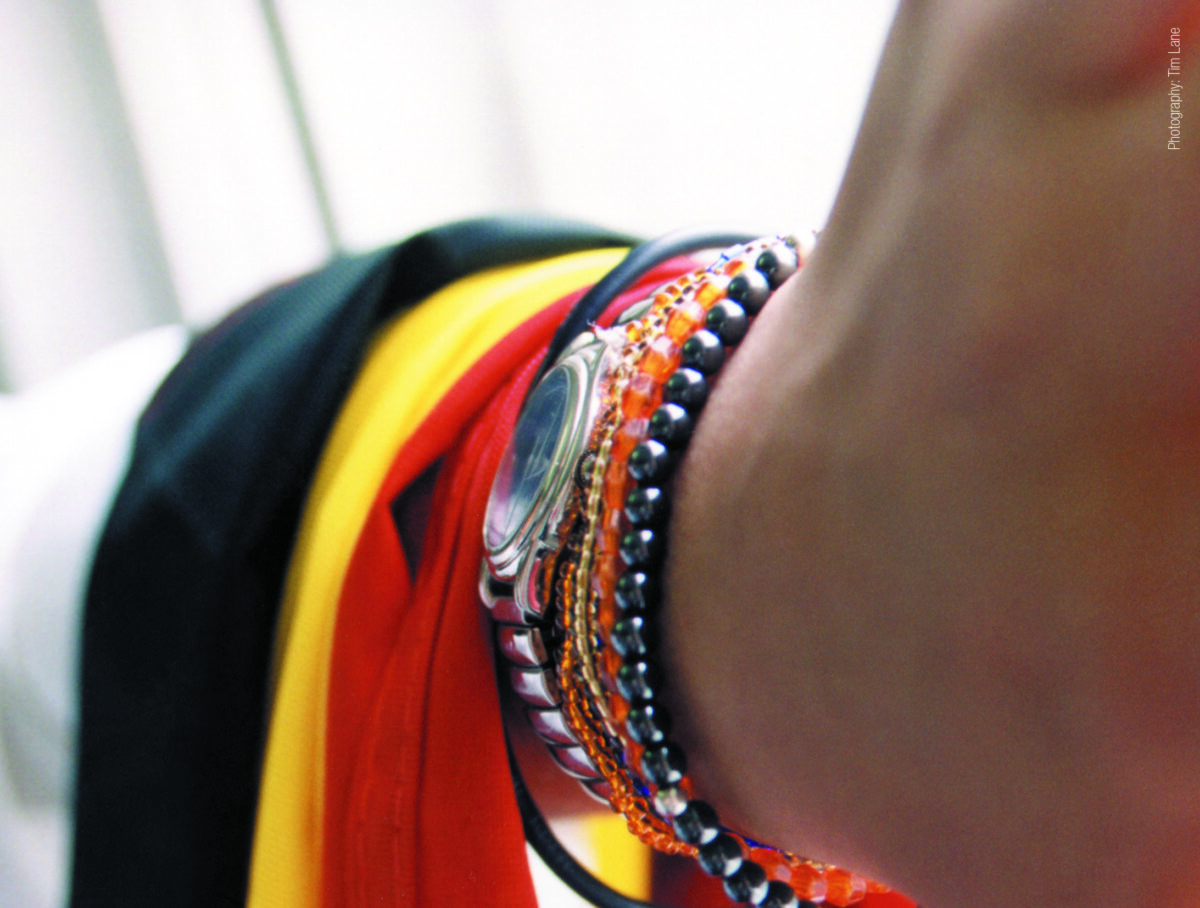
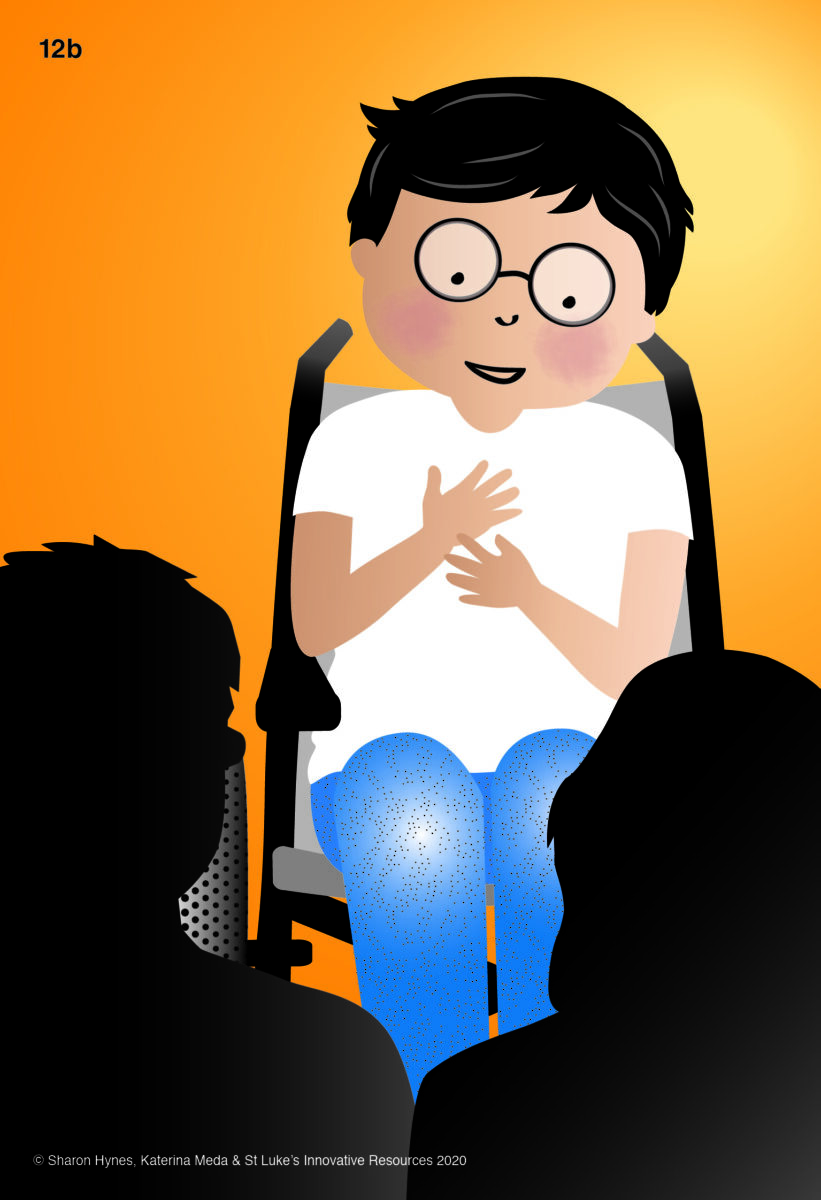 Sharon notes:
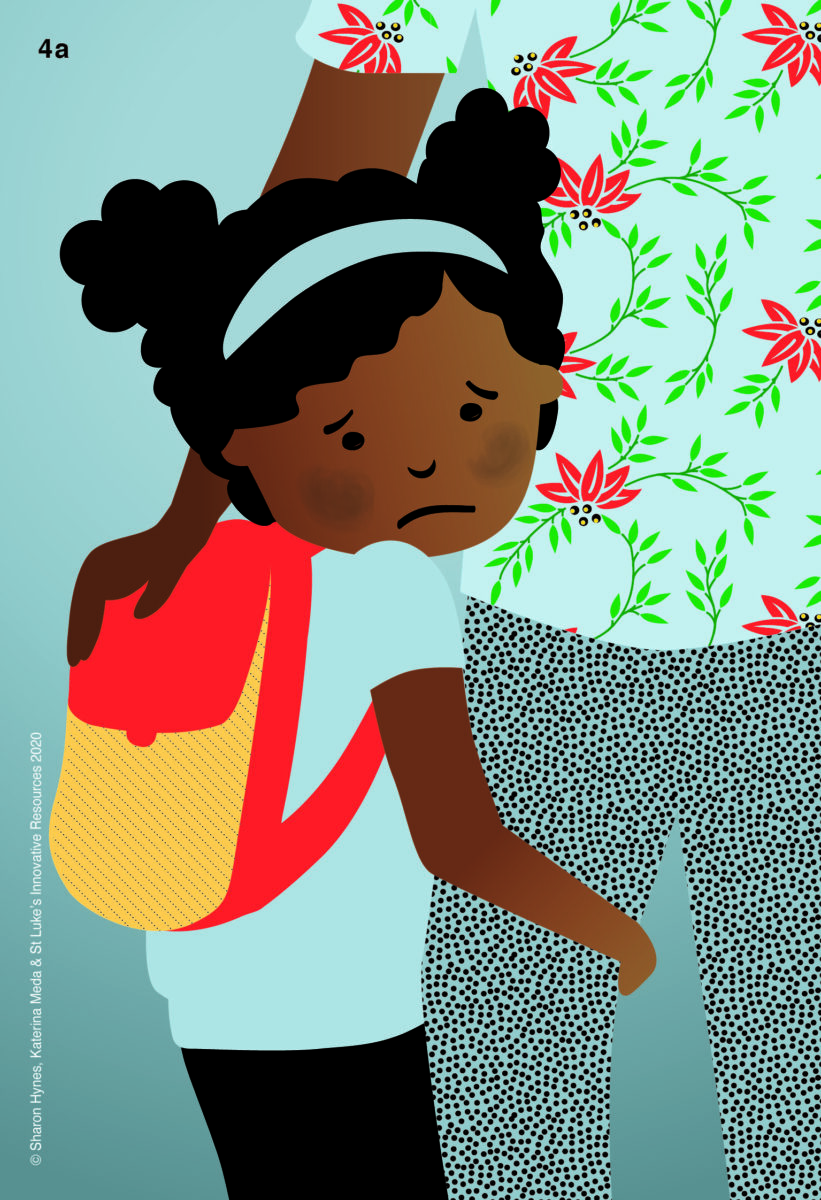 ‘I think a big one that I’ve used often is when children are a bit scared to leave home. If they’re a bit anxious to leave mum and dad, there is a card there with a little character with their backpack and they’re clinging to dad’s leg. The children really connect with that because at some point, most of them have felt that way.
 When my sister died way too young back in 2017, we took her ashes—as a family—down to where the Hopkins River meets the Southern Ocean. It’s a magical place where Ruth’s whoops of joy and laughter still echo on the waves—from all the years she bodyboarded that wild surf.
 continue to send us stories about the many ways they’ve used Picture This to create meaningful conversations, evoke powerful responses, and spark storytelling.
 Brendan has worked as a professional photographer for more than two decades and his work has appeared in Lonely Planet Guidebooks, The Age, Qantas’s in-flight magazine The Australian Way, Denmark’s Jyllends Posten, Fairfax Community Newspapers and The Bendigo Advertiser. He jumped at the chance to collaborate on a project that has storytelling at its heart.
 teach skills so they can find employment, and help them learn time management, emotional regulation, teamwork, adaptability, and how to learn new things. All of this is done so they can feel empowered to live a life that is meaningful and purposeful.
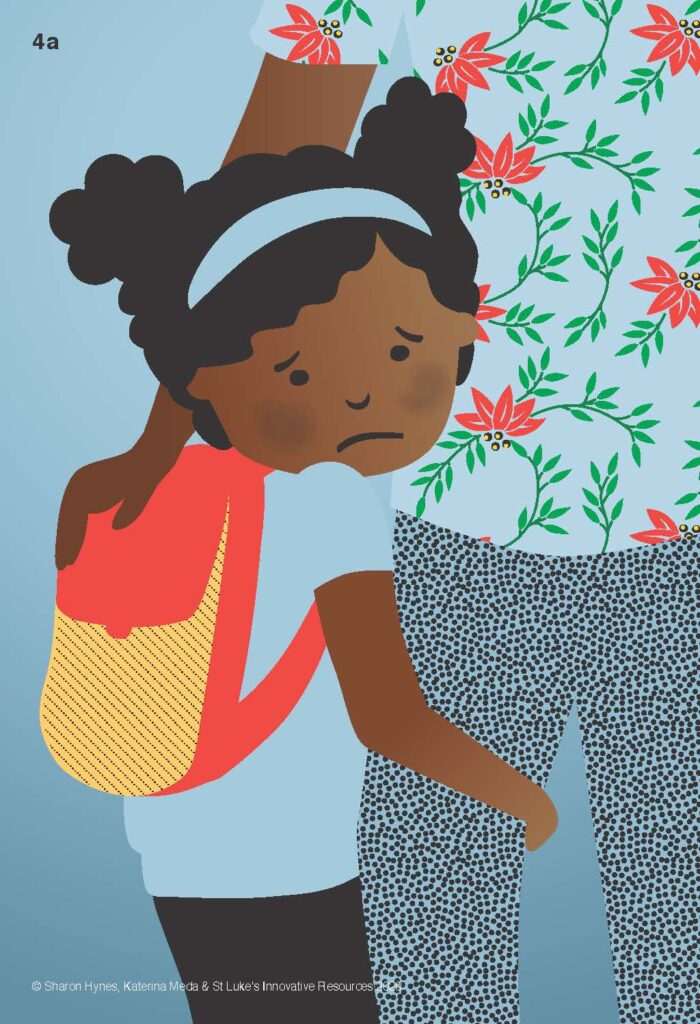 abstract. Stereotypes constrict play, narrow skills, and limit future options; over time, they also reinforce unequal power dynamics and expectations—the soil in which violence grows.
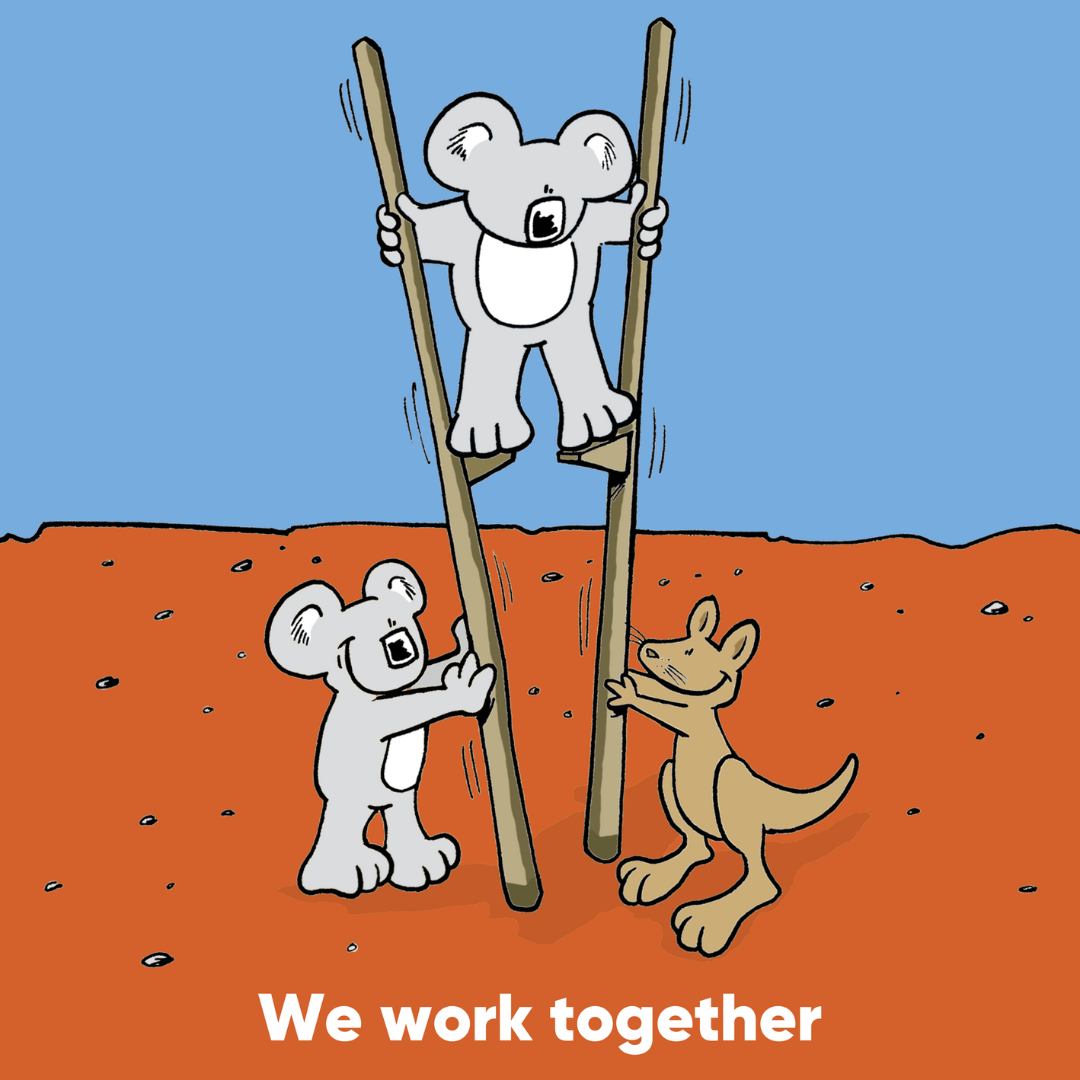 Level Playground’s philosophy is pragmatic: make the inclusive choice the easy choice.
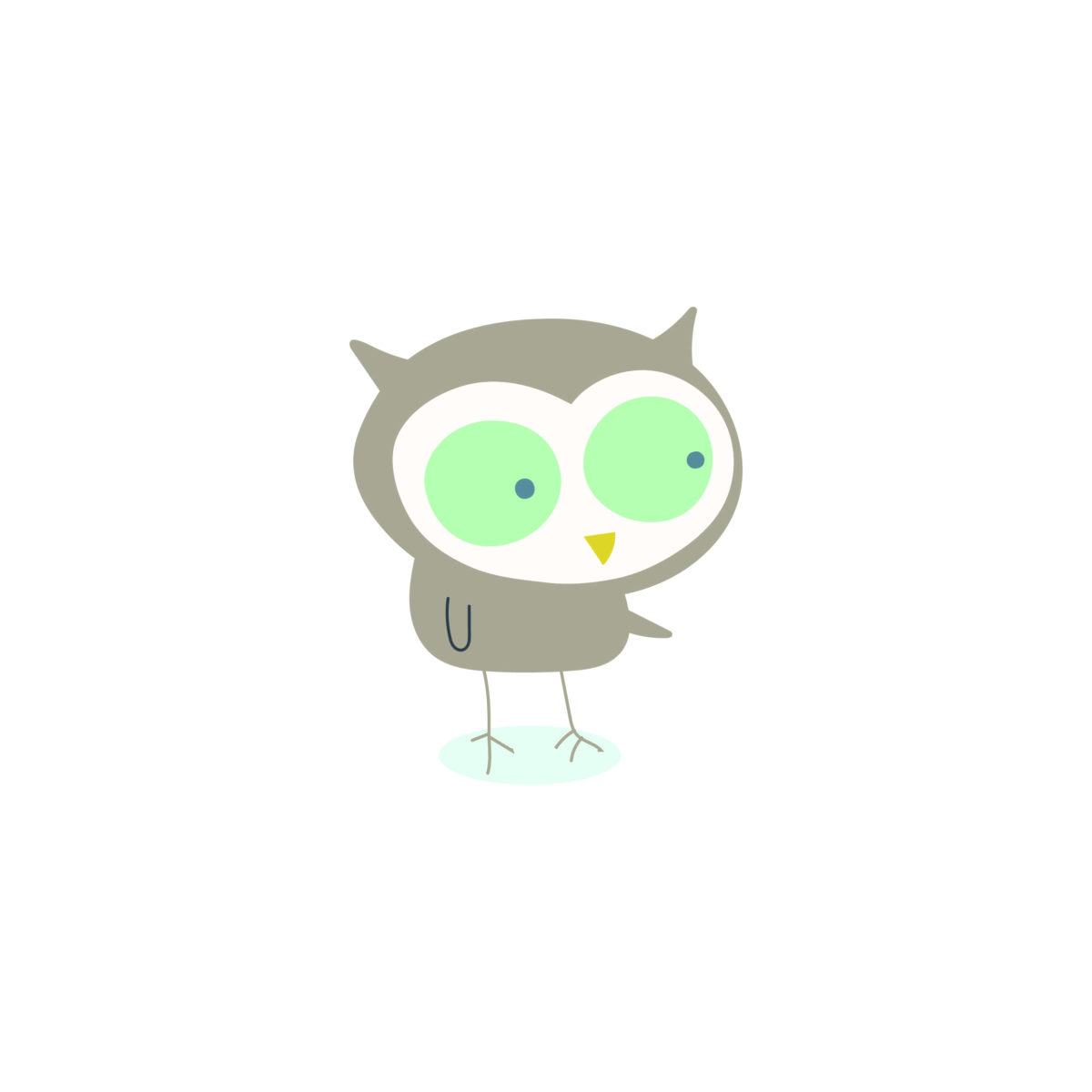 The next day, she walked into class with her bag of animals. Instant magic.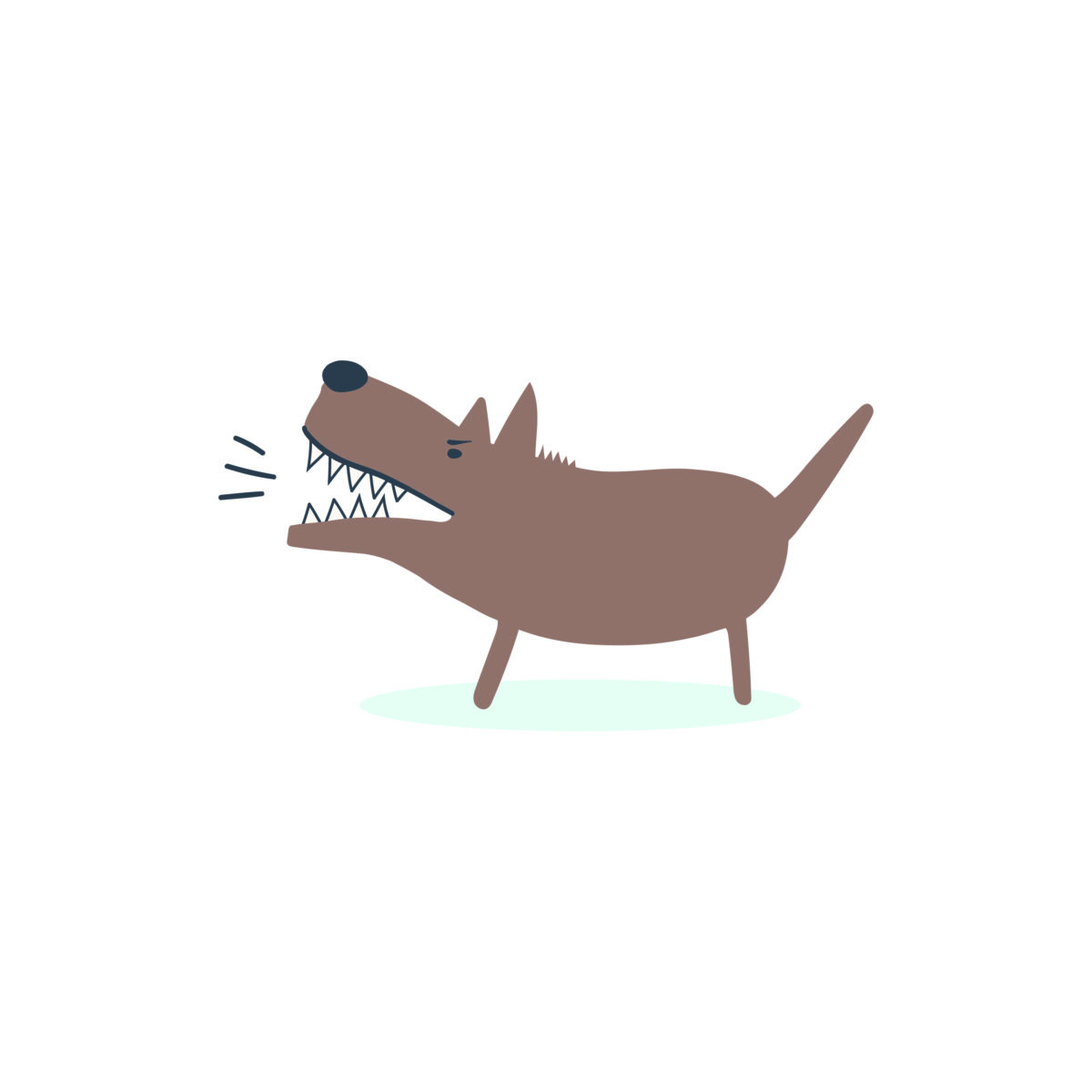
 Grow Your Mind began as two women trying to make wellbeing interesting. Today it’s a program, a podcast, a book, a movement.
 ‘I have a lot of autonomy,’ he says. ‘I waltz in and out. I run groups, respond to referrals, and maintain a presence in the inpatient units.’
 In one group supervision session with a youth mentoring service, Jess used The Bears cards to help participants reflect on each other’s emotional states.
 She often quotes Lisa Dion: “You are the best tool in the workshop.” For Jess, the relationship and rapport between supervisor and supervisee are the most important resources.
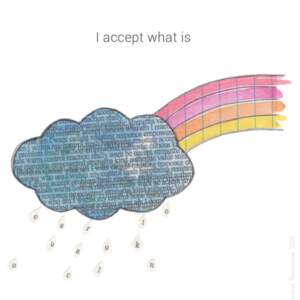 ‘Pain became my teacher. It pushed me to seek meaning, to change my relationship to suffering, and to discover strength I didn’t know I had. Often, I felt alone in it—and so I learnt to be there for myself. That journey became the soil in which Note to self grew, and it continues to shape this new edition.’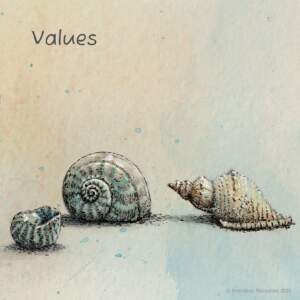
 Water as healing
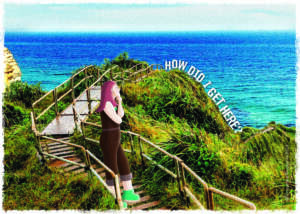 Water as spirit