
The stories of how people use materials developed by Innovative Resources never fail to inspire us with their practice wisdom. We received the following stories about using Shadows and Deeper Shadows in family violence situations:
From Lili
‘I like Shadows and Deeper Shadows because the artwork facilitates the identification and exploration of people’s darkest moments. The brilliance of these images is in their ability to hold the client while they make meaning of their pain and suffering. At the same time the cards also offer opportunities for sourcing strength, hope and resilience.
The golden shadow can be found in each image.
A few years ago I used the cards when counselling a 7-year-old girl who was experiencing family violence. I will call her Gemma. I asked Gemma to depict what it was like for her and her 5-year-old sister at home. Gemma selected an image of a burnt forest. All of the trees were charred and burnt down to their stumps. Gemma said that this was how she felt at home, like a bush fire was wiping out the family. At the base of one of the tree stumps was a new shoot. This new shoot had green leaves and a smaller shoot was growing from it. Gemma described that there was hope in the image because there was new life following the destruction. She said that she was the first shoot, and her little sister was the off-shoot, who she supports throughout the destruction. This conversation produced numerous themes for the following sessions.
I have also used this resource with men who have used violence towards their partners and children. Some of these men have found it difficult to articulate the impact that their behaviour has had on their family. I have asked men to select an image that depicts how their partners or children may have experienced their violence. Their responses have been reflective and insightful.’
From Susan
‘I like Shadows and Deeper Shadows because I have found that the card set really opens up the client to me and shows me exactly where they are and where they travel to throughout the ti me I work with them.
The adult clients I have used the cards with, who have experienced family violence, see two clear sides to their chosen card. Initially, at the beginning of the client/worker journey, it is slightly darker, focussed on the shadows in the pictures – a negative, almost sad place, where the client hides. However, when looking at the same picture at the end of the collaborative journey, when the client is in a more positive place, I have found the client noticing the light in the pictures, the objects that are creating the shadow rather than the shadow itself. This really signifies the transition the client has made and the confidence that they have found.’
 Thank you to everyone for sharing your practice stories. We love to hear them, and most of all, we hope they inspire others with creative ideas they can use in their work with others.
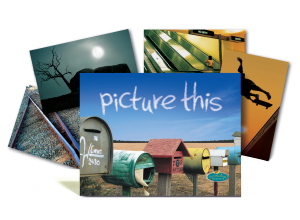
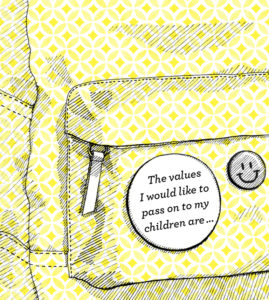 children and the card set Positive Parenting provides a medium through which this can occur. The questions are open, allowing parents to contemplate what it is they want and their priorities; and to reflect on the influences shaping their parenting and the direction they wish to take. The design of the cards has a gentle, homelike feel with everyday objects used on an uncluttered background. The fabric-like pattern is subdued so that the effect is light in touch, leaving the questions, themselves, constituting the challenge to parents’ thinking. The questions are skilfully crafted to explore parents’ sense of themselves in their parenting role, the influences of others on their parenting and their hopes for the future. This is one of the consistent strengths of Innovative Resources’ approach to tools—the ability to access conversations about hopes and change, without negating the need to talk about fears and concerns. Reading through the questions on the cards resulted in many pauses on my part, as I remembered some of the parenting behaviours that I valued, that I had rejected and that I always wondered about.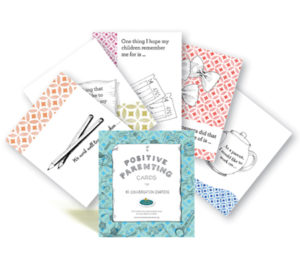




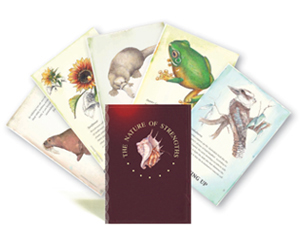



 way from shattered to ecstatic. Asking, ‘What is happening?’ to a bear or stone character displayed on a particular card, can help people put their own feelings into words.
 seahorse.) This observer or witness character could represent a parent, teacher, sibling or best friend. In real life, not everyone has a toucan on their shoulder or in their playgroup, but asking questions about what the toucan is observing in the scene depicted on the card is an effective way of introducing the role of an observer into the conversation.
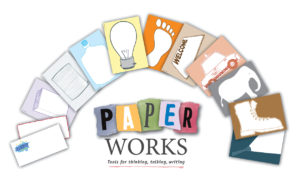 While images like the boot and the elephant naturally lend themselves to naming issues, they do so from a ‘person-centered’ perspective. For example, the boot might be used to name unhelpful things that the person wishes to walk away from. This conversation can be given a ‘strengths’ twist by asking about helpful things the person wishes to walk towards, or by asking what strengths they may want to draw on as they leave certain things behind. The tank can identify what no longer serves them (‘What drains my tank?’) or the elephant might be used to name hidden issues that it may be useful to bring to light.