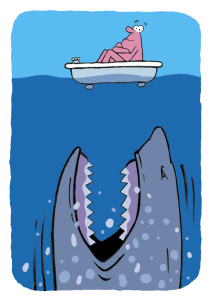
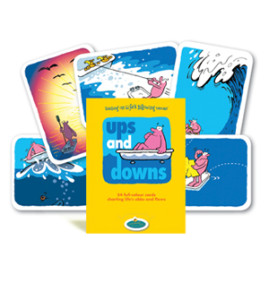
Andrew Shirres, our Practice Development Coach, was handed the high seas, darkly dramatic ‘shark’ card from Ups and Downs and invited to put pen to paper…
There’s a big scary shark headed our way.
Frightening isn’t it?
Or maybe not.
While we might sit there nervously thinking ‘what did I do to deserve this?’ we could choose another way. We could wonder, ‘How can we face life’s challenges with the equanimity of that little person in that tiny bathtub?’
When it feels as if life is charging headlong at us, when we know that a ‘big moment’ is just around the corner, we can wonder about what we might do to face the inevitable with the ‘fold your arms kind of calm’ we would all like to display.
Maybe, just maybe, we might think this isn’t the first time this has happened. Perhaps we will remember what we did to get through the last time. Or who was with us. Or what we learned.
We might think life goes on. We might decide our little bathtub is small enough to rise and fall with the turbulence, that we are adaptable beings, and we can ride this one out.
We might also decide that we are the right person for this task or that we have faced tougher times before and survived.
We might anticipate, accept and embrace the challenge while planning for what’s next.
We could do these things while folding our arms, leaning back just a bit, and floating gently in our little bathtub.
Over a three-year period Karen Masman Bedford ran a series of creative writing workshops with ‘Forgotten Australians’ in Melbourne and Bendigo. The term ‘Forgotten Australians’ refers to people whose childhoods were spent in orphanages and children’s homes. Many suffered abuse of every conceivable kind. On 16 November 2009, the Prime Minister, Kevin Rudd, made an apology on behalf of all Australians. He said: ‘We recognise the pain you have suffered. Pain is so personal. So let us, together as a nation, allow this apology to begin healing this pain.’ Organisations such as Open Place in Richmond, Melbourne (who sponsored the creative writing programs) were established to offer support services to Forgotten Australians.
The long work of healing the pain is far from over.
Writing celebrates the spirit of creativity
During the six-week creative writing courses, we played. We did not set out to write our childhood stories or create literature or even write well. We set out to celebrate the spirit of creativity that is inherently healing and exists in everyone, whether they are highly educated or have barely made it past Grade Two. We placed aside our ideas about writing and pre-conceptions about our ability or lack of it. We didn’t worry about grammar, spelling, writing between the lines, or whether we had ever written anything before. We decided that nobody could get it wrong. We certainly didn’t try to fill up the page. One sentence or even a few words on a scrappy bit of paper were enough because even though we didn’t set out to write our life stories, we found that even a single word tells a story about something the writer has noticed.
During the sessions we experimented with a smorgasbord of writing techniques including 6-word stories, 3-line poems, sentence starters, lists, hot topics, cartoon characters, photographs, symbols and character profiles. We tried automatic writing, collaborative story-writing, unsent letters and word collages. Even a rat puppet wearing a rucksack made a surprise appearance and had one participants nearly running for the door. We used many of the card sets published by Innovative Resources as prompts for writing, and we delighted and astonished ourselves with what emerged.
Appreciative listening is crucial
We began by agreeing on the ground rules which included listening respectfully and generously to each other, and understanding the excruciating vulnerability even very experienced writers feel when sharing their writing.
In the middle of the table we placed a leather box called ‘The Treasure Trove’. People were invited to place their snippets of writing into this box knowing that someday they might find their way into print. We sometimes roared with laughter at what someone had written and we were repeatedly moved by the poignancy and power of many pieces.
‘You’ve just got to put that in!’ we’d say.
The Treasure Trove is launched
After three years the dream of publication became a reality and, with funding made available through Open Place, a book called The Treasure Trove was published. It was fittingly launched on the Anniversary of the Apology and went almost immediately into the second print run. The exquisite page designs and illustrations by Frida Shoo and Step Forbes from GreenGraphics of Castlemaine, Victoria, brought the pieces of writing to life in all kinds of unexpected ways. They suddenly became visible for what they always were: genuinely unique, soulful, funny, biting, playful, aching or whimsical pieces of authentic writing. And the Forgotten Australians who contributed became what many people yearn to become yet never achieve—published authors.
‘NAIDOC stands for National Aborigines and Islanders Day Observance Committee. NAIDOC Week is held in the first full week of July. It is
a time to celebrate Aboriginal and Torres Strait Islander history, culture and achievements and is an opportunity to recognise the contributions that Indigenous Australians make to our country and our society. We encourage all Australians to participate in the celebrations and activities that take place across the nation during NAIDOC Week.’
From the official NAIDOC website: www.naidoc.org.au
As a way of celebrating NAIDOC week, we invited the RAP (Reconciliation Action Plan) Steering Group from St Luke’s to respond to two questions. Here are the inspiring and thought-provoking replies we received:
What inspires you about Aboriginal cultures?
Annette
The value of respect and honor—respect for the land and all who dwell on it and for each other; spirituality—knowing that we are more than just emotional, thinking human beings; connection—not only to the land but to each other, the past, the present and the future; creativity and beauty—expressed through so many artistic mediums and relationships.
Leonie
What inspires me about Aboriginal culture is that it is my culture—although having very white skin, I feel connected and a belonging.
Delwyn
What inspires me is the connection to land, people, story and spirituality; the respect and acceptance of the natural ebbs and flows of the land and its seasons and working with this rather than trying to control it.
Michelle
I am inspired at how deeply connected, proud and resilient Aboriginal culture is and how incredibly generous Indigenous Australians are in sharing their culture with the rest of the world. I look in on how Aboriginal people—individually, in family groups and community—carry that culture into their daily lives and I am envious at this great connection.
Carolyn
I am inspired by the strong emphasis on relationships with family, community and country.
Pauline
I am inspired by the richness and resilience of Aboriginal people. My experience has always been that in being with, and working with, Aboriginal and Torres Strait Island people I have the pleasure of working with, they are very generous in sharing their teachings and culture. It is very much a two-way learning journey with a healthy respect for each other. The most inspiring aspect of this relationship is the generosity of giving and receiving.
If you could send a message to all Australians about Aboriginal cultures, what would it be?
Annette
Aboriginal culture has so much to teach and show us. Are we willing to learn, to respect, to take the time to hear, see and understand so that we can grow as a people, as a community, as a nation?
Leonie
I feel Aboriginal culture accepts and embraces all cultures and remains strong in its beliefs but able to change and grow and adapt to stay strong.
Delwyn
There is much that we can learn from the traditional owners of the land—if we just took the time to watch and listen.
Michelle
As a nation we are so blessed to have such an awesome living culture to share in. It is present in the ways that Indigenous Australians hold themselves with pride, are honest about its needs and share with the world its depth and diversity. We have a responsibility to teach others about its past injustices, present and future hope and to act in ways that assist to heal, flourish and preserve this culture for present and future generations to live in and appreciate.
Carolyn
If we all valued our relationships with people and our country above other material and other superficial concerns, we would be a much more cohesive and enriched society.
Pauline
Thank you for remaining strong and proud in your culture and allowing us non-Indigenous people to learn, engage, walk alongside you and be proud of our First Nations people and culture. Your willingness to engage and include all people in sharing your rich culture is a privilege, in light of the dispossession and displacement of your people by the hands of our colonists. Together we are strong and together we can reconcile the past and ensure a strong and proud future.
What would your reply be?
Share it with us.
There are so many things I wonder about as a parent. I have to admit that right now in my life words like ‘parenting’ and ‘family’ and ‘home’ are like giant, shape-changing, mega-clouds of steaming immensity. S’cuse the hyperbole. For me, they have more in common with ‘infinity’ and ‘universe’ and ‘meaning of life’ than with ‘gingham’ and ‘curtain’ and ‘kitchen bench’. I wish the word ‘family’ would shrink back into the manageable neighbourhood of BBQs and kids’ sleepovers. Or fall down between the cushions on the couch alongside the discarded paper clip and the furry lolly. Family lived in those domestic spaces for decades, and it seemed to belong there. But recently it all changed. I woke up one morning and suddenly said to myself and anyone else who would listen: ‘Honey, the kids have all left home.’
I find I am a little like a stranger in a strange land
Arriving here now in this place of quiet with all three of my children having flown the proverbial nest, I find I am a little like a stranger in a strange land. I’m wondering what to do with the pile of certificates for trying hard in maths? I’m wondering where to put the plastic soccer trophies? I’m wondering what happens now? It takes a bit of getting used to, this letting go of tending to their needs, providing the taxi service, almost daily visits to the supermarket, and more than daily feasts of whatever carbohydrates can be found in the pantry, boiled up and smothered with tomato sauce and cheese.
I wonder about the whole glorious mess of my family. I don’t know quite how I feel about it. Feelings are tricksy, I find. The thing about feelings is that I feel more than one of them at the same time. In fact, pretty much all of the time I feel opposite things at once. So, regarding the empty nest … regarding family … regarding children … regarding parenting—I’m bereft and I’m thrilled. I’m exhausted and exhilarated. I’m proud and I have regrets. I adore my children utterly and I sometimes wish they would change. I feel like I did my utmost as a parent and sometimes I feel it wasn’t enough. Sometimes family feels like the most wonderful of adventures and sometimes I am a bit … well … a bit disheveled in the wake of it.
Yes, parenting is full of wondering. It is sobered by worry and niggled by guilt. It is fuelled by hope and love. It teaches you and challenges you. It floors you and fills you.
Even though the word for paper comes from papyros, Ancient Greek for the Cyperus papyrus plant, the invention of the paper industry is most often credited to a Chinese court official, Ts’ai Lun, in 105 AD.
Now all these many centuries later, we still have a deep and abiding connection with paper. Even before we make it to work in the morning, most of us have already had numerous close encounters with paper of various kinds from toilet rolls to facial tissues; milk cartons to cereal containers. And despite the digital revolution, more than a few of us still wake up to the pleasures of a morning newspaper delivered to the doorstep.
Traditionally, paper has also been the primary tool of social workers, teachers and many other human service workers since record keeping and the rise of community support professions began.
Many of you will remember with great fondness Innovative Resources’ first foray into paper tools in the form of the Scaling Pads. These were a simple set of pads with tear-off sheets. On each pad was an image—or visual metaphor—that could be used for measuring change in various ways. The images included a temperature gauge, a ladder and a pathway. How simple and how useful these paper tools proved to be, and we are delighted to say that they are still available today in digital format. Simply print them out and you have the same versatile paper sheets at your disposal (sustainable recycling recommended, of course).
PaperWorksbuilds on this rich tradition of paper tools.
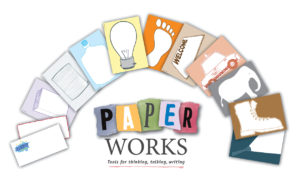
PaperWorks is a set of 12 masters featuring simple line drawings of objects we can all recognise very easily. These objects work as ‘visual metaphors’; they are designed to inspire meaningful conversations in a range of settings including counselling, education, team building, story-telling, organisational development, supervision, creative writing and more. Each image includes space for writing, doodling, painting or colouring. The back of each sheet features three questions that are relevant to the image and can be used to initiate conversations. Of course, there are countless other questions that might be asked in relation to the image, according to the creativity and imagination of the user.
Because the PaperWorks masters can be photocopied or the PDF masters printed out as often as required, these tools are designed to be used and owned by the people we work with. They can take their sheets home, use them as journaling tools, stick them on the fridge, post them on noticeboards, send them as a card, and when the time comes, place them in the recycling bin.
The first PaperWorks series is comprised of the following images:
Book (What title would you give to your life story?)
Boot (What bad habit would you like to kick out of your life?)
Bottle (What’s your message in a bottle?)
Brick (Which bricks would you like to use to build your wall of strengths?)
Elephant (Is there an elephant in the room?)
Footprint (What’s your next step)
Lightbulb (What’s your bright idea?)
Sparkling Moment (What’s your sparkling moment?)
Taxi (Where are you heading?)
Torch (What would you like to shine a light on?)
Water Tank (What fills your tank?)
Welcome Mat (What would you like to welcome into your life?)
In this complicated world, what a delight to enter the world of simple paper tools that you can purchase as PDF downloads or as a hard copy set of masters. And don’t be fooled by their simplicity; you may just find PaperWorksto be among the most effective, creative, and versatile tools in your kitbag of resources.
Copy them, layer them, collage them, form them into a book, paste them on walls, use them as practice notes, make your own comic, send them to someone you know—it’s up to you and the people you work with. Because people can take the sheets away with them, these tools can work as powerful reminders of the conversation you had together, and of their own thoughts, plans and feelings. In this way PaperWorks can become tangible ‘artifacts’ that transfer power to where it belongs. Surround yourself with PaperWorks and help create a new, safe and exciting work space that expresses best practice in action.
PaperWorks concept and development:
Andrew Shirres & Russell Deal
Booklet: Andrew Shirres & Karen Bedford
A very skilled and experienced social worker once told us about using two simple questions:
Can you pick a card that says something about where you are at?
Can you pick a card that says something about where you want to be?
At the time, he was working with a teenage boy who was refusing to go to school. He spread out the Reflexions cards and asked the young person to pick one (or more) that said something about how he is feeling about/at school, and another that said something about how he would like to be feeling about/at school. The social worker placed the first card on the left and the second card on the right. They chatted about the one on the left briefly first, and then the one on the right in much more detail.
In a short period of time they had quite a vivid description of the young person’s goal, or favoured ‘picture of the future’. All you solution-oriented, strengths-based practitioners out there will no doubt agree on how useful it is to focus on where the person is heading—their goal, their best hopes—rather than getting bogged down in going around and around in the problem. Problems can be very sticky and magnetic—they can so easily pull us into a spiralling vortex that leaves hope in its dust.
No, no to that, and yes, yes, to the land of hopeful possibilities—by whatever means you can invite teens to go there.
Then they sat back and the social worker asked, ‘How are you going to get from here to there? ’Dunno’, the young person replied.
The social worker then selected three more Reflexions cards. You can’t miss them—they stand out from the other 29 cards because they start with the phrase ‘Able to …’ (All the others have a single word on them.) There are five of these in the set and they name three key factors that are often pivotal in a positive shift. They are: ‘Able to make decisions’, ‘Able to work with others’, ‘Able to change’, ‘Able to start over’ and ‘Able to ask for help’. They could be called the ‘Catalysts for Change’ cards—or maybe the ‘Getting from Here to There’ cards.
What other key factors do you think bring about positive change for youth? What other ‘Able to …’ cards would you include in the set? We’d love to hear your ideas.
In an earlier blog From Here to There (Simple is Best), we suggested that you could ask the same two simple questions for any of the card sets we publish here at Innovative Resources:
Can you pick a card that says something about where you are at?
Can you pick a card that says something about where you want to be?
Simple though they may be, these two questions—or variations of them—are really worth a try. They can be surprisingly effective conversation-starters, especially when teamed with good visual images.
Simple is often best.
Even the word makes me sigh with relief. But have you noticed that it sometimes takes a whole lot of complication to get there? For example, you read a book or see a painting. Perhaps the painting is composed of a few lines on a white canvass; the book is built around a simple character who takes a walk to the shops. You’re tempted to think: I could do that! And maybe you could.
I applaud you for having that goal, and I am cheering for you every step of the way.
But what many people discover during the process of trying to create something very simple is how very complicated the thinking can get along the way. Just like that old zen saying:
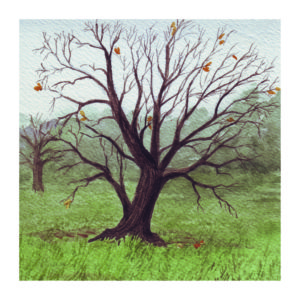
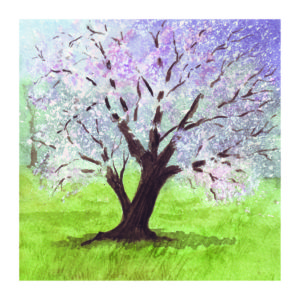
‘First a tree is a tree, then it is no longer a tree, then it is a tree again’.
The long and complicated apprenticeship of sincere practice allows the final destination of simplicity to be reached.
This seems to be the experience of many human service practitioners as well. In the early years of practice a counsellor, psychologist or pastoral carer may try an impressive range of modalities, a complicated mix of questioning styles. But you hear them say in the latter years of their careers, when perhaps they have grown humble and wise, that their practice has settled into a couple of simple things that they always do, or simple questions they always ask.
And here’s the simple truth about any of the card sets created by Innovative Resources for counsellors, therapists, teachers—anyone who wants to help others find ways forward: You can ask the same two simple questions for any of the 60 or so card sets. Doesn’t matter if it is a card set is for talking about feelings, goals, roles, teams, families, or communities. Doesn’t matter if the cards have words on them, or images only.
The two simple questions are:
Can you pick a card that says something about where you are at?
Can you pick a card that says something about where you want to be?
Then it’s about getting from here to there. The theory supporting these two simple questions could, and does, fill volumes of solution-focussed, brief therapy text books. But fortunately, in the therapeutic space between practitioner and the person they are working with, the buzz of all that scholarship can fall quiet and these two simple questions can be powerful pathways into change.
Narratives, metaphors and storytelling have become an important part of counselling and social work practice, and the term ‘restorying’ has entered the language of therapy. Restorying helps people think differently about themselves and the problems they are facing. It is about exploring alternative ways of looking at the same story or experience, and creating new and positive descriptions.
To put it simply, the stories we share can help us to build personal identity, reshape and bring new meaning to our lives. Stories touch us as no mere theory or explanation can, because they reach the very essence of who we are. By listening to the stories of others we come to realise that we’re not alone in what we are experiencing, but part of a wider cultural network.
Stories invite us to listen. Call it a meeting, a session, an interview, or a lecture and the connotations that come with such terms can make many of us run for the hills. But say, ‘I want to tell you a story,’ and we pull up our chairs to listen. Our personal stories can help us make sense of the world and our place within it. Stories can teach us how to live responsibly and how to understand others.
However, revisiting our personal stories and memories doesn’t have to be a therapeutic or life-changing exercise. Sometimes we just need to escape into ‘once upon a time…’.
The values of every human society are captured in its stories. We are defined by these stories and by the stories we choose to tell our children. We collect them from all sorts of places; from our families, through formal education, our religious traditions, on television, in movies and books and magazines—and of course our own life experiences. The genealogical dates and places are only the skeleton of our personal histories. It’s the stories that give our lives their special character.
Preserving these stories means honouring individual lives, our experiences and our relationships. It means celebrating the joys and treasured memories as well as passing down the learnings and struggles. Sharing family stories is a powerful tradition that strengthens and builds community— a tradition that many believe is being lost in the twenty-first century.
Stories can light our way, stir our spirits and warm our hearts.
Shared in person or in print, stories form verbal bridges between people. They cross gulfs of human ignorance, isolation, diversity, and conflict. Such bridges can also span the generations; a precious gift to the future—our unique yet universal legacies.
More than 10 years ago, Wayne McCashen, then a leader of strengths-based practice and trainer at St Luke’s, documented the framework that had been embedded as the foundation for the agency’s practice for working with people. ‘The Strengths Approach‘ has been reprinted many times over, and is still a prescribed text for many Social Work students in Universities all over the world.
Here are the basic concepts, taken from the beginning of the book.
The strengths approach is a philosophy for working with people to bring about change.
It is an approach to people that is primarily dependent upon positive attitudes about people’s dignity. capacities, rights, uniqueness and commonalities.
It emphasises people’s ability to be their own agents of change by creating conditions that enable them to control and direct the processes of change they engage in.
It creates conditions that enable people to identify, value and mobilise their strengths and capacities in the process of change.
It provides and mobilises resources in a way that complements people’s existing strengths and resources as opposed to compensating for perceived deficits.
It acknowledges and addresses power imbalances between people working in human services and those they work with.
It seeks to identify and address social, personal, cultural and structural constraints to people’s growth and self determination.
It acknowledges and addresses power dynamics, cultures and structures in organisations that are congruent with socially-just practice.
Every parent has heard this question from the back of the car once the two minutes of ‘Eye Spy’ have worn off.
Maybe questions like this never quite go away but they just change form as we hit adolescence. They morph into questions like ‘Why am I here?’, ‘Where am I heading? and ‘What is the meaning of my life?’ These questions may remain with us our whole lives, and they are so big they may defy pat answers. We may respond to them differently at different times in our lives.
We could call these ‘living questions’. Once questions like these come out of the bottle, they remain with us, prompting us to reflect on our values, choices and relationships in all kinds of fruitful ways—even as they may make us feel uncomfortable at times.
Fortunately not all questions are the deep and meaningful kind—as useful as these are. Some questions surprise us, delight us, intrigue us, make us laugh or set up a whole train of stories.
Who would you not want as a next door neighbour?
What’s the kindest thing you have ever done?
Do you believe in miracles?
What’s the best, worst, funniest job you have ever had?
What is stopping you?
If you won a million dollars how would you spend it?
At Innovative Resources we have published Deep Speak, a set of 120 cards, each with its own question for opening up dynamic conversations with young people. The cards are colour-coded into six broad themes—openers, identity, beliefs, emotions, values and relationships—so that facilitators can easily make selections of cards, if they wish.
This may be one resource that is really helpful in keeping the conversation interesting and alive on the journey to your holiday destination, or for family fun at home in the evening.
Ever poured muesli into a bowl and realised the good stuff has settled and now lies the bottom of the container?
Did you ever see a kid with his/her arm in a cereal box searching for the toy that has inevitably found its way to the bottom of the packet? (this might have been a while ago as they don’t put the toys in there any more)
It has been said that our thinking can sometimes get a bit ‘settled’ too. We can come to work and go home again at the end of a long day without thinking a lot about why we do what we do or even how it happens. Values and assumptions left unexamined or rarely visited can become hidden and not as helpful in our decision making. A great occupation unsupported by clear values and strength based assumptions can become more like ‘work’ and probably more stressful.
So I would like to ask you to think about ‘what do you do to ‘shake up the box’?’ How do you reflect upon practice?
Here are some questions you could think about.
Do I examine significant incidents with my supervisor?
Do I bring significant incidents up at Peer or Group supervision?
Do my team meetings allow time for questioning ‘why I did that?’ or ‘how my assumptions affected my meeting with that family or individual?’
Did I think I could predict what would happen?
Were my assumptions strength based?
Can I share my thinking about what is important to practice with my team?
Is ‘debriefing’ mostly about what happened or does it include why something happened?
Cheers (and enjoy your breakfast tomorrow morning)
Andrew Shirres
Practice Development Coach, St Luke’s Innovative Resources
Making good choices is a really handy skill. Sometimes we really struggle to know what the best choice is. We hum and haaa and wonder. And perhaps sometimes either choice would be fine. Just go ahead and jump one way or the other, pa-leeeeease!
But sometimes a wrong choice can have dire consequences. It’s every parent’s nightmare that our children may make a choice that spins them off the road. We hope, if it does happen, they can apply the brakes, do a u-turn or abandon the car altogether and take up cycling or walking. In other words, we hope that over the years we and others have helped equip them with some tools for making choices that will ultimately serve themselves and others well. And we hope they will know when the fuel tank is getting low, the tyre has a puncture and how to pull those tools out of the boot and do some running repairs. Or better still, they will know how to set off in a safe car, on a well-illumined street, seat belt firmly in place, and without any distracting back-set drivers. But we (and they) make mistakes; it takes loads of practice to travel the high-roads and low-roads of life well, with many a wrong turn along the way.
Here’s a tool based on the versatile car metaphor that might help jump start conversations about how people are travelling in their lives, and how to change direction if they are hitting speed bumps, colliding with other cars or getting bogged. Cars ‘R’ Us consists of 79 cards and a booklet of suggested uses. This resource is for teachers, psychologists, social workers, therapists, parents and facilitators will help children, teens and adults explore feelings, set goals and make skillful choices.
Take these fun, boisterous, quiet, angry, happy, racy
and just plain goofy cars for a spin
…and don’t forget to fasten your seat-belt—change is around the corner!


 stands for National Aborigines and Islanders Day Observance Committee. NAIDOC Week is held in the first full week of July. It is
 tion.
tion.
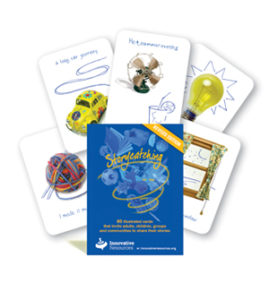 Narratives, metaphors and storytelling have become an important part of counselling and social work practice, and the term ‘restorying’ has entered the language of therapy. Restorying helps people think differently about themselves and the problems they are facing. It is about exploring alternative ways of looking at the same story or experience, and creating new and positive descriptions.

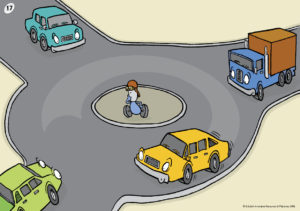 ers, therapists, parents and facilitators will help children, teens and adults explore feelings, set goals and make skillful choices.