One of the things we pride ourselves on at Innovative Resources is the combination of lived experience and industry expertise that goes into the development of each and every card set.
For more than 30 years we’ve partnered with leading experts in their respective fields to create resources that ignite conversations, while helping people unlock their strengths, aspirations and potential.
Here’s a chance to hear how it all happens, from the creators themselves.
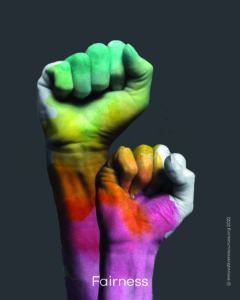
‘Fairness’ card from Exploring Shame
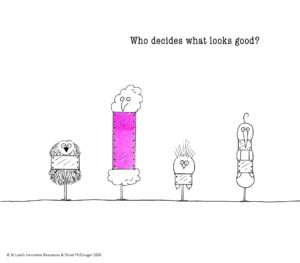
Join us online for a conversation with the authors of three of our most popular resources: Kate Skilbeck, Navigating Depression; Michael Derby, Exploring Shame; and Danni McDougall, Eating Disorders & Other Shadowy Companions.
We’ll ask our authors:
why they wanted to create a card set on their particular topic
what the process of creating a card set was like
what their favourite cards are
some examples of how they’ve used the cards in different settings
how they imagine their three sets could be used together
any unexpected or surprising responses to the cards
some tips for introducing the cards into conversations.
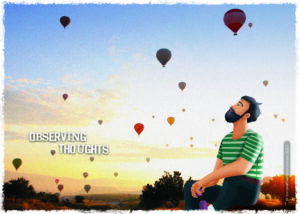
‘Observing Thoughts’ card from Navigating Depression
Gain a deeper understanding of the cards, learn more about our highly skilled and experienced creators, and ask any questions you have about these beautiful, practical and creative resources.
Wednesday 14th May – 3:30pm-4:45pm
Sharon Dunn lives and breathes creativity.
Whether she’s creating unique artwork for an Innovative Resources card set, fulfilling a design brief for a business client, or writing and performing music, she is always searching for originality—the offbeat and quirkier the better.
‘Being a musician and a designer means I’m in two creative world’s most of the time,’ Sharon says. ‘They both bring so much joy, companionship and stability to my life and allow me to see and hear the world in different ways.’
For Sharon, this immersion in creativity can include everything from architecture, product design and food, to a perfect sunset, or the clothes people wear. Even the sound of a dripping tap can be a source of inspiration.
‘I’m extremely visual and tactile, and my musical nature allows me to hear creativity in sounds that possibly annoy others,’ she explains. ‘The indicator in the car can be a perfect drum pattern for me to create a little tune or sing a song that pops into my head. I’m constantly entertained and surprised by what’s around me.’
‘Creativity’ card from Strength Cards Unlimited
Sharon has designed four card sets for Innovative Resources, including Anxiety Solutions (2018), No Room for Family Violence (2019), Strength Cards Unlimited (2022), and IR’s newest resource, Navigating Depression, published at the end of 2023.
Like so many artists who’ve been drawn into Innovative Resources’ orbit over the years, Sharon’s introduction to IR was serendipitous. After teaching graphic design in Melbourne for many years, she landed a job at Greengraphics in her hometown of Castlemaine. Her colleague, Frida Petrie, who was the original designer for Anxiety Solutions, went on maternity leave and Sharon stepped in to complete the final 40 cards of the project.
‘It turned out that Innovative Resources’ Managing Editor at the time lived at the end of my street, and the former IR Director was my neighbour across the street,’ she recalls. ‘It’s crazy how worlds collide.’
While she admits that Innovative Resources’ card sets present a design challenge like no other, Sharon also finds the complexities and nuances of catering for such a diverse audience to be creatively inspiring.
‘When I have limitations or constraints in a design brief, that’s when I tend to thrive,’ she says. ‘But, being mindful of mental health issues and social issues, such as domestic violence, can also make it challenging to determine the right tone.
‘For example, the brief for No Room for Family Violence was to create a card set with no images, but an “uplifting” design. Navigating Depression required five illustrated characters to represent the diversity of our communities, including one with a very visual physical disability—something I’d never been asked to do before. For Strength Cards Unlimited, I needed to visually represent a single word (strength) on each card, many of them quite abstract concepts, or words with multiple meanings. All of these were great challenges.’
It’s one thing to have great ideas, but another altogether to turn them into a completed image on a card. For Sharon, that process always begins the same way—with pencil and paper. She loves the process of transferring the image she sees in her mind on to paper, or as she puts it, ‘getting straight to the heart of a concept’.
‘Get Creative’ card from Anxiety Solutions
‘When I was teaching, I always encouraged my students to sketch out their ideas first, even if it was just stick figures,’ Sharon says. ‘Then you can address things like what am I trying to say; what sort of composition and style am I aiming for; will it be an illustration or an image?
‘It can all get very overwhelming very quickly if you just jump on the computer and try to start. But when I finally bring my sketches to the screen, they come to life in a different way. I’m able to alter the style, add colour and texture, and often take it somewhere I wasn’t expecting.’
Sharon believes the key to managing an Innovative Resources project with 40-plus cards is to break it down into small steps and never think about the whole mountain you have to climb. She also trusts, from experience, that good things happen when you open yourself up to the creative process.
‘It’s a bit like songwriting,’ she says. ‘I look back at many of the songs I’ve written and wonder how they happened. Sometimes it’s a more deliberate—thinking outside the box—but other times it can just feel like a bit of magic.
‘When I was creating the images for Strength Cards Unlimited, some concepts would arrive instantly, and others I’d have to dig deep. I like the surprise element of this. You never know which will be the hard words to conquer.’
‘Music’ card from Anxiety Solutions
Sharon has covered a lot of creative territory in her years as a designer, musician and teacher, but credits her collaborations with Innovative Resources as some of her most satisfying and stimulating.
‘I’m really passionate about social justice and mental health, so to know that I’ve used my skills to make some kind of difference is really important to me,’ she says. ‘When I hear feedback on how helpful and well received the cards have been for practitioners and the people they support, it really hits home.
‘The creation of the cards has been a personal development journey for me as well, which I’m really grateful for.’
by John Holton
Are you an educator looking for a better work-life balance? Are you feeling exhausted or overwhelmed in your teaching role and looking for ways to improve your energy levels and sense of connection? Do you work in a team that needs an infusion of hope, creativity and joy?
Then our latest offering may be just what you’re looking for!
Based on years of research by authors, Professor Monica Thielking (Dean of the School of Psychology and Health, La Trobe University) and Dr. Kristina Turner (Senior Lecturer in Education. La Trobe University), these beautiful, evidence-based cards are designed to open-up honest and hopeful conversations about teacher wellbeing, in all its myriad forms.
In the fast-paced, demanding, and every-changing educational environments that educators find themselves in today—from primary and secondary teachers, to early years educators and university lecturers—finding the time to reflect on mental and physical health, values and relationships, can be challenging.
Use the Teacher Wellbeing cards to have conversations about:
how you can replenish your energy and enthusiasm
where you find meaning and how you can focus on those things more
what brings you joy in your work
how you can create meaningful boundaries
what you do to take care of yourself
how you connect with others
what you are grateful for
how to name and work through challenges
who supports you
what you do to celebrate your successes, big and small.
The Teacher Wellbeing cards include artwork by exceptional artist and educator, Kain White. These stunning images have been deliberately designed to be reflective, evocative and hopeful. Drawing strongly on the natural world, the cards invite people to experience a sense of calm and optimism.
The 32 cards in the set also include a single word on the front and three sentence starter prompts on the back, to help the conversation along. Plus, you will have access to a digital toolbox of extras, including a digital booklet, with lots of ideas for using the cards, a digital set of the cards so you can use them anywhere, anytime, card hacks, articles and lots of other great support materials.
We understand that teachers are incredibly busy, so we have designed the cards to be used even when you’re short on time—in that 5-minute break between classes, as a reminder on your desk or fridge, or as a quick prompt in a debrief with colleagues. They are also perfect for staff meetings, professional development, team building and for counsellors supporting educators, to build a culture of support, respect, kindness and trust.
Every New Year’s Eve, millions of people make resolutions related to losing weight or changing their body shape. In fact, losing weight is one of the most common new year’s resolutions, along with eating more healthily and getting fitter (which are often alternate ways of saying you want to lose weight or change your body shape).
Most of us consciously know that changing our body shape or weight isn’t as meaningful or life affirming as doing things like connecting with family and friends, finding more balance, learning a new skill, exploring the world, being grateful for what we have, getting out in nature, or being more creative. But resolutions about weight and body shape still appear at the top of many people’s list every year.
So, how does this cultural obsession with changing our body shape impact on our mental health, and on the mental health of the people we work with?
‘… a set of beliefs that promote weight loss and equate it with a person’s health, success and self-worth. It perpetuates the understanding that thinness is the ‘correct’ body size to maintain and a person is ‘morally bad’ if they gain weight or live in a larger body. Diet culture conditions a mindset that there is a ‘right’ and ‘wrong’ way to eat. It encourages unhealthy practices around food, exercise and eating to achieve a desirable physical appearance.’
Diet culture draws its legitimacy from the fact that obesity can contribute negatively to a range of health issues, including diabetes, heart disease and some cancers. While these are genuine health concerns, dieting as a solution nearly always fails. Despite the research that says up to 95% of diets don’t work, with most people only losing an insignificant amount of weight, and nearly everyone gaining it back after two years, many of us continue to spend money and time on dieting. If any other medical or health intervention had such a high failure rate, we would have thrown it out years ago.
what is the problem with being caught in a ‘diet culture’?
Diet culture associates thinness with health and attaches moral virtue to particular body shapes. It encourages us to spend large amounts of time, energy, and money on diet products, by attaching a sense of shame to particular types of bodies.
Being caught in the diet cycle also contributes to a negative relationship with food (which should be one of our pleasures in life). It reduces our confidence; drains us of mental and emotional energy (which could be directed to more positive, productive and meaningful endeavors); increases anxious food-related thoughts or ‘food noise’; and often leaves us with lifelong yoyo cycles involving deprivation and overeating. As the Butterfly Foundation states, diet culture can ‘generate disturbed relationships with food, the mind and body’.
We also know that the diet industry and mass media are invested in making us feel bad about ourselves so that they can sell us more diets and diet products (the diet industry is one of the most lucrative in the world, along with the fast food industry). These highly profitable industries need us to look in the mirror and not like what we see. They also want us to believe that not having the ‘ideal’ body shape is our fault.
We live in a world where our food environment is dominated by processed foods. As Forbes magazine notes, ‘In industrialised countries, over 50% of calories come from ultra-processed foods’. This, combined with our increasingly sedentary work environments, doesn’t help us to build and maintain good health. So, we end up in cycles of dieting. This is ideal for the diet industry because they know we’ll keep coming back for more—the latest diet fad, the newest ‘research-informed’ diet or health kick.
We can choose to be part of this destructive culture, or we can choose to turn away and find more hopeful, life-affirming and healthy ways of looking after ourselves.
how does our focus on body shape impact on our mental health?
‘In research published in 2015, researchers found that people who report being judged or criticised because of their weight are the ones who experience the most deterioration in their health, are more than twice as likely to experience mental health concerns like anxiety and depression, and have a 60% increased chance of mortality, regardless of what their weight is.’
In Taryn’s award-winning 2016 documentary, Embrace, one of the most striking scenes is when she interviews people on the street and asks them to describe their body. Person after person, mostly women, describe their body as ‘disgusting’.
Hidden, shaming thoughts like these are something many people experience. The problem is, this negative self-talk can extend into other parts of life and may undermine our sense of wellbeing, confidence and capacity to act in the world.
diet culture, disordered eating and eating disorders
Diet culture triggers disordered eating, weight-loss dieting and body dissatisfaction, which are all risk factors for the development of an eating disorder.
Young people who diet moderately are six times more likely to develop an eating disorder; those who are severe dieters have an 18-fold risk.
People who follow disordered eating patterns or dieting behaviours may deliberately remove themselves from social activities that involve eating. This can drive loneliness and low self-esteem.
For those in recovery, diet culture can exacerbate an eating disorder and may make full recovery difficult.
As young people and children head back to school, and many people head back to work, anxieties about looks and body image are often heightened.
It’s not just young people who experience disordered eating. Many people of all ages and genders have carried disordered eating patterns and a distorted body image with them for years, sometime decades.
By accepting diet culture, and perpetuating it, we may be unwittingly encouraging children, young people, families, communities, and our co-workers, to see this culture as safe and ‘okay’.
body image is not just personal, it’s political
We often think our relationship to our body is just a personal thing, which is why we may not see it as a cultural construct or a political issue. This can happen for a number of reasons.
Often, we carry shame about our bodies, and with shame comes silence and secrecy, so we don’t connect with others. We may also have internalised widespread, largely unchallenged, social messages that we are lazy or weak for not fitting the current ideal, leading us to blame and judge ourselves and see our shape as a personal failing.
As a consequence, we may not see diet culture as something we need to talk to clients or students about—we see it as personal, rather than systemic. Unless they mention it themselves or have a clear eating disorder, we are unlikely to ask them about their body image or relationship with food.
The Body Positive Movement, which started in the 1980s, has always talked about body image as political:
‘Body Positivity can also be much more than battling a low self-esteem day. It can question capitalism, challenge patriarchy, and ask us to examine whether our ideas about bodies are fatphobic, sexist, racist, or ableist.’
In terms of feminism and women’s empowerment—or disempowerment—by focusing our attention on women’s body shapes, we neglect to focus on their intelligence, creativity, ingenuity, strengths, values, and vision. We tell women they can only be valuable if they look a certain way. This is a common strategy of oppression in patriarchal structures and systems.
Women may internalise these ideas and undervalue their skills, personal qualities and achievements (this is increasingly happening to men and people of other genders too). We may also perpetuate these ideas and impose them on the women and girls around us, consciously or unconsciously. For people who don’t fit neatly into binary gender stereotypes, the impact of expectations around ideal body shapes can be even more profound.
If we have a body type that is influenced or shaped by our ethnicity, culture, or genetics, and if that body doesn’t fit the ideal of the day (ideals of beauty are always changing—you just need to look at Renaissance paintings ), then we may be excluded or undervalued, based on the way we look. If people are differently abled, they may not see their body shape represented in media and other forums at all. This can lead people to be vulnerable to the messages and influence of diet culture.
Poverty, food security and food deserts can also impact on a person’s body shape. In low socio-economic areas, remote locations and increasingly in the new suburbs of sprawling cities, access to fresh, healthy foods can be limited. Highly processed foods generally have a longer shelf life so are often much more readily available in these communities. This connects body shape to economics and geographical location. If you are working with people experiencing poverty, looking at access to food as a structural or political issue may provide a different perspective on body shape, health and food choices. This alternate perspective can be used to reshape the stories clients or young people tell themselves.
Body image can also be distorted by experiences of trauma. Trauma can impact on our awareness of bodily cues (interoception), like hunger and fullness. People might also use food as a source of comfort or to medicate pain. Underlying traumas, however, are unlikely to be solved by ‘diet culture’, indeed they may be exacerbated.
Judging people on their appearance, or body shape, has long been used by the powerful to undermine the voices of those with less power, whether this is in relation to gender, class, race or disability. These issues are all political, related to inclusion or exclusion, representation, voice, power, and socioeconomic inequality.
When we think about body image from this perspective, the question changes from ‘How can I lose weight or change my body shape to look better?’ to questions like — ‘Who is deciding what an ‘ideal’ body looks like?’ — ‘Where does the decision-making ‘power’ reside when it comes to the distribution of healthy food?’ — ‘If these are social justice issues, how can I advocate for more transparency and inclusion?’
what can we do to challenge unhelpful ideas about body image?
We can start by examining our own relationship to food, body image, diet culture. We might ask ourselves:
What aspects of diet culture have we internalised that we model, consciously or unconsciously, with our children, students, clients or colleagues?
What messages might we be sending them about what it means to be healthy and confident in the world?
Do we talk about our latest diet or share dieting tips as a way of building rapport and connection with others? What if we shared positive stories about how we use our bodies instead (a hike where we got a great view, dancing with our kids, having a belly laugh with friends, or sharing a great meal)?
How do we talk to ourselves about food, our body shape, health and exercise? Is our inner voice nurturing and encouraging or critical and undermining?
What media do we consume that might be embedding unhealthy ideas about body shape? (You can tell if the social media you’re consuming is unhealthy if you come away feeling worthless, anxious about the way you look, un-lovable, helpless, or powerless. Healthy sources of media should leave you feeling empowered, hopeful, inspired, energised and capable.)
How might we be sending messages to others, verbal or nonverbal, about how they look, or should look?
What disempowering cultural messages might we be perpetuating without knowing it?
We might also explore some of the alternate approaches to diet culture, like those coming out of the various body positive movements, including body neutral or body appreciation perspectives. These movements or approaches tend to focus more on what our bodies can do rather than how they look.
‘We are all more than just our bodies. We are complex beings with a range of emotions and feelings about our bodies. And because body neutrality de-emphasises the focus on appearance, it allows us to better appreciate all the things our bodies are able to do. Being grateful for being able to do the hobbies you love or appreciating your body for what it’s capable of doing are both examples of body neutrality.’
Food and eating have always been some of the great pleasures in life. We connect with family, friends and community through food. We share our culture and identify with food. We show love and care with food.
If we can find our way back to having a warm, respectful, joyous relationship with food and our bodies, our lives are likely to be more balanced, healthy and connected. We are also more likely to have an inner voice that is kind, nurturing, and curious rather than judgmental, allowing us to focus on much more important things than our appearance.
Have you ever said sorry to someone, and yet you know they have not experienced your apology as authentic? Somehow your sincere apology did not land. This may be more likely to happen when the offence is perceived as a grave one. But it can also happen with seemingly small transgressions.
Within families, among friends, with work colleagues, in teams and community groups, hurts can take place with alarming regularity. Navigating them, genuinely trying to make repairs and learn the noble art of forgiveness, are essential ingredients of respectful relationships. Not only that, they are the balm that soothes our own wounds.
But saying sorry is often not easy. And saying it in a way that it can really be heard is a great skill. It requires empathy, humility self-awareness and a genuine desire to make amends.
In their book The Five Languages of Apology, authors Dr Gary Chapman (relationship counsellor) and Jennifer Thomas (psychologist) offer some thoughts about what makes an apology more likely to open the door to authentic healing and repair. They present five basic languages of apology which together, make up a complete and full apology. They also say that we each have our own preferred language, which may not be that of the person we are apologising to. For our apology to resonate with the other person, and for us to be able to hear an apology we are being offered, it is useful consider the language of apology being used.
The five basic languages of apology as presented by Chapman and Thomas are:
Expressing Regret – ‘I am sorry’
Accepting Responsibility – ‘I was wrong’
Making Restitution – ‘What can I do to make it right?’
Genuinely Repenting – ‘I’ll try not to do that again’
Requesting Forgiveness – ‘Will you please forgive me?’
You can identify your own or another’s apology language by asking questions such as:
What do I want the person to say or do to help make it possible for me to genuinely forgive them?
What hurts most deeply about the situation?
Which language is most important (or do I usually use) when I apologise?
by Karen Bedford
If you ask people to describe the role that children play in the world, you will get a range of responses, which may include things like, ‘They are the future’, ‘They are the reason we get up and go to work in the morning’, ‘They give the world meaning and purpose’, or ’They represent hope and innocence’ (although, if you asked a frazzled parent in the midst of a bad day, you may get some rather more colourful and less complimentary descriptions).
We often see children as uncorrupted; their lives as blank slates, ready to be inscribed and therefore full of possibilities and potential. We entrust them with our hopes and wishes … and our expectations that they will do better than we did.
For the most part, children are one of our most powerful motivators for making the world a better place.
But do we really value children or do we just idealise them? Do we listen and include them in decision-making? Do we allow them to vote, contribute to policy development, and include them in discussions about how to address environmental issues, town planning or educational design?
Well, for the most part, not really.
Sometimes we build in service parameters that require us to ‘hear the voice of the child’ which require us to seek feedback from children about programs or services. And sometimes we consult, but we rarely collaborate or co-design.
If the future really does belong to children, how then can we include them in creating that future?
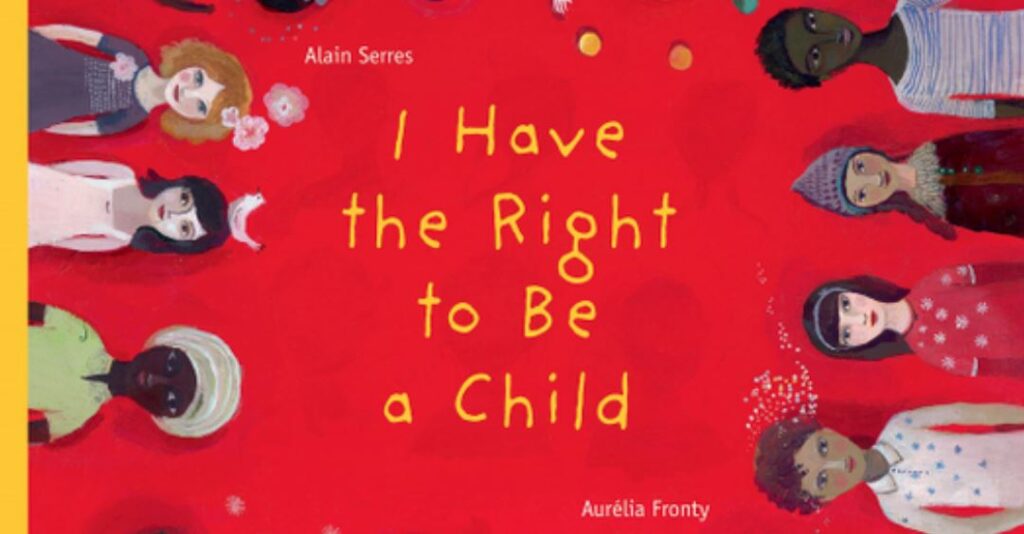
I recently came across a beautiful children’s book, titled ‘I have a right to be a child’ by Alain Serres and Aurelia Fronty. This colourful and engaging book gently introduces children to the concept of human rights and more specifically to their rights as children. Drawing on the United Nations Convention of the Rights of the Child, it takes sometimes challenging and confronting topics—like the right to be free from violence, war and discrimination—and makes them accessible and grounded.
‘I have the right to never experience the storm of war or the thunder of weapons. I am afraid of guided missiles and smart bombs.’
One of the most fundamental rights people in open and fair societies all value is the right to express themselves, without fear of violence or discrimination. This is beautifully captured in the book.
‘I have the right to express myself completely freely—to say what I truly think about everything, even if it doesn’t always please my dad, to say exactly how I feel, even if it doesn’t always please my mum.’
A counsellor who works in a school recently told me that people rarely ask children the ‘Miracle Question’ (If you woke up in the morning and a miracle had happened overnight, what would be different?’). She said they often have wonderful answers; answers full of insight and freshness.
I wonder how the world might be different if we stopped, sat down with our children and really listened when they shared their answers to this question.
Perhaps if we become more skilled at genuinely including the voices of children in future planning, they may surprise us and come up with innovative and left-field solutions we may never have thought about on our own. Of course, we may have to sacrifice a few of our comfort zones and KPIs, get our hands a bit dirty, use the apple-green texta (that actually smells like apples!) instead of the blue pen, sing a few Wiggles songs, jump a rope or two, but hey, all in the name of saving the world.
How do you include the views, ideas, feedback and suggestions of children in your program or school? Have you got any innovative and practical suggestions for prioritising children’s rights and hearing their voices? We would love to hear from you—feel free to share your thoughts below.
Dr Sue King-Smith
Tell A Trusted Adult is a resource that is designed to help children express, and help adults hear, what children have to say about feeling safe or unsafe.
I shouldn’t be at all surprised by the creative ways Innovative Resources’ tools are used in classrooms, in the playground, in groups, or on the family fridge. But every time I deliver training or a workshop, I hear incredibly innovative stories from people—social workers, teachers, early years educators, counsellors, parents and others—about how they’re using the cards in unexpected ways.
So, I thought I’d share a few stories with you. Hopefully they inspire you, as they’ve inspired me.
can do!
In a recent tools workshop, we were unpacking new resources and I asked the educators to open up the Can-Do Dinosaurs (one of my favourites). Almost straight away, I could hear people talking about how the cards would resonate with the children they worked with.
Once we were settled, I asked them to choose two cards for a child they were currently working alongside, and then ask themselves, ‘What have you noticed?’
As the educators shared their stories, what really resonated with me were the smiles on their faces.
I then asked, ‘How do you share what you notice?’ and, ‘How do children share what they notice about others?’
After giving this some thought, one educator said, ‘We have the digital resources, we could create a set of lanyards that children could be given when we noticed an act of kindness—if they were a good friend, or they were careful, or helpful.’
The educators spoke about the logistics and how they would involve the families. They talked about creating a photo wall with the children wearing their lanyards.
Then one educator said, ‘Wow, imagine if the children were able to give lanyards to their peers when they notice them using a strength, like being brave or listening.’
I really enjoyed hearing the educators move beyond their first instincts and ideas … expanding their thinking to empower the children.
We know that if the children embed their learning in actions and are encouraged to proactively look for examples of peers using their strengths, it creates neural pathways and those behaviours start to become normalised.
And what a fun way to do it!
using card sets with our favourite books
In a recent workshop, a Grade One teacher (6/7-year-olds) spoke about reading the book, We’re Going on a Bear Hunt (one of my children’s favourites).
When they came to the last page, as the bear was wandering into a dark horizon (sorry, spoilers), a child stood up and got a pack of The Bears cards.
He then asked the other children, ‘How’s the bear feeling?’
The teacher recalled how, in that moment, she decided to sit back and let the children run the room. She spoke about watching them creating space for everyone to have a chance to speak.
The children all described how they thought the bear in the book was feeling, from sad, to mad, to really sad. Then, after some discussion, the children spoke about how the bear was exhausted and needed to get home ‘cos’ he was late and he needed to be there tomorrow to make a new friend.
The teacher then talked to the children about how we may all be looking at the same bear, but because of our different life experiences, we may interpret what the bear is feeling differently.
WOW!
I recently read The Salt Path by Raynor Winn, and it reminded me that becoming homeless can happen to anyone, anytime. As she says in the book:
‘We are all just a slip away from losing everything we have. Life is precarious, and we should be grateful for what we have while we can.’
After losing their home and income, Winn and her husband, Moth, pack an old tent and some basic camping gear and walk the 630-mile South West Coast Path in England. Their tent becomes their home for several months. They ‘stealth’ camp along the way as they don’t have money to pay for campgrounds and find incredibly resourceful ways to make their meagre income stretch to get them through day to day.
They share the path with day hikers and thru-hikers who are on vacation, walk shoulder-to-shoulder, share cups of tea and stories, but they know they are different. They are homeless.
Winn gives us a profound and moving insight into the stigma (real and self-imposed), precariousness, uncertainty, danger and sense of dislocation that comes with being homeless. She is walking side by side with people on the path, but she is worlds apart; adrift, scared, exhausted, burdened, stressed, living in a parallel world.
what if you become homeless as a child?
As an adult, this is an incredibly confronting experience for Winn, but imagine how it impacts on a child? If your school friends go home at night, have access to food and clean clothes, have a place to do their homework, are involved in extracurricular activities, have money and transport to go to social events, have sleepovers, and you can’t do a lot of these things, how would it feel?
Like Raynor Winn, it must feel like you are living in a ‘parallel world’, but as a child, you probably have much less capacity to understand the context or name what you are feeling.
children and homelessness in Australia
When we think of people who are homeless, the stereotype of an older man living in a doorway still comes to mind for many people. While there are many older men experiencing homelessness, this is only part of the story.
The Centre for Excellence in Child and Family Welfare provides the following statistics:
26,918 children had contact with Victorian homelessness services in 2018-19, accounting for almost 1 in every 4 people seeking assistance
22 per cent of people experiencing homelessness in Victoria at the 2016 census are children
With the cost-of-living crisis hitting families hard, and a lack of affordable or public housing, homelessness is on the rise.
reasons for child homelessness
In an article called, ‘Creating change for children in homelessness’, StreetSmart Australia is clear that poverty is a significant contributor to the number of children who are homeless:
‘Poverty is a key driver of homelessness for children and their families, driven by a chronic lack of affordable housing. Right now, 761,000 children under 15 years [in Australia] are living in poverty – that’s 1 in 6 kids.’
For young people, physical or sexual abuse, violence, neglect, family conflict, or other forms of trauma in the home, may also be sources of homelessness.
Streetsmart also suggests that, ‘Children are increasingly facing homelessness … after losing a tenancy and having to re-enter the rental market’.
homelessness and mental health
Mental health can also be a major contributor to homelessness. If parents or carers are experiencing mental health issues, it can be difficult to find and maintain work, which in turn can make it difficult to maintain a home.
As Misson Australia notes:
‘A deterioration of mental health can trigger additional challenges that a person can experience through no fault of their own, such as:
job loss or ability to attain employment
reliance on alcohol and other drugs
loss of ability to sustain or qualify for tenancy
breakdown in relationships and lack of support systems
feelings of isolation
deterioration of physical health and/or additional medical expenses.’
Being homeless can also impact on a child’s mental health. They may be living in environments where there is a high level of stress and anxiety, where things are uncertain and changeable, and where resources are extremely limited. They may also find themselves living in places where the physical space, or the people they co-habit with, make them unsafe.
hidden homelessness
Because there is a still a stigma around homelessness, and because we may still carry stereotypical ideas of what ‘homelessness’ looks like, it can be easy to miss the signs that children or young people are experiencing homelessness. Additionally, children and their families may go to great lengths to hide the fact they are experiencing homelessness.
Homelessness isn’t just when children are living ‘on the streets’ (although this is certainly one form of homelessness). They may also be spending the night:
When children have a ‘roof over their heads’, we may not realise they are homeless. Their accommodation may be unstable, uncertain and sometimes unsafe. This can cause children, and their parents or carers, to feel powerless and anxious. Living in a world that looks so different to their peers can also lead children to feel isolated and excluded.
It can be hard to go about life as usual when you’re carrying this stress. In fact, it may take all your energy and focus just to get through each day.
impacts on a child’s development
The Australian Institute of Health and Welfare states that when a child experiences homelessness, the impacts can affect many areas of their health and wellbeing:
Preschool and school-aged children experiencing homelessness are more likely to experience mental health problems than housed children, and some evidence suggests that homeless children are more likely to have physical disability, emotional or behavioural problems than housed children (Bassuk et al. 2015; Clair 2018). Food insecurity is also frequently reported by young people experiencing homelessness, putting them at increased risk of adverse health outcomes (Crawford et al. 2015).
Homelessness can also have a profound impact on a child’s educational outcomes and development:
‘Children living in poverty have fewer resources to buy food, uniforms, and school supplies, negatively affecting their engagement with education and learning. Often these vulnerabilities have long lasting impacts, with research showing that disadvantaged children are 2-3 years behind in reading and maths by the time they are 15.’ Creating change for children in homelessness – StreetSmart Australia
Additionally, homelessness is often associated with ‘decreased engagement in the classroom and, when coupled with frequent school moves, is associated with poor academic achievement’.
In this ABC article about families living in tents around the regional Victorian town of Bendigo, the interviewer highlights how there can be several barriers for children experiencing homelessness in attending and participating in school. These barriers include access to transport, lack of support services and having to navigate complex bureaucratic systems.
For example, sometimes children are unable to enrol without a fixed address.
enrolment at multiple schools, lack of records, gaps in learning
poor hygiene, unmet medical/dental needs, wearing the same clothes repeatedly, fatigue.
Of course, these changes may be the result of any number of factors, so it’s important not to jump to conclusions. However, they could be prompts to gently inquire if the parent or carer is okay and if they need any support.
what you can do to support children in schools and early learning centres
When supporting children and families, it’s important to assume that the parents or carers are doing the best they can for their children within the limitations of their circumstances. By making this assumption, we can be supportive, empathetic and respectful, which is more likely to encourage people to feel we are ‘on their side’ and be more open to support.
In a Launch Housing report, titled, ‘What works for children experiencing homelessness and/or family/domestic violence?’, the authors note that schools can be a protective factor for children and can promote healthy development.
The research shows that schools and early learning providers can play an important role in supporting children experiencing homelessness. Schools can help by creating a continuity of education and by reducing the risk of the child falling behind (which can increase the risk of homelessness, lower educational outcomes and result in health issues later in life). They can also be a source of stability, structure, ongoing relationships with teachers and other students, physical resources like food, clothes and school supplies, and psychological support.
Schools and early learning centres can ensure they create a welcoming environment for all students and find ways for them to actively participate regardless of their living situation. They might do this by:
having snacks and food available for all children
making sure children don’t have to do homework to succeed
having spare clothes, books, stationary, hygiene products, and other school resources
subsidising excursions so that all children can participate
connecting with parents and carers about any supports they need, finding flexible and respectful ways for them to stay involved in their child’s education, and talking about the best ways to contact them (as they may not have a phone).
‘The experience of, and events leading up to, homelessness can expose students to violence, abuse, hunger, trafficking, and other traumatic experiences. Allow students to hold on to personal possessions in class, keeping in mind that any possession may be the child’s only one. Provide well-defined transition procedures from one activity to another and give choices when appropriate to counter the loss of control experienced in their lives.’
noticing strengths
When supporting children, young people and families who are experiencing homelessness, acknowledging that people are doing the best they can under highly stressful and difficult circumstances can help them feel supported and encouraged. Just surviving each day can be an achievement.
It takes a great deal of skill and energy to navigate services, source food, make sure children have clothes and school supplies, and provide a nurturing environment when you are under so much stress.
To negotiate their way through such challenges, children and families have to draw on many strengths, skills and resources. For example, they may be resourceful, creative, organised, flexible, brave, and persistent. They may have resources and supports like family and friends, community, services, schools or food banks. It can be helpful to encourage them to consciously notice and name their strengths, skills and resources, as this can feel empowering and hopeful.
As Raynor Winn, author of The Salt Path and now advocate for homeless services, says of the experience of being homeless, ‘Strength is about more than just physicality. It’s about resilience, determination and finding the light even in the darkest of times.’
If you believe a student may be homeless and you are looking for advice, talk to your Student Wellbeing team or search for local homelessness services online.
Using card sets like Two Worlds, Funky Fish Feelings, Tell a Trusted Adult, Strengths Unlimited or Positive Parenting with children or families may also be a gentle way to open up a conversation about feelings, family strengths, transitions, moving between homes, family conflict, homelessness, and the challenges that might arise as a result of family breakdown.
by Sue King-Smith
Every step we take follows another.
Every step we take precedes another.
The smallest shifts—doing some dishes, putting something away, stopping something, starting something, taking a shower—can all be significant events on a continuum of ‘next steps’, representing our unique pathways through life.
‘A journey of a thousand miles begins with a single step.’ Lao Tzu
When big-picture goals get in the way
As well-intentioned as this practice may be, and as useful as having a goal or aspiration may be, both worker and client can expect big things to be achieved quickly, and yet they may find it hard to get things going. It’s a bit like, ‘Well, we both know what your goals are, let’s just do it!’ Pretty soon these big picture goals seem to slip further and further away, ‘progress’ can feel slow or non-existent, and blame can set in for both client and worker.
On top of this, ‘blank slate’ practice can creep in. This revolves around the concept that someone is starting from an underdetermined beginning—an assumption that can make any step towards the long-term goal seem monumental, or at the very least, hard to achieve. Blank slate practice also encourages workers to think they are somehow responsible for that so-called first step and, quite possibly, that it might not happen without them being involved. Before you know it both worker and client are blaming either themselves or each other for not making big changes or achieving ‘outcomes’.
I started wondering: What could we do that would support both the people we work with (clients of family services, youth or mental health programs) and ourselves as workers, to identify and celebrate the small, next steps that have been, or could be, taken towards long-term goals? What could we do to place the means for the conversation in the hands of the people we work with? What would be a practical, simple and easy-to-use tool that captures the elements of change that are achievable or doable almost immediately?
Next Steps is a resource that attempts to capture the power and purpose behind the simplest of immediate steps one can take on a longer journey. It contains 52 cards made up of 48 colour photographs and four timeframe cards.
The idea for Next Steps arose directly from my practice both as a mental health support worker and manager of mental health programs for St Luke’s Anglicare (now Anglicare Victoria). The people who accessed these services were doing their best to cope with the extremes of life and what their mental illness was throwing at them. At a time when they were struggling to come to grips with the intensity of their lived experience, often we as workers would encourage them to come up with some long-term goals to aim for. Sometimes these goals would be decided for them.
Next Steps changed this approach dramatically. Putting the cards into the hands of clients quickly unearthed a surprising breadth of applications. While some people clearly identified with the immediacy of what might be achieved, others found ways to order the cards into categories, such as what had already been achieved, what other people might identify as achievements, or what might be considered as aspirations.
People also discovered the cards could be organised and prioritised in a variety of contexts such as home or in public, quiet or loud, work or recreation, inside or outside, alone or with others.
These simple, yet powerful photographic images continue to evolve in the hands of those who use them, helping people at every stage of their journey consider their next step.
Author: Andrew Shirres
“People, especially children, respond much better when given positive labels, even if it is a label they intend to pursue.”
I’d been working with this family for several weeks and using the Solution Focused Approach. We’d seen marginal and inconsistent improvement in the boy’s behaviour, both at home and school. He was able to participate in therapy, but it would be a stretch to say he seemed to be enjoying each session. It would be more accurate to say he tolerated the process. That is, until I used the Strength Cards for Kids in a session with him.
The boy was around 9 years old and, as we began to talk, I asked him to find a card that represented who he would like to be going forward. He chose a card and began to describe why he wanted to demonstrate the skill it represented in the future. Then I asked him what he would catch himself doing in the future that would fit with this skill being a bigger part of his life. For the first time since I knew him, he seemed to enjoy the therapy. He seemed to have a true sense of joy as he answered the questions and was very detailed as he described the behaviours he would be exhibiting in the future.
As I sit here writing this piece about our interaction, I’m compelled to reflect on what I think happened and why my young client responded the way he did. It seems to me that people, especially children, do not like being given negative labels such as having ‘ADHD’ or ‘depression’. People, especially children, respond much better when given positive labels, even if it’s a label they intend to pursue.
In this case, my 9-year-old client left the session elated, and two weeks later the parents reported that it was as if they had a whole new child. He was turning in his work in school, following the rules at home and school, and seemed happier than he had been in years.
I have to be honest. When I was originally told about Innovative Resources’ Strength Cards I was not sure I would like them. Not that I had any particular problem with the concept, it was just that I have never really found tools useful in my work. I’ve been working with children and their families for years and it’s one my great professional joys. In this time, I’d never used a tool that I found helpful—until now.
I believe in Strength Cards for Kids now because I see the power of assessing clients for positive labels that will allow them to feel empowered and valued. Such tools have a role to play, and it’s time they found their way into our practice.
Elliott Connie is a family and marriage counsellor based in Keller, Texas. He’s also a bestselling relationship authorand an internationally-known speaker and podcaster, who has trained clinicians around the world to use Solution Focused Brief Therapy.
Elliott grew up in Boston and has worked with leading solution-focused practitioners in the US, UK and Sweden.
To learn more about Elliott’s work, publications and to tune in to his YouTube videos, visit www.elliottconnie.com
A gift is not always something that is wrapped up with brightly coloured paper. Not all gifts are the kind you can place under a Christmas tree or tuck under your arm when attending a birthday party. While tangible gifts can be utterly delightful (and sometimes disastrous) many gifts are not ‘things’ at all.
On a daily basis most of us give and receive gifts that are intangible. Such intangible gifts may come in the form of encouragement in times of need, good advice, a smile or a helping hand, or someone enacting a virtue such as honesty or patience.
Whether a gift comes wrapped in polka dot paper or is of the intangible kind, giving has a wonderfully circular quality. You could almost call it ‘Janusian’, a word derived from ‘Janus’, the ancient Roman God who is represented by a head with two faces—each facing in opposite directions. When a gift is given, the benefit flows to the recipient and in the opposite direction back to the source—the giver. It is the recipient who receives the gift and yet it is the giver who experiences the fruit of their own generous action; the intangible inner atmosphere that is generated via the very impulse to give.
What is the effect of such giving on the giver? One person’s story can serve as inspiring testimony about this: One month after her wedding day, 33-year-old Cami Walker was diagnosed with multiple sclerosis. She was soon in and out of emergency rooms with alarming frequency as she battled the neurological condition that left her barely able to walk and put enormous stress on her marriage.
Then, seeking relief for her condition, Cami contacted a friend, an African medicine woman named Mbali Creazzo, who told her to give away 29 gifts in 29 days. The gifts, she said, could be anything, but their giving had to be both authentic and mindful. At least one gift needed to be something she felt was scarce in her life.
Many of her gifts were simple—a phone call, spare change, even a Kleenex. Yet these acts of kindness were transformative. Cami has subsequently written a book about how this simple daily practice of giving affected her outlook and her medical condition. Subsequently, over 11,000 people in 48 countries have signed up to embark on their own 29-day giving ritual and raised thousands of dollars for charities.
The life-giving properties of generosity have long been known. Back in 2008, a British government think tank called Foresight issued a report called ‘Mental Capital and Wellbeing’. In the report, giving to neighbours and communities was cited as one of the five critical elements of wellbeing and mental illness prevention.
In an article called It’s Good to Give (Ode magazine, Dec 2011 Vol 8, issue 6; odewire.com), author Diana Rico points out ‘…the word community comes from the Latin communis, which means bound together—and that word, in turn, has as part of its root the word munus, meaning gift. So giving is the glue that binds us as a group, creating a system of exchange and acknowledging our interdependence as humans.’
As a final activity in your team this year, you may want to ask each person to think of someone they know who may be doing it tough right now—it could be a family, an individual, a community or even a country. Then choose a card from day Everyday Strengths(published by Innovative Resources and illustrated by Trace Balla) for a gift, strength or blessing you would wish for them.
Acts of everyday kindness are all around us. They can come in the form of a kind word, a helping hand, a nod of appreciation, an encouraging smile, a story, a wave, a letter, a gentle caution, a friendly visit or a meal shared. We could think of each one of these acts of everyday kindness as a messenger of hope.
The kindnesses that people show us, and that we show others, can bestow a powerful blessing on the recipient.
When a smile, a kind word or a helping hand arrives at the right time and in the right form, it can feel like a gift of hope to the one who receives it.
And it’s not only the recipient who may feel a strong sense of gratitude. The giver too experiences the glow of their impulse towards caring and generosity.
It’s as if in thinking and acting out of kindness to another, we bestow something of the intended gift upon ourselves. In this way, even if the recipient does not choose to take up the intended kindness (perhaps with good reason), a true kindness is never wasted.
Even big challenges and sad times can contain blessings—both obvious and hidden. Such gifts may be in the form of the wisdom that we gain from our hard-won lessons and experiences, or even the simple awareness that we want to do something differently next time.
Perhaps it can be said that those who are most happy are those who have developed the capacity to notice and savour moments of kindness and extract the learning from the challenges along the way. Perhaps tiny kindnesses are scattered throughout everyone’s day, but many of us may be more schooled in noticing what is wrong, and so we are missing out on their frequent appearances. Perhaps we have nurtured a kind of myopia to the everyday messengers that visit us on a daily basis?
Everyday Strengthsis a set of cards for thinking and talking about the myriad ways we give and receive. Not only the big, earth-shattering—and rather rare—moments of good fortune, but all the tiny, everyday ways in which our lives are enriched by our connections with others and with the natural world.




 After giving this some thought, one educator said, ‘We have the digital resources, we could create a set of lanyards that children could be given when we noticed an act of kindness—if they were a good friend, or they were careful, or helpful.’
 chronic lack of affordable housing. Right now, 761,000 children under 15 years [in Australia] are living in poverty – that’s 1 in 6 kids.’
 Preschool and school-aged children experiencing homelessness are more likely to experience mental health problems than housed children, and some evidence suggests that homeless children are more likely to have physical disability, emotional or behavioural problems than housed children (Bassuk et al. 2015; Clair 2018). Food insecurity is also frequently reported by young people experiencing homelessness, putting them at increased risk of adverse health outcomes (Crawford et al. 2015).
 role in supporting children experiencing homelessness. Schools can help by creating a continuity of education and by reducing the risk of the child falling behind (which can increase the risk of homelessness, lower educational outcomes and result in health issues later in life). They can also be a source of stability, structure, ongoing relationships with teachers and other students, physical resources like food, clothes and school supplies, and psychological support.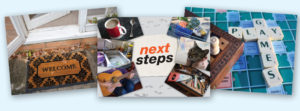
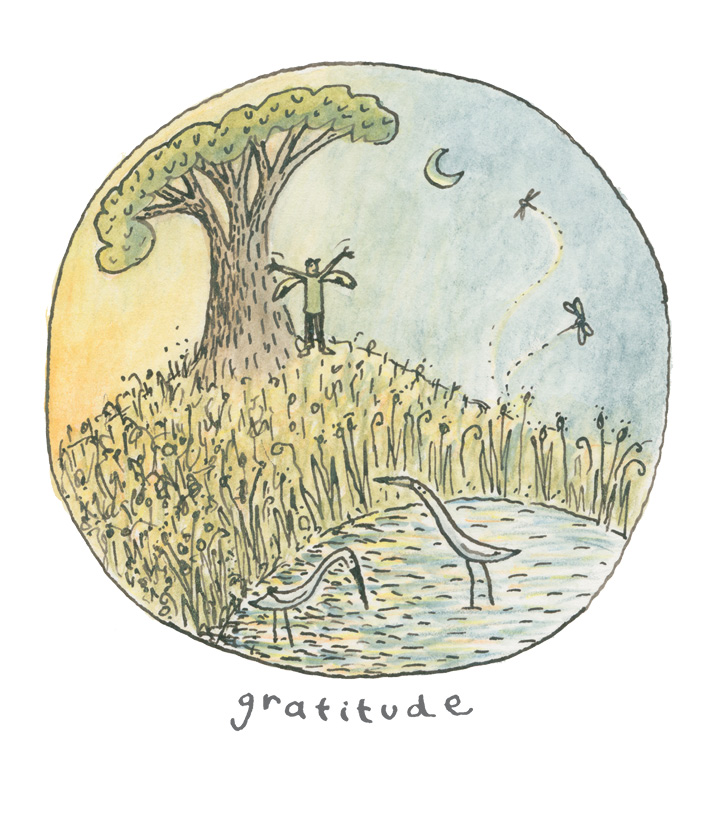 quality. You could almost call it ‘Janusian’, a word derived from ‘Janus’, the ancient Roman God who is represented by a head with two faces—each facing in opposite directions. When a gift is given, the benefit flows to the recipient and in the opposite direction back to the source—the giver. It is the recipient who receives the gift and yet it is the giver who experiences the fruit of their own generous action; the intangible inner atmosphere that is generated via the very impulse to give.
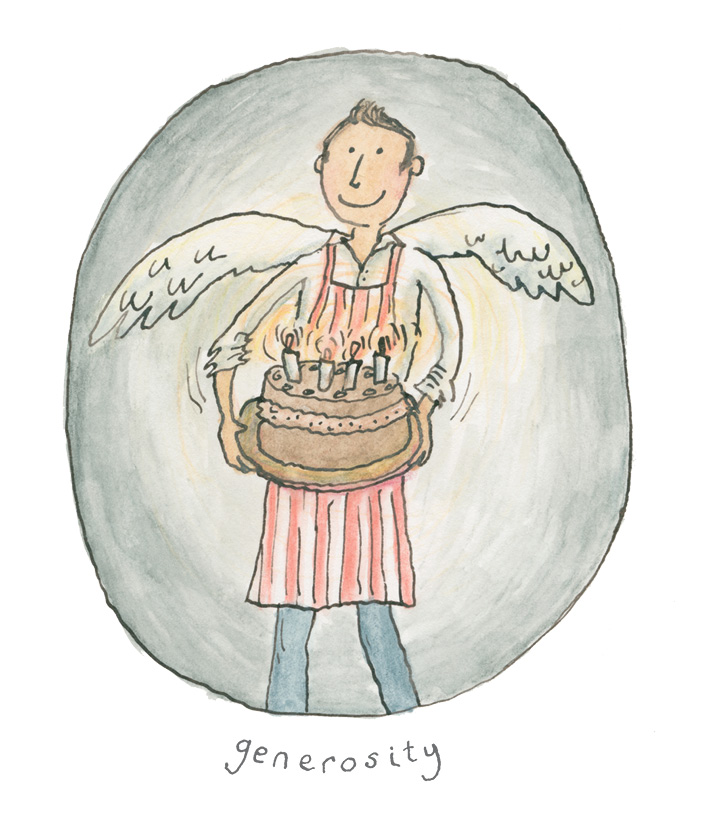 In an article called It’s Good to Give (Ode magazine, Dec 2011 Vol 8, issue 6; odewire.com), author Diana Rico points out ‘…the word community comes from the Latin communis, which means bound together—and that word, in turn, has as part of its root the word munus, meaning gift. So giving is the glue that binds us as a group, creating a system of exchange and acknowledging our interdependence as humans.’