
Join the conversation! SOON (Seriously Optimistic Online News) keeps you connected with everything Innovative Resources – subscribe today!

If your situation is urgent, you can contact these services 24-hours a day, 7 days a week

CLOSE (X)

Basking in the warmth of stories

Cate Kennedy’s foreword for Storycatching (Innovative Resources, 2008) may have just turned 16, but it’s still one of the most beautiful pieces of writing about the shared experience of storytelling you’ll ever read.

When Cate references the influence of TV, you realise this resource pre-dates the smart phone (as we now know it), but the cards’ quirky, retro designs haven’t aged a bit. They’re still sparking transformative conversations and stories about the joys and struggles of life … in the classroom, in therapeutic settings, and anywhere people want to reflect upon feelings, memories and attitudes to life.


Just as some people are born with a fine ear for music or the ability to kick a football straight every time, some people seem born with a knack for recognising a good story when they hear one. They know how to remember its important ingredients in the right order so they can tell it for themselves. They sift through their own experiences knowing which ones are worth passing on. I use the word ‘worth’ cautiously because I see people’s inherent nagging doubt that their experiences are worth anything as part of the problem. ‘Nothing interesting ever happens to me,’ they will say, or ‘I’ve got nothing worth telling a story about.’
Yet what breathes life into a story is the storyteller’s faith in its power. It is their total conviction which makes us sit still and pay attention, and find something in what we’re being told which touches a chord deep inside us. I love it when someone says of a story: ‘That was pretty close to the bone,’ or ‘That cut really deep.’ A story which hits on something true gets us deeply inside, right down near the bones. And sometimes that recognition comes with a grimace of pain or a lump in the throat.

I heard two stories recently that have stayed with me. One was told to me by an 85-year-old man. In the course of a casual conversation he described how he remembers, from his childhood, a woman who lived on a neighbouring farm. The men were often away for days at a time, and during one of these lonely periods her fire went out. She walked eleven miles to a neighbour’s farm for a match and then walked home again.

I’ve been thinking about this story, planted in my subconscious, uncurling and growing like a vine. Compulsively, almost helplessly, I have been filling in the blanks. How did she feel when she realised her hearth was cold, and what she needed to do? What clothes did she pull on and what did she take with her for that long walk? And when she arrived, did she feel an aching longing to stay at her neighbour’s house, resting in their company rather than face the solitary desolation of that long trek home again to a cold and empty house? I imagine they gave her more than one match, and I imagine her clutching those matches in her pocket for comfort.

I circle around the story, wondering about the hold it has on me. I begin to see the underside of it, like the stitches in a garment, the terrible loneliness of pioneer women, their heartrending stoicism, their hardship. I wonder if I can make something out of it, something else, to touch your heart with.

I heard another story in a documentary, told by a Jewish survivor of Auschwitz. After the war he had returned to his former family house in Germany and knocked on the door. The German occupant admitted him uneasily, well aware that he was surrounded by the Jewish man’s family possessions.

‘I know why you’ve come back,’ he said finally to the Jewish man. ‘You hid money in this house, didn’t you? Now you’ve come to take it.’ No, the Jewish man had said, his family had no money to hide. The German didn’t believe him. ‘Go and get it,’ he insisted, ‘and you and I can go fifty-fifty.’

At that, the Jewish man had turned and left the house without saying anything more. The next time he visited the town he went to the house again and found it an uninhabitable wreck. Walls were knocked out, plaster had been torn off, floorboards pulled up. He spoke to the neighbours. ‘After you left,’ they said, ‘he couldn’t sleep. He couldn’t believe there wasn’t a fortune hidden somewhere. He tore the house apart looking for it. It sent him broke. He couldn’t afford to repair anything so he left and we’ve never seen him since.’

Here, lifted from reality, is a fable so perfect it could be told to us by Aesop, or Scheherazade, or Jesus. Like all great fables there’s no need to provide a moral—the story just sings with its own simple truths about theft and treasure and guilt. How can we not tuck it away in our pockets, and use it to light a fire somewhere, to keep our listeners warm?

I like the idea of a story being like a fire. It gives me heart to imagine tribes of humans sitting around fires telling stories, different voices speaking up with their own contributions. One memory provokes another, one joke triggers a fresh one, and on it goes until the fire dies down and we are left basking in the warmth of our circle.

Somewhere over the last couple of hundred years we have forgotten the power of this simple, crucial connection. Our hearth is now the flickering blue light of the TV set in the corner, which never lets us interrupt and contribute something of our own; which never stops and lets us contemplate, and which usually isn’t even reflecting a life or culture which is recognisably our own.

I love the stories best that have been passed down from fire to fire, through generations, very often without being written down for hundreds of years. You know those ones are going to cut right to the bone somehow, because thousands of people have listened to them, remembered them and thought they were worth retelling. Like songs that work in the same way, those stories are going to have a chorus worth singing.

That’s where the ideas come from—the well of emotion that fills from inside, the small painful memory that won’t let go, the tale that made me nod my head that I will carry with me like a talisman, ready to pass it on to you in the same spirit. Far from being worthless, it seems to me, more and more, that these are the only human legacies worth anything at all.

Maybe people have forgotten that what they’re carrying is the very thing they need—the urge to share what happens to them. We tear down walls looking for hidden wealth, when we had it in our pockets all the time.

Here is a pack of cards for you—each of them a tantalising path into a place worth exploring. Shuffle through them slowly, or spread them on the floor around you. So many doors asking to be knocked on! Light a bonfire in your listener’s imagination with them, listen in return, and be reminded of something else worth telling and retelling. Amazing but true—you’ll remember more. You’ll find laughter you’ve forgotten and tears you haven’t shed. Pick out another card and see where it takes you.

I don’t know you yet, but tell me a story and I can start. Those voices you can hear around the fire—as people pick up those threads and smile with recognition, understanding and a kind of relief—those voices are what make us human. That circle is all we have—our whole past and future is tied up in there. Hold onto it. Hold everything you want to share like cards in your hand, because soon it will be your turn.

 

Cate Kennedy is an award-winning author who has published two short story collections, a novel, three poetry collections, and a memoir. Her stories have appeared in many publications including The New Yorker, the Harvard Literary ReviewWorld Literature Today . Cate is the recipient of the Queensland Literary Award for her collection, Like a House on Fire, and the Victorian Premier’s Literary Award for her poetry collection, The Taste of River Water. Her novel, The World Beneath, was awarded the People’s Choice prize in the NSW Literary awards and has been translated into French and Mandarin.

I was recently listening to an episode of the fantastic podcast, The Imperfects, (part of The Resilience Project) where Dr Emily introduced the idea of ‘micro moments of joy’.

The idea is that wherever you are and whatever is happening, if you choose to notice, you will find a small moment of beauty, meaning, connection or something else that brings you joy.

What are ‘micro moments of joy?

If you’ve ever done any mindfulness training, you’ll be familiar with the exercise where you centre your mind by focusing on what you can see, hear, smell, touch and taste.

This sensory exercise is designed to help focus your attention on the here-and-now. Often when we’re stressed or feeling low, our thoughts get caught up in either the future or the past. This exercise is great for bringing us back to the present.

Focusing on micro moments of joy offers a different approach, an invitation to notice, and savour, the small moments of happiness or meaning that happen to us every day; moments we often miss because we aren’t paying attention or are thinking about the next thing we have to do.

Micro moments may be found in any facet of life. Here are a few common ones.

  • Beauty, wonder and awe – these moment might be found in the natural world, in music, art or science, for example.
  • Physical or biological – eating something delicious, feeling the sun on our skin, resting after a strenuous walk, patting a dog, or hugging your child or partner.
  • Relationships – we often share small, profound moments with partners, children, family, friends or community.
  • Meaning – when we do something or witness something that aligns with our values, we may experience a spark of joy. This might also happen when we feel we are making a difference, connecting with our spiritual beliefs or supporting others through a tough time.

All it requires is taking a few minutes each day to stop, draw breath, look around, and notice.

Micro moments of beauty, humour, awe and connection are all around us—we sometimes just forget to look. The good news is, it’s really easy to learn.

Why focus on micro moments of joy?

Often, we think big things need to happen to change our level of happiness—winning  the lottery, a new relationship, a career shift or a bucket list holiday—but actually, an accumulation of very small moments of joy can have a big impact.

The BIG JOY project, an initiative of The Greater Good Science Center, invites participants to rank their happiness after completing 7 ‘micro acts’ of wellbeing over 7 days. So far, the study has surveyed over 22,000 people from over 22 countries and the preliminary findings suggest that these simple acts result in a 26% increase in emotional wellbeing, demonstrating ‘that small, daily activities can lead to meaningful increases in emotional wellbeing, positive emotions, agency over happiness and coping, and social connection.

In Julia Baird’s beautiful and profound book, Phosphorescence: on awe, wonder, and things that sustain you when things go dark, she describes how research has shown that ‘people who regularly feel awe are more likely to be generous, helpful, altruistic, ethical and relaxed’ (p. 24).

Focussing on micro moments of joy, rather than happiness, can also have other benefits. In this article in The Conversation, Finding joy in the little things really can benefit your wellbeing – a scientist explains, the author describes how:

‘Another key aspect of micro-joys is the fact that they centre on cultivating moments of pure joy—not happiness. This is important, as studies have found that the pursuit of happiness can be counterproductive, potentially leading to diminished wellbeing and heightened loneliness. While happiness is a state that people aim to achieve, joy encompasses the processes that may result in happiness.’

Does it work?

I thought I’d give it a try.

After I finished listening to the podcast, I was sitting in my car at the traffic lights in a fairly dismal industrial area. Piles of pallets sat alongside chain-link fences, rubbish was piled against bland concrete buildings, there was very little greenery. Thinking I probably couldn’t find anything that ‘sparked joy’ here, I challenged myself to find something.

As I looked across the concrete path, I noticed a rogue weed had grown from between two cement pavers. Swaying gently, its yellow flower and new leaves had caught the late afternoon light. It was so unassumingly beautiful in its resilience, I was surprised to find that I was profoundly moved.

And it did remind me that if we choose to look, these micro moments can be found anywhere.

After this, I found that I could find a micro moment of joy just about anywhere, if I put my mind to it. In fact, I made a bit of a game of it and tried to find things even in the most seemingly mundane and boring situations.

And you know what? It did leave me feeling more hopeful. Plus, it was quite ‘more-ish’.

Of course, this was just my experience. I encourage you to give it a try and see what happens.

How can it be helpful in your work with others?
If you are a social worker, educator, counsellor or parent, encouraging people to focus their attention on the micro moments of joy in their life can help bring a sense of hope into situations that may otherwise feel overwhelming or un-fixable. It’s also a great skill for children to learn, to support their wellbeing and resilience.

Additionally, supporting people to bring their awareness to the small positive things in their lives can have physiological benefits:

‘On a physiological level, engaging in micro-joys can improve our vagal tone. This is important, as the vagus nerve is responsible for our body’s autopilot system, which regulates the processes we don’t have to think about—such as our heart rate, digestion and breathing. The vagus nerve is also linked to mood and anxiety disorders, and regulating stress, so the more stimulated it is the better off you may be.’

In strengths-based terms, micro moments of joy could be thought of as ‘exceptions’. They can be the small moments when a problem or issue is absent, or lessened. They can also be used to help challenge cognitive errors like catastrophising or generalising, and disrupt ruminating thoughts.

By learning to take a step back, even at the height of a difficult experience or feeling—to consciously look for a small positive—we can create an opportunity for a new perspective, a tiny glimmer of hope, a moment of reprieve, or ‘calm in the storm’.

Unlike other forms of mindful practice (which are also incredibly useful and helpful for many people), these moments can be found anywhere, anytime. There is no right or wrong way to do this, or a correct time. It doesn’t need a quiet or specific space, which makes this practice highly accessible and easy to build into everyday life.

Micro moments of joy are as unique as people and each person will focus on the small moments that are meaningful to them. For a person who loves nature, those moments may be found primarily in the natural world—a bird on the balcony, the fragrance of a flower, an unusual cloud formation, toes in the sand at the beach. For someone who values relationships, those moments might be found in a hug with a family member, a laugh shared with friends or a flash of pride at a community event. For someone who loves music, they may tune into the sound of water or a favourite song.

This means that micro moments of joy are inherently person-centred, and personalised.

Encouraging people experiencing tough times to embed this practice into daily life can help them create a sustainable skill they can use forever. You might even encourage them to record these moments—in a journal or on a phone, or maybe as photos or drawings—to look back on in difficult times.

Over time, this can also help people tune into what they value. What things consistently bring them joy? Are these more in the realm or relationships or nature? How can they bring more of these experiences into their lives?

The more we train our minds to focus on moments of joy or meaning, the more we will naturally start to look for positives, which, over time, can result in a change of perspective or outlook on life. As the old saying goes, ‘you get what you focus on’. This can contribute to long-term mental health and help create a sense of empowerment.

How to get started

The key to doing this is stopping and taking time to notice. How often have you eaten a favourite food while watching TV—do you even notice how it tastes? Are you distracted when a loved one gives you a hug or says something nice? How often are you scrolling social media while in your garden or waiting for a bus?

Noticing micro moments of joy is an action. It requires attention and making a choice to deliberately seek out and focus on the world around us. It’s an invitation to find the small positives, even when everything may be feeling bleak or overwhelming.

It’s finding the swaying weed in the crack of concrete, watching a small child snuggle into their parent’s neck in the checkout line, noticing a sunset or a small moment of kindness, or finding pleasure in your child’s drawing of a wonky lopsided dog.

If you take the time to stop and notice, often a surprising thing happens. You start to gather a collection in your mind of small, beautiful, hopeful moments that continuously grow in number and power.

Suddenly, you have a ready-made constant reminder—accessible anytime—that the world, even in its bleakest moments, is a wonderous place.

by Sue King-Smith

After so many of you contacted us to ask about bringing back Angels, we decided to revitalise this much-loved card set, with a new name and a fresh new look.

But don’t worry, we’ve kept all the beautiful, original watercolour illustrations by award-winning artist and art therapist, Trace Bella!

The 52 whimsical cards in Everyday Strengths each feature everyday people using their personal qualities and skills to connect, share, give, play and find joy in the simple pleasures of life.

Designed to encourage people to share their stories, each card includes a word and image to gently prompt people to reflect on the things that matter most to them.

Many people see relationships as a big strength in their lives. The cards include lots of images of the different ways we can connect, showing all kinds of relationships, from family and friends, community and the wider world, even our relationships with pets.

Nature also features strongly in the cards, inviting us to ponder the different ways the natural world contributes to our sense of wellbeing.

For some people, talking about their strengths can feel a bit confronting or overwhelming. In fact, some people may never have thought about themselves as having strengths. The soft colours and organic lines of Everyday Strengths bring a sense of calm and peace, which can help people relax into a simple, reflective exploration of strengths.

Enjoy using the cards to help people explore:

  • personal qualities, skills and knowledge
  • values and beliefs
  • what they appreciate about the important people in their lives
  • strengths they admire in others or would like to grow in themselves
  • what they are grateful for
  • how they connect with the world around them.

The characters in the cards—from adults, babies and dogs—retain their wings from the original Angels cards. This quirky element can open-up a whole new set of lighthearted questions, like:
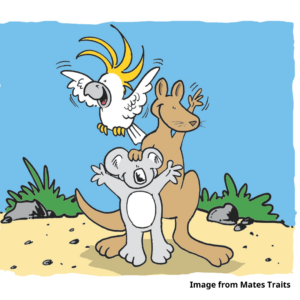
  • What strength would help you spread your wings?
  • Which card reminds you of a time you took flight?
  • What do the wings mean to you?
  • Who helps to lift you up? What strengths do they have?
  • Which strength would help you get a bird’s eye view of the situation?

Whether you are a counsellor, teacher, social worker, or psychologist, Everyday Strengths is perfect for having gentle, reflective conversations about the vast array of strengths people draw on everyday. Ideal for use with people of all ages in groups or classrooms, with families or one-on-one.

Available in late 2024. Preorder now!


Mat Jones is more than just a sublimely talented illustrator, designer and interpreter of strength-based ideas, he’s part of the fabric of Innovative Resources (IR). For almost 20 years, his illustrations have graced some of our most iconic card sets and his designs are central to our branding and messaging.

His latest illustration project has been the reinvention of the classic card set Mates Traits (originally published in 2006), soon to be released as Respectful Relationships. With a fresh new look and colour palette, the set features 11 brand new cards and another 10 with updated wording.

The all-new Respectful Relationships will spark those important conversations about what makes great relationships tick, how we can model respectful relationships for our kids, and how diverse human relationships can be.

With Respectful Relationships due off the press at the end of November, we thought we’d take the opportunity to sit down with Mat and delve into his journey with Innovative Resources.

SOON: Tell us a bit about your background in illustration and design … have you always loved drawing?

Mat: As a kid, watching morning cartoons and reading comics, drawing and illustrating were always a constant. Suddenly, it’s the closing stages of Year 10 and I’m putting together a folio comprising illustration, line art, photos and a single piece of offset printed material—an A2 sized school calendar, all 100% hands-on, cut and paste. This happened a whole year before I would be introduced to an Apple Mac desktop computer.

The folio secured me a place at La Trobe University Bendigo, and the following three years were a blur of finished art production (film! bromides! paste-up!) with a healthy dose of drawing (pencils! conte! naked people!), photography (darkrooms! chemicals! film!), painting, air-brushing and other hands-on approaches to creating quality visual art. Eventually we were introduced to the new-fangled technology of the digital realm—computer generated art.

While computers have been a splendid tool for churning out art files in gangbuster style, I’ve been most fortunate throughout my years as a graphic designer to be able to grab a pen and draw pictures on demand (my party trick). Every studio I’ve ever been a part of has, at some stage, required illustrations created at the drop of a hat, drawn on an A4/A3 sheet of paper, scanned and given a digital makeover. It’s still more fun than a barrel of monkeys!    

SOON: You’ve had a long association with Innovative Resources … how did you first enter the IR orbit?

Mat: In the early 2000s, my then girlfriend (now wife) suggested I deliver some work samples to the place where her mum worked—a bookshop/publishing company that was crammed full of cool card sets, books, puppets … and other great stuff. Suddenly I found myself having a round-table discussion with the editorial team. As it turned out, a random illustration I’d presented of a quirky fish took their fancy, and I was asked to produce a few concept roughs for a picture book. I came away from that initial meeting feeling inspired and optimistic, and while the quirky fish concept never progressed, I was invited to submit a series of roughs for another project titled Mates Traits*.
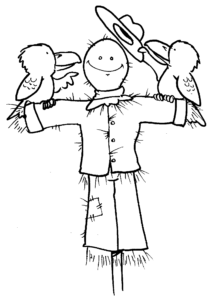
*Recently re-imagined and revitalised as Respectful Relationships.

SOON: You’ve illustrated some iconic IR card sets, including Strength Cards for Kids, Body Signals, Cars ‘R’ Us, and the new Respectful Relationships cards … do you have a favourite project, or is it a bit like being a dad?

Mat: Yes, much like my relationship with my kids, those card sets are ‘all my favourite. Each and every project has been a privilege and a pleasure to contribute to. The development process continues to provide plenty of fabulous conversations and belly laughs.

SOON: What’s your process for creating characters and scenarios? For example, in Strengths Cards for Kids, how do you decide on a meerkat lifesaver, a lion reading in an armchair, or a rhino playing chess with a turtle?

Mat: Being a big fan of the natural world and having watched and consumed a lifetimes-worth of cartoons and comics, I have a stockpile of nature/critter/cartoon-based thoughts in my mind and simply thrash out concept illustrations at the drawing board. During the product development process, sitting at the round table with the team, tends to unleash a flurry of creative ideas from everybody which fly back and forth and result in cool outcomes like the lifesaving meerkats, or game-playing critters. 

SOON: What does your creative process look like? Do you start with pen and paper, or do you work digitally?
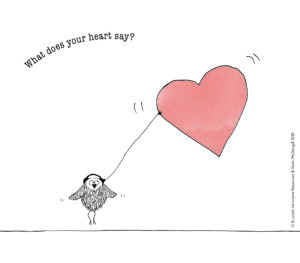
Mat: I continue to use traditional markers and paper, perched at a drawing board. The results of initial doodling are quickly scanned and given the digital treatment for review. Anywhere, anytime, I always have a notebook/marker tucked away in my bag in case sudden inspiration hits me, or something needs to be drawn quickly. 

SOON: You’ve been in the biz for over three decades now … what are some of the biggest changes you’ve seen?

Mat: Computers and design software have kicked-on in leaps and bounds. Once upon a time we gathered round an Apple Mac LC2 and swooned at the technology. Mobile phones and the internet have been quite a wild ride, with web-based design now occupying a far greater amount of my time. 

SOON: What do you love about working at Innovative Resources?  

Mat: Not only are the team at IR a fabulous bunch to rub shoulders with, but the opportunity to create and contribute to outstanding products never loses its appeal. Producing resources that reach a global audience and have the ability to start positive conversations and make a world of difference to a lot of people continues to be an absolute joy.

Eating Disorders, and mental illnesses come in all shapes, sizes, colours, ages, race and social economic levels. Throughout my lived eating disorder experience I have had to deal with weight stigma and being told things like “you don’t look that sick or underweight”, “your BMI is too high for our program”, or “it’s not like you are taking diet pills or vomiting”. All of these statements had an impact on my mental health, self-worth and made accessing support all the more challenging.

In our society there continues to be a thin ideal, we see this on Facebook, Instagram, in the abundance of weight loss and diet pill ads, in advertising and in the words spoken in our society about bodies and appearance.

If I am honest, in times of stress I do have thoughts about changing my body and how that would help deal with stress, emotions and feel better in myself. What I have learnt through my experience is that no number on the scale can help me deal with stress or emotions. If anything, the number on the scale leads to more stress, low self-worth and distress and perpetuates the negative messages about body image that present in society and at times within myself.

When I find myself thinking that changing my body is the answer to stress I try to take a step back, remember what my eating disorder took from me, and what being in a better space has given me. At these times, I reflect using Eating Disorder and Other Shadowy Companions cards.

Cards that question “What does the eating disorder voice say?” allow me to notice and acknowledge unhelpful thoughts. The card “What does your heart say” reminds me to listen to my heart and reconsider what actually will help me and allow me to reject the internal and external messages about changing my body being the answer.
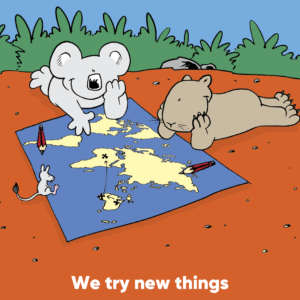
We are bombarded with messages about body dissatisfaction and given solutions we can buy to “fix” or change our bodies. In this environment it is natural to unconsciously value the thin ideal, impacting individual body image of all of us and how we view people seeking support with eating disorder recovery. I encourage you to reflect on your own bias towards your body and the bodies of others. This is not about judging ourselves for having these biases, it is about being aware of them and actively being a different voice both internally and externally to promote better body image for all.

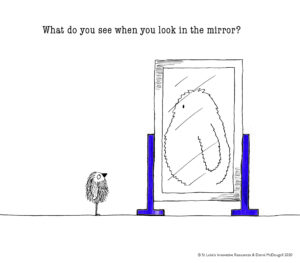
A card that can help open up conversation about body image is “What do you see when you look in the mirror”. This can support personal self-reflection to understand own biases as well as be a tool to understand the experience of people we are supporting. A card that can help reject the messages of society “How do you know what is worth listening to” and figure out for ourselves which voices, opinions and advice to listen to.

I know that an eating disorder is part of my experience, and it is also an experience of our society, whilst our society cannot be diagnosed with this. I am not perfect, and do not have everything figured out. But my hope is that one day we will live in a world where all bodies are valued, all bodies are supported and I am at peace with my body more than I am not.


Guest blog by Danni McDougall, author of Eating Disorders and Other Shadowy Companions, to mark Body Image and Eating Disorders Awareness Week (BIEDAW) September 5th – 11th

Visit Danni’s website: https://eatingdisordersupport.com.au


Innovative Resources has been publishing strength-based card sets and books for more than 30 years.

Over that time—for all sorts of reasons—card sets fall by the wayside. Some lose their relevance because of social or cultural changes. Others date because of their design and illustration styles, or even changes in language.

BUT, some resources are stayers. They are so universally loved and make such an impact on the work and lives of the people who come in contact with them, they continue to evolve and be reinvented over time.

One of those is a set of cards first published in 2003 as Mates Traits—32 cards that explore the strengths that make great friendships. Twenty years on, this much-loved resource has been reimagined and redesigned as Respectful Relationships.

With 11 brand new cards and another 10 with updated wording, Respectful Relationships has a fresh new look and colour palette, but retains many of the Mates Traits characters (and a whole lot of new ones) illustrated by our own Mat Jones.

We think this rejuvenated resource is perfect for encouraging children to discover the foundations of healthy relationships and spark those important conversations about what makes great relationships tick, how we can model respectful relationships for our kids, and how diverse human relationships can be.

Over the years we’ve heard many stories highlighting the power of these cards to create conversations of meaning and hope. None have been more compelling than one from Nicole Rotaru, a Sister of Mercy who for more than a decade has travelled to Sudan each year to train student teachers and provide professional development for graduate teachers, and staff at the Mother of Mercy Hospital and the Voice of Peace radio station in the Nuba mountains.

The radio station had a staff of ten and Nicole was asked to lead a team-building session called ‘Come Live Into the Light’ with a focus on strengthening the team’s unity and appreciating its diversity. The aim was to strengthen the group by identifying their qualities and how they enhance the team.

‘As part of my facilitation, I used the Mates Traits cards,’ Nicole explained. ‘Each member was asked to choose one card that reflected a quality she or he believed was present in the group, and the cards were placed in a central space. Discussion about each quality followed and examples of each quality in action were given. Following the discussion, members placed the cards in order of priority—the most important card to be placed at the top and others to follow.

‘One member of the group, who had been watching and listening quietly, finally spoke. “There is a card missing,” she said. I gave her a piece of paper and a texta to write the missing word. ‘‘Love’ is missing,” she said. “Without love the others cannot follow. She placed “love” at the top.
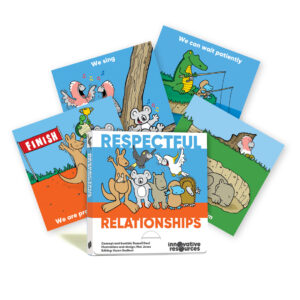
‘Her reflection stopped us all in our tracks. There was silence, then a long pause. Her comment resonated with everyone.

‘After a time, discussion resumed, but at a deeper level. Issues that had been part of the team were named, and ordering and reordering of the cards followed. This time, the reasons given reflected more authentically the strengths of the team—strengths that were born of the angst and misunderstandings they had struggled through. The final ordering of the cards was agreed a much truer reflection of the team.

‘As I think again about that final selection of Mates Traits cards made by the Voice of Peace team, I’m reminded that the power of the human spirit can transcend extreme adversity to find meaning and hope. The human spirit is far stronger than adversity.

‘For this group of Nuba people, their personal struggles with conflict and anguish while living in a war zone of complete chaos, utter de-stabilisation and untold suffering brought them to choose “Love” as the key to trust, to share and to forgive.’

Respectful Relationships is a powerful resource. As Nicole related, the cards enabled staff at the radio station to recall and articulate experiences and have rich discussion.

‘The captions on the cards along with the directness and simplicity of the characters’ expressions really spoke to the group,’ Nicole said. ‘Many of the drawings brought smiles and laughter. And while the images are not necessarily part of their lived experience, they still widened and brightened the world of the Nuba people.’

We’re excited to be bringing back two of our old favourites, Respectful Relationships (formerly Mates Traits) and Everyday Strengths (formerly Angels), both with a fresh new look.

Respectful Relationships

What is a respectful relationship? How do we know if we are being inclusive? When should we ask others for help? Do all healthy relationships look the same?

The quirky characters in Respectful Relationships are ready to help children, and adults, have conversations about all these questions, and more!

It isn’t always easy to understand the strengths, skills and personal qualities that make up a healthy relationship or friendship.
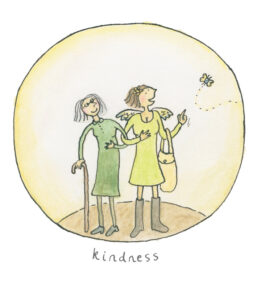
Use these 36 colourful cards to help children talk about what makes a good friend, feelings and body signals, how to connect with others, their strengths and other people’s strengths, safety, valuing difference and being inclusive.

This new edition includes 10 completely new cards, 11 updated cards and lots of new characters.

Perfect for use in classrooms, groups and one-on-one conversations.

Preorder now!

Everyday Strengths

We have refreshed one of our most beloved sets, Angels, with a fresh new name and look … but we’ve kept all the beautifully-designed illustrations by award winning artist, Trace Bella.

This set of 52 whimsical cards features everyday people using their strengths and skills to connect, share, give, play and find joy in the simple pleasures of life.

These strength-based cards are designed to help people share their stories and reflect on who they are, what is important to them, and how they can draw on their strengths to navigate life’s ups and downs.
Perfect for having conversations about gratitude, noticing the things that bring calm and peace, the power of nature, and appreciating our relationships with others.

Ideal for counsellors, teachers, social workers, and psychologists, to use with people of all ages in groups or classrooms, with families or one-on-one.

COMING SOON!


Tuning Into Kids (TIK) is a suite of globally recognised, evidence-based parenting programs that seek to build children’s emotional intelligence and develop strong family relationships.

Created by Professor Sophie Havighurst from the University of Melbourne and teacher/sociologist, Ann Harley, Tuning Into Kids has been assisting families to build healthy relationships—both in Australia and internationally—for more than 25 years.

Mindful, at the University of Melbourne, delivers facilitator training for the programs and Ann Harley, now a Program Consultant, says The Bears have been an integral part of the TIK program manual right from the beginning.

‘I first discovered Innovative Resources card sets back in the 90s when I was working as a Parent Help program coordinator in Melbourne’s west,’ she recalls. ‘I was introduced first to Strength Cards then The Bears cards and stickers after attending a number of IR workshops.

‘We found out very quickly that when people used The Bears as a visual and tangible prompt, they were more able to speak freely about their experiences and feelings.’

Ann’s positive experiences using The Bears cards and stickers in parent groups led to her advocating for their inclusion in the TIK program manual to help parents/carers more easily identify and explore their own emotions and those of their children.

‘When it comes to encouraging parents and carers to talk about their feelings and then draw parallels to their children’s emotions, nothing is as effective,’ Ann says.

The Bears are beautifully flexible and resonate so well with people of different ages and from a range cultural backgrounds. Everyone finds a bear they can relate to.’

Trainer, Gianna Mazzone, delivers training to TIK facilitators and says they take an experiential approach to learning, which means trainees have the opportunity to try some of the key activities they will later present to parents/carers in the parenting program.

The Bears stickers are used to illustrate how to teach parents and carers to strengthen the emotional connections between them and the children they care for,’ she explains. ‘Our facilitators experience first-hand how much easier it is to talk about their bear’s feelings. It removes a lot of the anxiety.’

Some TIK facilitators report using them at the start of every session of the 6-week program to increase parents/carers emotional literacy and connect body signals to feelings and thoughts.

‘One of our facilitators told us a story about deciding to use a different warm-up exercise at the start of one of her sessions. She almost had a revolt on her hands … the parents made it clear they wanted to use The Bears in every session!’

Tuning Into Kids facilitator trainings are delivered by the University of Melbourne, in both online and in-person formats. These sessions are suitable for anyone who works with parents in a professional capacity, particularly in family and community services, child protection, foster/kinship care, health, mental health and education sectors.

by John Holton

The connection between Innovative Resources and creator/illustrator Katie Jardine began with a moment of serendipity and has grown to be a most enduring collaboration.

It was almost 20 years ago that the Innovative Resources editorial team happened to be visiting their printer in Maryborough on the same day that greeting cards featuring Katie’s illustrations were coming off the press.

The attraction to Katie’s illustrative style was immediate, and two years later the card set Wonderful You was born. It was a set of 26 alphabetised cards that used alliteration, affirming language and fun illustrations as a way for children (of ALL ages) to notice strengths and say ‘well done’!

‘I’d never heard of Innovative Resources,’ Katie remembers. ‘I was a freelance illustrator and designer, working from home and caring for our young son Ben. He’s 18 now!

‘I remember feeling drawn to the cards and books that IR were publishing … and the philosophy behind the strengths approach.’

The timing couldn’t have been more perfect. A new edition of the iconic Strength Cards was in the pipeline and Katie’s style was a natural fit. Sixteen years on, her playful sheep, resourceful duck, peaceful elephant (in a bathtub!), and other delightful creatures, are still helping people around the world focus on strengths and abilities rather than problems or deficits.

‘After all these years I still feel such joy when I look at the Strength Cards,’ Katie says. ‘I have my own favourites—the happy echidna and the humorous meerkats. They’re such a simple, yet powerful tool.’

Now a primary school teacher, Katie has a special insight into the power of Strength Cards in the classroom.

‘I’m always finding new ways to use them,‘ she says. ‘I might take out a single card and we’ll simply look at it as a class and consider the strength. Courage, for example. What is it? When do we need courage? How does it make us feel? What do we do when we’re courageous?

‘It can work across all year levels—drawing and writing about strengths. Making children aware of their strengths empowers them.’

Nine years after Strength Cards came Anxiety Solutions for Kids; Katies fun yet soulful illustrations proving the perfect expression for Selina Byrne’s 50 practical strategies for kids struggling with anxiety.

‘Many of the illustrations in that set still provoke my own emotions and memories of the time,’ Katie says.

‘The ”Funniest Thing” card, for example, reminds me of a time when I had lots of medical appointments and was dealing with my own roller coaster of emotions.

‘Thinking about how funny it would be to get up and dance in front of all the people in the waiting room at the medical clinic still gives me a little twinkle in my eye!

‘The image for the “My Special Place” card is my son Jack sitting under the plants in our garden … exploring … being present. It’s a card that allows children to stop and ponder—away from devices—and think about how they feel and why they feel that way. Anxiety Solutions for Kids is my go-to for supportive conversations within the classroom.’

Creativity is at the heart of Katie’s teaching practice, but also permeates every other part of her life, from parenting to her own art practice.

‘I love to be creative and make something out of nothing,’ she says. ‘It isn’t always drawings, but sometimes creating with clay, sticks, string or wire. I enjoy the process—not knowing what might appear.’

The characters for Strength Cards and Anxiety Solutions for Kids grew from this same practice; Katie sitting down and scribbling with pencil and paper to ‘see what happens’.

‘It’s where my ideas feel free and unconstricted,’ she explains. ‘All my designs start with pencil on paper before I recreate them in Adobe illustrator.

‘I love the sharpness of colours and the ability to change them at the click of a button. I do love painting with a brush too, but it can be limiting. I worry about making a mistake on a nearly finished piece!’
When I ask Katie if she has a favourite out of the card sets she’s created for Innovative Resources, it’s like I’ve asked her if she can pick a favourite of her three sons.

‘They are all my favourites, for different reasons [I do sound like a mother]’, she laughs. ‘While creating each set of cards I was on my own little life journey, so they are like my creative children. I love how they’ve evolved over the years and continue to inspire.’

by John Holton


Adel is a teacher at Woori Yallock Preschool, a small sessional kinder in Victoria’s Yarra Valley. The preschool has 38 children who each attend for 15 hours a week.

Like many preschools, Woori Yallock’s first Innovative Resources card sets were purchased using the State Government’s School Readiness funding.

‘For many years we used The Bears and Stones cards [Stones…have feelings too!] to prompt simple conversations about feelings,’ Adel says.

‘I really like having something visual and hands-on for the children to interact with.’

In more recent times, Adel has introduced Funky Fish Feelings, Can-Do Dinosaurs, and Body Signals (the kids love the cheeky meerkats!) to the mix.

‘Since (and during) Covid times I’ve been using the cards as discussion topics for our outside “mat” sessions,’ she says.

‘Visually they are so beautiful and engaging for the children … and having so many cards in each set makes them great for bigger groups.

‘They’re so durable too. They even survive the sandpit!’

At Woori Yallock, the cards are used as an ongoing learning tool.

‘Once the children are settled in and familiar with the preschool we start to introduce the cards as a way to build an emotional vocabulary,’ Adel explains.

‘Having a variety of card sets is a wonderful resource as every child responds differently to the various animal characters.

‘We use them to discuss how our bodies change when we feel different emotions and what signs to look for in other people. We can see the children developing the language and tools to express themselves and understand another person’s perspective.’

Having experimented with the cards over many years, Adel says the cards have the best results once strong relationships have been formed, between the children and staff, and the children with their peers.

‘The children definitely lead the conversation,’ Adel says, ‘giving examples both verbally and physically.’

From its very inception, Innovative Resources was driven and inspired by the ideas and feedback of those who use the cards at the coal face—people working with people in all kinds of settings and situations.

Thirty years on, and the stories keep coming—from teachers, therapists, counsellors, mental health professionals, child and family workers, supervisors, chaplains—practically anyone wanting to ignite conversations and help people unlock their strengths and potential.

building rapport in high schools

I still remember the time a writer friend of mine was booked to speak to a class of Year 10 boys at a Central Victorian secondary school. This was a ‘tough’ environment and the students in question were amongst the most disengaged in the region.

My friend headed into the fray, armed with a pack of Storycatching cards. She laid them out on the floor and asked each student to choose a handful of cards that grabbed their attention. They were then invited to open their notebooks and write the words ‘I remember’ at the top of the page.
‘Write whatever comes to mind as you look at the cards,’ she told the boys. ‘Don’t worry about spelling, or punctuation, or any of those things—just write.’

What ensued was an hour of writing, storytelling, laughter and sharing that she described as ‘just amazing’.

‘I’d been so worried in the lead up,’ she said, ‘but all those young men had a story to tell, and the flood gates opened.’

That’s the power of Innovative Resources cards—they spark new ways of thinking and help create safe spaces for people to share feelings.

primary school children reflect deeply

 A teacher from the Northern Territory, Lillian, shared her story about encouraging vulnerability and trust in the classroom. She’d been using the Deep Speak cards with her Grade 6 students.

‘Prior to starting any activity with the cards, we discuss behavioural expectations and some ground rules, such as the right to pass, one voice speaking at a time, what is said in the circle stays in the circle, and the need for confidentiality and respect,’ she explained.

‘We go round the circle with each student turning over a card and considering their response. I leave the depth of response up to them. Some answer the question in one sentence, whereas others go into a deeper reflection.

‘I think the students really appreciate hearing my honest answers to the questions; this often gives them the confidence and trust to replicate it themselves when it’s their turn.’

fun ways to help children and families connect

 We hear lots of great stories about how the cards are used in child and family settings.

Louise, a counsellor from Adelaide, stresses the importance of keeping things ‘light’ when using the cards with children.

‘When I get out a set of cards I always call it a game,’ she said. ‘I keep it very light and if a child doesn’t resonate with the set, I put them away for another day.

‘Some children like to use the same sets every session and we use them in different ways, such as role play, charades, or how others may be feeling.’

Louise’s advice is to be flexible. Let the child lead the conversation, using their imagination and own words as much as possible.

navigating transitions

On the Gold Coast, the Can-Do Dinosaurs have been doing great work with families thanks to counsellor and narrative therapist, Jillian.

‘I was working with a family where two children had been court appointed to live with their dad,’ she explained. ‘Dad had a new wife and two smaller children and had not seen his kids for six years.’
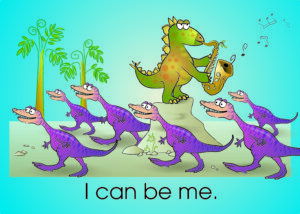
Jillian used the Can-Do Dinosaurs to start some positive discussion.

‘Sitting around the table, we took turns to choose a card for each person. For example, the boy chose a card for himself, then one for his sister, his dad, his step-mum, and step- sisters. I asked him to give an example of why he chose that card for them.

‘I took a photo of each family member and, with the Can-Do Dinosaurs, made a reminder of what was chosen for them and by whom. It helped the family see that each member was contributing to the family unit, and that the small things they did were appreciated by the others.’

Often, we’re pleasantly surprised to hear of resources being used in ways that were never imagined during their creation.

strengths and goal setting in supervision

Like Stones … have feelings too! becoming a supervision tool right here at Anglicare Victoria.

‘They were really useful in helping a worker articulate how she was feeling about her planning, goal-setting and current work with a family,’ Denis told us.

‘It opened-up a whole conversation about the worker’s strengths and ways she could use them to enable a shift towards her “preferred stones”. This flowed on to new plans for the family intervention and her overall practice. It was a real “ping” moment!’

professional development—active listening

We love this example from a workshop facilitator of how Signposts can encourage deep listening.

‘At the beginning of my workshops I invite each participant to choose a Signposts card they like, whether it’s because of the image or the words. When everyone has chosen a card, participants are invited to pair up. Each person in the pair takes a turn to speak about themselves—using the card as a prompt—for two minutes, while the other person listens. Really listens.

‘At the end of two minutes the roles are reversed.

‘The “interrupters” often reflect on having to bite their tongues to stay silent. It prompts everyone to reflect on how often we do interrupt. Others reflect on how uncomfortable they are talking about themselves for two minutes, and others mention how difficult they find the silences.

‘When we stop, listen and wait during moments of silence, we are open to hearing some truly amazing things.’


by John Holton

understanding the importance of children’s voices

When Judy Hall describes The Bears as, ‘an opening of the floodgates’, it comes from a place of deep understanding of how important it is for children’s voices to be fully heard.

judy hall’s background in child care

Judy’s instinct for caring and listening to children stretches back to her initial training as a kindergarten teacher and her role as manager of an after-school program on an inner suburban housing estate back in the 1980s.

‘It was during this time that I became involved in out of home care,’ she says. ‘The communal household I lived in hosted many children, providing respite care for families.’

Over the years, Judy has delivered modules in Child Care studies at TAFE, provided family day care, and was a foster carer. She even organised and supported a troupe of young circus performers, so her credentials when it comes to juggling the needs of young people are well founded.

It was during her time as a foster carer that Innovative Resources card sets became part of her ‘toolkit’—in particular, The Bears.

‘My experience with very hurt children in my care was that The Bears were easy to use and gave very young children a wide vocabulary to express their feelings,’ Judy says. ‘The Bears allowed children to communicate they were existentially alone, even when they appeared cheerfully social.

‘They could quickly tell me how safe they felt in a variety of contexts.’

using the bears to hear children’s stories

In 2017, with The Bears still tucked away in her toolkit, Judy headed to South Africa to volunteer at Fikelela Child and Youth Care Centre, a temporary safe care facility in the Anglican Diocese of Cape Town.

Her experience in working with children who’d experienced trauma and loss, combined with her training in therapeutic play, was put to good use.

One of her roles was to help prepare reports for the courts, to assist the Magistrate in making decisions regarding some of the children’s futures.

‘I worked with one young boy who had been removed from a home that was the centre of some gang violence,’ Judy recalls. ‘The authorities were considering transferring him to a specialist adolescent institution, but Fikelela felt strongly that his best interests would be served by remaining with them.

‘I spent time with him over a number of days, using The Bears to help him tell his story, and express his hopes. I wrote these accounts up as dispassionate observations and submitted them to the social worker. She used them in her submissions to the court, and thankfully the boy was able to remain.’

Judy introduced The Bears to many children during her six-week stay at Fikelela. She describes their reactions as a ‘kind of quiet desperation’ and she thought deeply about how to make sure their voices were being heard.

‘I would very simply explain that the bear pictures represent how we feel, and ask, “Which one is you when..?”

 the bears transcend language

‘Often a child’s first language was Afrikaans or Xosa, so I needed to keep the language clear and simple,’ Judy says. ‘The Bears enabled them to respond in a nuanced way to questions such as, “Which is you at school?” or “Which is you when you think about Mummy?”

As the children became more familiar with The Bears, Judy was able to take the conversations deeper and broader.

‘It never ceased to amaze me how focused the children were, and how decisive their choices,’ she recalls. ‘I struggle to describe the relief and delight—a kind of urgency the children expressed—as unsayable things tumbled out, and we listened with compassion.’

by John Holton