Join the conversation! SOON (Seriously Optimistic Online News) keeps you connected with everything Innovative Resources – subscribe today!

If your situation is urgent, you can contact these services 24-hours a day, 7 days a week

CLOSE (X)

moving from strength to strength

innovative resources: born out of the strengths approach

It was 1992, and ideas around how welfare services should be delivered were changing. At St Luke’s (now Anglicare Victoria) workers decided there was a genuine need for a hands-on tool that could be used by social workers to focus on emerging strengths-based approach to social work.

the foundation of the strength-based approach

Growing out of solution-focused practice, narrative therapy, and Intensive Family Services (which was a radical way of working with families to keep children at home), the strengths approach was built around the values of equal partnership and respect between people—or ‘power-with’.

core beliefs

Fundamental to strengths-based practices is the belief that everyone has strengths and that mobilising and sharing strengths is the key to building hope and creating positive change.

One of the pioneers of the strengths approach, Wayne McCashen, described it as a positive, transformative and profound philosophy for practice that has the power to build self-confidence, connection and community.

‘For many, it is not only a philosophy for practice but also a philosophy for life,’ he said. ‘It is built on attitudes and values so deeply respectful of people’s intrinsic worth, their potential and their human rights.’

the birth of strength cards®

The original Strength Cards® were created by a small group of St Luke’s workers who, as Innovative Resources founder, Russell Deal, puts it, ‘sat down together with a dictionary and chose 48 strengths that people use every day to work through life’s challenges and solve problems.’

Coupled with simple illustrations by fellow worker, John Veeken, the first print run was packaged in zip seal plastic bags and sent out into the world. Such was the popularity of the cards, they soon went to second print run, this time packaged in printed boxes.

evolution and impact

Strength Cards® for Kids followed hot on it heals and a year later The Bears made its debut. The rest, as they say, is history.

expanding horizons: from strength cards® to choosing strengths

The strengths approach, in its various iterations, has become one of the most influential approaches to social work and human service practice, not only in Australia and New Zealand, but internationally.

Stories of how Innovative Resources card sets and other tools continue to unlock people’s strengths, aspirations and potential continue to arrive from a diverse range of organisations, individuals and industries: education and healthcare, mental health and counselling, sporting clubs and correctional facilities, HR departments and First Nations cooperatives, justice settings and pastoral care, families and foster care … the list goes on.

Just as strength-based practices and strength-based approaches in therapy have evolved, so has our understanding of what constitutes a strength.

exploring new dimensions of strengths

Our resources have kept pace with, and sometimes driven, these changing ideas. Where Strength Cards® and Strength Cards® for Kids focus on our unique personal qualities as strengths, subsequent resources explore strengths in more expansive ways.

Based on the tenets of Choice Theory, Choosing Strengths (2013), suggests our strengths are in our own hands. We can choose to see ourselves as a ‘victim’ or a ‘survivor’. We can choose to see the glass as half-empty or half-full. We can choose to see ourselves as filled with deficits or as possessing great strengths. We can choose to adopt any number of strengths from a huge array of possibilities.

The Nature of Strengths (2014) invites us to notice and name the characteristic survival strengths of plants and animals in nature and think about how we could employ those strengths to tackle the challenges in our lives.

Taking the notion of strengths to the next level, Strength Cards® Unlimited (2022) prompts conversations about the many resources we all have in our lives that we can draw on to overcome challenges, reconnect with others and create a more optimistic picture of the future.

Our strengths can be as practical as transport, food and clothing, or as diverse as community, culture or the stories we tell. More abstract things like time, feelings or rights can also be powerful strengths.

the timeless wisdom of strengths-based practice

As the pioneers of strength-based practice knew when they sat down to create a conversation-building tool all those years ago, the wisdom we gather as we go through life—the challenges and the good stuff—can be a great source of strength, insight and hope.


by John Holton


For a long time, I’ve felt honoured to live in a country that is home to the longest, living, continuous, culture in the world. It has always felt momentous to me. But it wasn’t until I went on a trip to Greece last year that I truly understood how momentous it actually is.

how old is old

As culture buffs and story catchers, my partner and I were excited to visit some of the most iconic sites of ancient Greece—the acropolis, Delphi, Aristotle’s school, Knossos—especially Knossos—which is home to the myth of the minotaur in the labyrinth and some of the most interesting statues linked to matriarchal cultures in the world, such as the Minoan Snake Goddesses.

While some of these sites are among the most ancient in the Western world (many of our founding stories, philosophies, sciences, architecture, languages and political systems originated there) their age pales in comparison to so many Aboriginal sites across Australia.

Homeric and Classical Greece, for example, (the eras we often think of when we imagine ‘the Ancient Greeks’ i.e. from Homeric Age to the philosophers) roughly started around 1200BCE.

A few months before we travelled to Greece, we went on a camping trip to Gariwerd (Grampians National Park) in Victoria and visited five rock art sites (there are over 200 rock art sites in the park, but only five are open to the public).

I remember the first one we visited, driving down a dirt track and parking in a small carpark, before walking a few hundred metres up a rough-hewn path to Bunjil’s Cave.

In the cave we encountered an incredible painting the on the rock wall of Bunjil, the Kulin creator being and Wedge-tailed Eagle, protected by a wire cage. There was no one else there the day we visited and we had to wander around a bit to find it (very different to the ancient sites in Greece where there are huge crowds all the time).

Some of the rock art in the Grampian’s National Park is estimated to be 20,000 years old.

Around Australia, we have many examples of ancient Indigenous sites. From the two-metre long kangaroo cave painting in the Kimberley region, dated at approximately 17,000 years old, to the Brewarrina Fish Traps (or as they are traditionally known, Baiame’s Ngunnhu) on the Barwon River in New South Wales, which are thought to be the oldest manmade structure on earth. In 1968, in the Willandra Lakes region of New South Wales, the remains of Mungo woman were found and have since been dated at 42,000 years old.

These incredible sites give us some perspective on what ‘ancient’ means.

continuously the same … and continuously changing

When people describe First Nations Australians as the longest living continuous culture in the world, they are referring to a genomic study that traced their genetic origins back 75,000 years to a single founding population of people, making them the oldest, continuous civilisation on earth.

However, the word ‘continuous’ also implies ‘unchanging’. The reality is, First Nations Australians have lived through periods of immense change and have had to constantly adapt and grow.

They have survived ice ages, the last one ending approximately 20,000 years ago, during which the population plummeted and ‘the vast majority of Australia was simply uninhabitable’. They lived alongside the megafauna that followed the dinosaurs (including a marsupial lion and a giant wombat) for at least 30,000 years. They have survived volcanoes and floods and droughts. And, of course, they are survivors of colonisation.

As a result of having to be so adaptable and responsive to change, Aboriginal peoples gathered an enormous body of knowledge and wisdom over tens of thousands of years, about the land, climate, flora and fauna and how to survive and thrive in such challenging circumstances—often embedded in stories, songlines and other cultural artefacts.

As Luke Pearson notes in his article, What is a ‘continuous culture’… and are Aboriginal cultures the oldest? | SBS NITV:

‘The term ‘continuous culture’ should be a source of pride, but it is also a concept that needs to be unpacked. Viewed through the wrong lens it can also be seen to suggest that because we had a ‘continuous culture’ for over 60,000 years that there were no changes, no adaptations, no innovations, and was not influenced by individuals of great talent and skill. Aboriginal cultures in Australia maintained certain consistencies, but we also know that it survived through significant periods of change and needed to be able to grow and adapt, to survive and thrive in these changing environments.’

He also notes that First Nations Australians can be celebrated, not only for what they did—‘environmental sustainability; equitable wealth and resource distribution’; the first makers of bread; the first astronomers and the earliest evidence of religious beliefs and practices’—but also for what they didn’t, like ‘not being in a state of perpetual war; not needing to exploit others for resources and labour’, all the barbaric, destructive and power-driven practices and inventions of so-called ‘civilised’ cultures.

But even to think of First Nations Australian cultures in this way, as always ‘advancing’ or ‘progressing’ towards civilisation, is to frame these cultures against a Western, Darwinian ‘survival of the fittest’ idea of what it means to be a ‘successful’ human community.

Pearson says, ‘The fact that Aboriginal cultures ‘never invented the wheel’ is misunderstood by many people, and is often used to argue that Aboriginal cultures are ‘primitive’, rather than understanding that Aboriginal cultures were not further behind on a single path of progress, but were on an entirely different path altogether.’

Margo Neale, series editor for the First Knowledges series, says in the foreword to Design: Building on Country:

‘In the Aboriginal world view, everything starts and ends with Country. Yet, there are no beginnings in this world view, nor are there any endings. Everything is part of a continuum, and endless flow of life and ideas emanating from Country…’ (p.1)

So, what does it actually mean to be part of a ‘continuous culture’ in this context? This isn’t a linear ‘time moves forward’ model; it is a regenerative, reflective, flexible and relational model of being human, of being ‘continuous’.

Perhaps this is one of the most profound and humbling lessons we can learn as we navigate such uncertain times—times that require a new (or old) kind of wisdom and innovative thinking—times in which many of our ideas about ‘progress’ or ‘evolution’ are failing us.

Maybe this ancient understanding of being ‘continuous’, where everything in the world—living and inanimate—is viewed as belonging to a continuum, could help us move forward in a more meaningful, sustainable, connected and hopeful way. Maybe replacing our constant drive for progress with a more flexible, cyclic, responsive model of living would not only enable us to be more adaptive to our changing world, but also happier and more fulfilled.

While the ancient Greeks have clearly made a huge contribution to so many aspects of our lives, perhaps we have just as much to learn, if not more, from the longest living continuous culture in the world.

**********************************************

The theme of National Reconciliation Week this year is, ‘Now more than ever’. As they state on the National Reconciliation website, ‘… the work continues. In treaty making, in truth-telling, in understanding our history, in education, and in tackling racism. We need connection. We need respect. We need action. And we need change.’

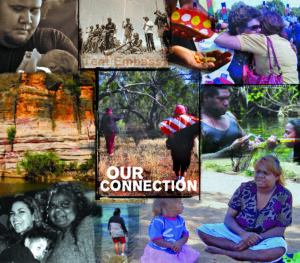
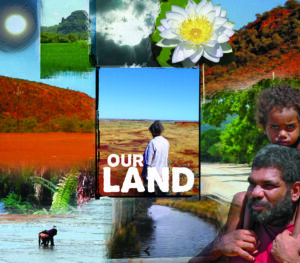
Talking Up Our Strengths is a card set for talking about what we can learn from First Nations Australians—their strengths, their sense of place and connection to country and community, their struggles and their resilience in the face of huge challenges.


by Sue King-Smith

Ray Bowler is a name well known to long-term devotees of Innovative Resources’ products and training. His quirky, soulful illustrations and designs have helped thousands of people explore their feelings, prompted important conversations about strengths and mental health, and inspired people to share stories about their most meaningful life experiences.

But before he began changing lives with his first Innovative Resources publication (The Wrong Stone, 2002), Ray spent almost 30 years as a commercial graphic designer, working with clients to design packaging, brochures, annual reports … ‘all the usual suspects,’ he says.

‘I thoroughly enjoyed the work, but it was time to take our sister company, Ark Publishing, into new territory—working with publishers.’

To promote their services, Ray sent out monthly promotional calendars to publishers, demonstrating his illustration and design skills.

‘The silence was deafening,’ Ray recalls, ‘but as I became braver, the calendars became more creative.’

One of those publishers was a small outfit in Bendigo called Innovative Resources. After seeing an article in a trade magazine about a new set of cards called The Bears, Ray reached out and, naturally, added IR to his calendar list.

‘I inundated them with my calendars for many months without hearing a peep,’ Ray jokes. ‘Then one day the phone rang … “Would you like to illustrate a children’s book for us?”

The rest, as they say, is history. Ray made the trip to Bendigo and felt right at home amongst the IR crew.

‘Creatively, it felt like I’d found my clan,’ he recalls. ‘I loved the products, but more importantly I was welcomed with such warmth and enthusiasm by then Director, Russell Deal, and Managing Editor, Karen Bedford.

‘They gave me so many great opportunities and had such trust in my work.’

Ray brought a diverse range of skills and styles to the many products he designed for Innovative Resources, from cartoon characters to digital illustration—even original photography. But it was while exploring a new software program that he discovered the joys of 3-D illustration.

‘After some practice I created a wooden top that scrolled in circles over a page,’ Ray says. ‘I sent it to IR thinking they may consider 3-D digital artwork as a way to complement their traditional hardcopy resources.

‘The response wasn’t what I expected at all—”We’d like to use your spinning top as our logo!”’

Ray’s iconic spinning top logo would endure for more than 20 years, only replaced early this year with Innovative Resources’ new branding rollout.

In a period of intense creativity, between 2002 (The Wrong Stone) and 2011 (Cavepersons), Ray designed and illustrated four card sets and two picture books for Innovative Resources—it’s no wonder he finds it hard to choose a favourite.

‘Each project dictates its own needs, particular style and graphic flavour,’ he says. ‘Two projects that stand out for me, because of a calculated design risk that paid off, are Ups and Downs and Storycatching.’

Many SOON readers will be familiar with the “everyperson” character who sails the billowing ocean of life in Ups and Downs, but as Ray explains, there’s more behind the creation of the character than is immediately apparent.

‘I created the bright pink “jellybean” character to represent us at our most vulnerable,’ Ray says. ‘The choice to place them in a bathtub was both absurd and strangely powerful.

‘Are we ever more vulnerable than when we’re in the bath? Yet it’s also a place of comfort and warmth and a space that allows contemplation and “philosophising”.’

The 2008 card set, Storycatching, was visually inspired by Ray’s and the author’s (yours truly) shared love of all things found and pre-loved, along with contemporary kitsch sourced from discount stores.

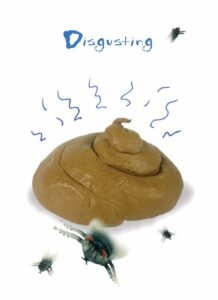
‘Op shops, flea markets and bazaars are emporiums of potential photographic props,’ Ray says. ‘With a bit of “tricking up”, a toy elephant, plastic fruit or rubber dog poo (that’s right! Storycatching is the only Innovative Resources card set to feature dog poo!) look so convincing in front of the lens.

‘All those years of hunting, searching and perhaps hoarding, both my own and John’s, definitely paid off. We had no shortage of story-inspiring props.’

More than a decade on from his last Innovative Resources product, Cavepersons, Ray is enjoying retirement, but has not lost any of his infectious curiosity and creativity. He’s still drawing, painting, producing digital art and photography, reading and, as he puts it, ‘letting the sands of time slip quietly through his fingers’.

‘I certainly don’t miss the stresses of commercial life,’ he says. ‘I have even come close to achieving a sense of calmness which allows for better creativity.

‘I still can’t get to the end of my street without discovering something funny, profound or downright intriguing.’


by John Holton

‘I’m Dion, I live on a boat.’

That’s a pretty cool introduction for anyone, and not what I expected from a man who has spent the past decade and a half working in human services and, more recently, perfecting the “art” of solution-focused supervision.

But it does speak to his sense of adventure, both in life and his years of working with people across a broad range of service areas including Resi Care, Intensive Case Management, Foster Care and Family Services.

Dion Sing’s pathway into human services was unconventional, yet somehow serendipitous.

‘Up until my early twenties I’d done labouring work, but I was wanting to do something that invested in people, rather than building houses,’ he explains. ‘I had experience working with addicts and youth, but no formal qualifications.’

Dion heard about a job as a Residential Care worker at St Lukes’ Anglicare—at a time when there were no minimum qualifications. He soon found himself immersed in the complex world of Resi Care.

‘I laugh now at how green I was,’ he reflects. ‘When my new boss told me we would have “supervision” I thought he might observe me working with the young people for an hour a fortnight. I had no clue what supervision was.’

While terms like ‘strengths-based’ and ‘solution focused’ weren’t part of his vocabulary back then, Dion remembers reading about them in the key selection criteria for the job and thinking: “that makes sense—to solve problems based on strengths and solutions”.

‘Little did I know, these ideas would still have me thinking and experimenting over a decade and a half later,’ he says.

Dion embraced the strengths approach to working with people and thrived under the St Lukes’ Anglicare ethos of “the person is not the problem, the problem is the problem”.

‘I was privileged to be taught, supervised and mentored by some of the amazing thinkers we have to thank for the strengths approach,’ Dion says. ‘We regularly used Innovative Resources card sets for team building, debriefing and talking about hopes and pictures of the future.

‘Once you start thinking in a solution-focused way it applies to almost everything you do. It guides how I face challenges, parent my children, and do business. Not to say that all of that is perfect, but solution-focus provides a framework. It changes how you “see” people.’

As Dion moved into leadership roles, he began to see solution-focused supervision differently—beyond thinking it was merely a good way of working with people. He began to see the “flow-on”—from the people he was supervising to the children and families they were working with.

‘I decided I wanted to get really good at supervising,’ he says. ‘I started researching, learning and consuming information that would help me achieve this.’

It was around this time Dion gave a presentation to the Australasian Solution Focused Association and soon realised that the hand-out he’d prepared for his presentation was the very rough draft of what is today The Solution-Focused Supervision Handbook.

‘The book is a decade of research, experimentation and practice, condensed into an easy-to-read handbook for busy supervisors,’ Dion says. ‘I wanted to write something that makes the ideas accessible, useful and builds the confidence of supervisors, regardless of their understanding of solution-focus or supervision.’

Innovative Resources card sets are still close to Dion’s heart and continue to feature in his work. Funky Fish Feelings, Stones…have feelings too! and Cars ‘R’ Us are among his favourites as their simplicity allows people to ascribe their own meaning to the images.

‘I love the non-prescriptive nature of the cards,’ he says. ‘They are particularly useful in learning and talking about feelings with people of all ages who are not used to putting language to their feelings.’

These days, Dion’s supervision, consulting, training and writing happens from his boat, a sailing catamaran, where he lives with his wife, a five-year-old, a three-year-old, and their pet poodle.

Just like the Innovative Resources card set, Ups and Downs, life on the billowing ocean has its challenges.

‘Sometimes it’s blue water and sunsets, other times things are breaking,’ Dion says. ‘It’s been a steep and amazing learning curve for all of us.

‘Sometimes I get to knock off and swim on the reef, other times I’m bracing myself in the hull on a video call. All in all, it balances out—we’re still sailing!’


Discover more about The Solution-Focused Supervision Handbook at thesolutionmethod.org

Use the promo code SOON for a 20% discount in the month of May.


by John Holton

Innovative Resources’ newest card set, Navigating Depression, is the brainchild of psychologist and author, Kate Skilbeck.

With stunning illustrations and design by Castlemaine artist, Sharon Dunn, Navigating Depression draws on the metaphor of life’s journey to create person-centred conversations about the lived experience of chronic sadness and depression.

Kate Skilbeck brings almost 30 years of experience as a psychologist, training consultant and mindfulness teacher, to Navigating Depression. In addition to her direct client work, she has provided professional supervision for psychologists, social workers, mental health nurses and clinicians, counsellors, youth workers, school wellbeing staff, teachers, doctors, nurses, managers and CEOs.

Kate also teaches the highly regarded 8-week Mindfulness Based Stress Reduction Program, and other programs, such as the Mindfulness Based Cognitive Therapy for Depression.

‘Over the years I’ve worked up close and personal with people who suffer chronic states of distress and mental illness,’ she said. ‘A diagnosis of depression brings a whole other level of challenging thoughts feelings and emotions.

‘We know that one in five people in this country will experience a mental illness—it’s a big problem to tackle—but we also know there are things we can do to help navigate these situations more skillfully and kindly.’

Navigating Depression was launched by Innovative Resources’ managing editor, Dr Sue King-Smith, who described the journey metaphor as incredibly fertile ground for having conversations around mental wellbeing.

‘The metaphor can be used in so many ways,’ she said. ‘The idea of being able to chart a course—to create agency and choice—is a really powerful one.’

The 40 cards that make up Navigating Depression each feature a visually engaging image, accompanied by a simple question, sentence starter or strategy. The five diverse characters who inhabit the cards portray the common and lived experience of depression.

Kate explained that Navigating Depression’s great strength is the broad range of interventions and modalities that have influenced its creation.

‘We’ve drawn from an enormous body of knowledge—mindfulness-based cognitive therapy, narrative therapy, positive psychology, cognitive behavioural therapy, neuroscience—the whole field of post traumatic growth,’ she explained.

‘The cards are not about pathologising, but rather exploring. Depression is complex. Navigating Depression creates a safe space to discover, learn and reflect on our mental wellbeing, our physical health, the way we’re behaving and being in the world. It’s a deep dive into “what’s going on” for us.’

At the launch of Navigating Depression, Kate used the ‘Observing Thoughts’ card as just one example of an incredibly powerful skill to learn when we’re working with low mood.

‘Often with depression comes a depressed mindset,’ she explained. ‘Thoughts of “I’m not worthy”, “I’m broken”, “No one cares”, or “I’m all alone”. If we can learn to observe these thoughts, we can often find a new perspective—a new way of positioning and orienting.

‘Now, when I have certain kinds of thoughts, I’ll say to myself, “Ah, there’s my mind saying that thing again”, and instead of being hijacked by that thought and believing it’s true, I can recognise that it’s not helpful—and maybe even orient my way of feeling and experiencing that thought in a new way.’

With this in mind, the cards are a great tool for exploring our patterns of thought and recognising warning signs. As Kate explained, ‘if I get really stressed I might overthink things, then I might not sleep well, then I’ll have a lower mood.

‘If we can know these patterns, we have a much better chance of managing our thoughts and developing strategies moving forward—we can be really wise.’

When it comes to the range of applications for using the cards, the sky is the limit. While they are perfect for psychologists, counsellors and wellbeing practitioners working one-to-one, they are also ideal for exploring self-care, burnout and vicarious trauma.

‘We all go through challenging moods and stressful times,’ Kate said. ‘Navigating Depression can enhance anyone’s wellbeing toolkit and is a perfect companion for self-reflection and journalling—our own personal map for charting a course through challenging times.’

Kate also sees the cards having an important role to play in secondary school settings to help build knowledge about mental health and wellbeing.

Many people working in the mental health space have already discovered Navigating Depression’s special magic in transforming their work with others.

Principal Practitioner at Counselling First Professional Services, Kristine Clements, says the cards have facilitated a deeper level of communication and understanding in sessions with her clients.

‘The questions on each card gently encourage clients to open up about their thoughts, emotions, and struggles associated with depression,’ Kristine said. ‘Clients who initially found it difficult to verbalise their feelings, felt more at ease and empowered to share their experiences using the prompts on the cards.

‘The cards support clients to identify and explore potential solutions to their challenges—alternative perspectives, coping mechanisms, and self-care strategies.’

Perhaps the greatest endorsement for Navigating Depression comes from author and Emeritus Professor of Clinical Psychology at Oxford University, Mark Williams. Dr Williams is the co-developer of mindfulness-based cognitive therapy (MBCT), a modality designed to prevent relapse and recurrence in major depression.

In his foreword to Navigating Depression, he describes the moments of hope, ‘where we glimpse the possibility of change.

‘We gradually discover that we don’t need to take our negative thoughts so personally,’ he writes. ‘That we are stronger than we think and have within ourselves more resources, more wisdom and more kindness than we knew.

Navigating Depression will be a huge help in identifying those hopeful moments and building on them to create a new life. May they be, for all who use them, a place where new possibilities are found.’


by John Holton

When Camilla Pang was five, she was diagnosed with autism spectrum disorder (ASD). Then later, as an adult, she was diagnosed with attention deficit hyperactivity disorder (ADHD) as well as generalised anxiety (GAD).

In her book Explaining Humans, Pang describes how as a child:

‘I felt like a stranger within my own species; someone who understood the words, but couldn’t speak the language; who shared an appearance with fellow humans but none of the essential characteristics.’

As she got older, Pang became fascinated with what it meant to be human and was drawn to the sciences for answers, leading her to complete a PhD in biochemistry. She used that knowledge to try and understand what it means to be human on a biological and physical level, giving her a window into understanding what it means to be human more broadly.

As a result of her research, Pang realised that being neurodiverse could be an asset. She now believes that, while being neurodiverse in a world that has been designed for neurotypical people can be challenging, the things that make her ‘different’ are also the things that give her unique intellectual advantages.

‘Living like this is frustrating, but also completely liberating. Being out of place also means you are in your own world—one where you are free to make the rules. What’s more, over time I have come to realise that my curious cocktail of neurodiversity is also a blessing, one that has been my superpower in life—equipping me with the mental tools for fast, efficient and thorough analysis of problems. ASD means I see the world differently, and without preconceptions, while anxiety and ADHD allow me to process information at rapid speed … My neurodiversity created so many questions about what it means to be human, but it also gave me the capacity to answer them.’

What is neurodiversity?

We hear this term bandied around a lot, but what does it actually mean, and what forms of diversity fall under this banner?

According to the Mental Health Academy, neurodiverse brains differ from neurotypical brains in both structure and function.

For example, they describe how in brains impacted by ADHD, parts of the prefrontal cortex, which are used to ‘problem-solve, make decisions, control impulses, and utilise logic’, can be underdeveloped. People with ADHD can also have structural differences within their white matter (part of the limbic system) which can impact on ‘learning, memory, and regulating emotions’.

Neurotransmitters (the chemicals that help send messages), particularly dopamine and norepinephrine, can also work differently in neurodiverse brains.

This means that people with neurodiverse brains may process information differently and interpret the world in unique ways. They may also experience emotions differently to people with neurotypical brains.

For some people, being differently-abled can present challenges and they may need supports and adjustments. For others, being neurodivergent can lead to opportunities and insights that aren’t available to neurotypical people.

‘It is powerful to realise that neurodivergence has to do with how someone’s brain is structured and functions. It’s a part of the variability in humans and life, and it makes life on earth exciting and interesting and beautiful,’ says Annette Estes, director of the University of Washington (UW) Autism Center.

Common types of neurodiversity

Currently, the Diagnostic and Statistical Manual of Mental Disorders (DSM) recognises autism spectrum disorder (ASD), attention deficit hyperactivity disorder (ADHD) and dyslexia as forms of neurodivergence, but the more widely accepted definition seems to be somewhat broader. Generally, the following are considered to be types of neurodiversity:

  • autism spectrum disorder (ASD)
  • attention deficit hyperactivity disorder (ADHD)
  • specific learning disabilities (SLD) including dyslexia, disgraphia and dyscalculia
  • dyspraxia
  • Tourette syndrome

Acquired brain injuries (ABIs) and mental health conditions like anxiety, depression, obsessive compulsive disorder (OCD), amongst others, are also sometimes considered to be forms of neurodiversity, because they can change the chemical composition of the brain.

Sometimes the following conditions are also included under the banner of neurodiversity:

  • Meares-Irlen Syndrome
  • intellectual disabilities
  • synesthesia.

Some people also consider ‘giftedness’, or people with extremely high intellectual/creative capacities, as neurodivergent.

Ideas and understanding about neurodiversity are developing and changing all the time, but broadly, neurodiversity is understood to include any condition that impacts on the structure or function of the brain.

Why it’s important for us to be thinking about neurodiversity

It’s estimated that approximately 15-20% of people are neurodiverse.

Not everyone who is neurodiverse will have a diagnosis or ‘label’. In every classroom, group or therapeutic setting, we are likely to be working with people who identify as neurodiverse. We will also work with clients, students or colleagues who think differently, or whose brains work differently to neurotypical brains, but who don’t identify with a particular form of neurodiversity.

It is also important to understand that the impacts of neurodiversity can be profound for some people.

For example, the Mental Health Academy says that people with ADHD have a life expectancy up to 21 years lower than people without it,  as ADHD can lead to increased risk-taking behaviours, reduced capacity for decision-making, increased risk of accidents and substance misuse.

The World Health Oganisation states that people with ASD,  ‘…are at greater risk of violence, injury and abuse’. They also note that, ‘…autistic people are often subject to stigma and discrimination, including unjust deprivation of health care, education and opportunities to engage and participate in their communities’.

In his article, ‘Neurodiversity can be a workplace strength, if we make room for it’, editor at The Conversation, Misha Ketchell, describes how, ‘Unemployment rates for people with some forms of neurodiversity are also significantly higher than for people who are neurotypical, or for people with physical disabilities.’

Additionally, people who are neurodivergent may be more prone to experiencing poor mental health. As McKenna Princing from UW Medicine notes, ‘Neurodivergent people can also be diagnosed with other mental health conditions. In fact, two of every three people with ADHD have another condition such as anxiety, depression or OCD, and autistic people are at higher risk for mental health conditions.’

However, people who are neurodiverse also bring many unique insights, skills, experiences and perspectives to the table. In a world that is desperately seeking solutions to a raft of challenges, it may well be people with unique perspectives that provide solutions that neurotypical people would never consider.

Some things to consider

It is important to remember that even if someone has a particular diagnosis, their experiences and needs may be unique compared to others with the same diagnosis. As such, asking good quality questions that enable the person to express their needs and preferences is a valuable way to ensure they feel included and supported.

How you ask the questions, and the types of questions you ask, may vary depending on the person and the type of neurodivergence. For example, some people on the autism spectrum may struggle to understand metaphors and abstract concepts, so it can be worth making sure that language is kept direct and concrete. Some forms of humour may also be challenging for people with ASD to understand, especially if it relies on word play or abstract ideas.

Of course, many neurodiverse people, including those with ASD, enjoy using metaphors and humour, which is why it’s important to ask the person what works for them and how they would like to communicate.

Here are a few things to think about when creating safe and inclusive environments for neurodiverse children and adults:

  • Ask about preferences for communicating. For example, some people may prefer to communicate using visual cues, others may prefer to use different forms of technology to aid communication.
  • Ask what spaces feel safe—what is it about those spaces? How can you replicate elements of those spaces during interactions, for example, offer low sensory input (or quiet) spaces; provide visual instructions and descriptors as well as written instructions; include different types of learning experiences and activities that appeal to different types of learners, e.g. action-oriented, tactile, mindful and reflective, conversation-based, visual, audio, etc.
  • Develop a support plan with the person and any support people they rely on, e.g. family members, friends, support workers or aids, social workers, psychologists, etc.
  • Wherever possible, invite the neurodiverse person to be at the centre of the process and give them as much agency in deciding the ‘when/where/who/why’ of any meeting and how it is to be conducted/recorded. Also, aim to include the person in any discussion that is about them and make decisions with them.
  • Do your own research. Like any area of diversity, it up to all of us who work in human service and educational spaces to educate ourselves about how others may experience the world and what inclusion might look like.
  • Support people to consider the different ways that their neurodiversity could be seen as a strength. Invite them to think about how their differences gives them insights, skills and awareness others may not have.
  • The more people understand themselves and their particular form of neurodiversity, the more they are likely to feel confident to advocate for themselves. Encourage them to develop a deeper understanding of their neurodiversity and the different ways it impacts their lives. They may do this by researching other people with similar forms of neurodiversity, connecting with individuals or groups (in person or online), engaging with media content created by neurodiverse people, etc.
  • Support people to advocate for themselves.

In every group, we are likely to have people from different cultural, social and gender groups, so too, we are likely to have a mix of neurotypical and neurodiverse people.

By considering how we can make spaces more welcoming, and conversations more inclusive for neurodiverse people, we are enabling them to feel more respected, valued, ‘seen’ and understood.


Sue King-Smith

Innovative Resources’ managing editor, Sue King-Smith, recently sat down to chat with Paula, a support work supervisor at a residential rehab in Victoria. Paula talked about some of the challenges she experiences in the human services sector and also shared some great ideas and examples for using Innovative Resources cards to build rapport and connection in groups and teams.

Sue: Great to meet you, Paula. Thanks for agreeing to talk with us today. Could you start by telling us a bit about your program?

Paula: The program is a 12-week residential rehab for young people up to the age of 35. It’s a bit unusual to have an AOD (alcohol and other drugs) rehab program specifically for young people, but it works well.

Day to day, there are two sites, one for residential and one for day programs. At the units, we focus on life skills. People stay for up to 12 weeks. It used to be six weeks which meant we could really only stabilise people. This change has really increased our scope and what we can help people achieve.

Sue: You’ve worked in the sector for many years. What changes have you seen over that time?

Things have become really competitive. Services that used to work together are now battling for the same piece of funding, particularly with things becoming more technological … ‘oh we can just do that online now’. We’re losing our face-to-face presence with people and, because we worked face-to-face all through the pandemic, I’m really noticing it.

The sector is much more about ticking boxes, closing at the right time, opening at the right time and making sure you get your funding.

There also seems to be a really big push on outcomes and measuring outcomes in a bazillion different ways rather than just saying, ‘Well, this is where they were when they started and this is where they are at now’. We are measuring things constantly and we are always ‘at’ people to tell us more. It’s frustrating the participants and it’s frustrating staff.

If you talk to practitioners they’re saying, ‘Why do I have to do it that way?’ and we have to say, ‘Well, when we report, we need this piece of data’. They feel it’s getting in the way of them doing their jobs and building rapport with people. They’re sick of filling in forms and ticking boxes.

Now we constantly battle to keep people’s supports because as soon as they come into resi rehab, everyone closes—they have to because they want to get paid. And that’s big for the participants because they lose all their supports and you have to refer them back out into the community. There’s no continuity of care and that doesn’t seem fair.

Sue: If you had a magic wand, what would you change?

Paula: It would be nice if we could all cooperate with one another—collaborate and be resources for each other. It’s hard when we’re all battling for the same funding.

The service system needs to be changed from the inside out. I would put it back into the hands of the community—the people who could respond to what the needs are. I think when you empower people to build their own communities, they build them to work. To feed one another. To care for one another.

We forget to look at our clients sometimes. If I could change things, there would be a lot more focus on outcomes being created and driven by participants. Right now, we sit with these templates and say, ‘Well, these are the outcomes we are going to create’. It’s not always what people want.

Sue: It’s funny isn’t it, we talk a lot about ‘people-centred care’ or ‘client-centred practice’ but what you’re saying is that, in many ways, we’re actually moving further away from that?

Paula: Yeah, even though we’re saying the words, we’re not living the words. And we can’t live the words because we’ve still got boxes to tick. And yes, we need to regulate and make sure we’re doing good quality work and we’re not damaging people, but I don’t think building our towers higher and bigger and shinier is the way to do that.

Sue: You mentioned that you’ve used Innovative Resources cards before?

Paula: Yes. My two defaults are the Strength Cards and the Ups and Downs. They’re such a good way to get people to talk about things without necessarily talking about themselves.

I often take a pack of Ups and Downs into a community meeting [where a group of residential AOD participants come together], especially when the group seems to be feeling really flat.

You know that if you ask, ‘How are you travelling?’ you’re going to get, ‘Yep, good thanks.’ But if you spread the cards out and say, ‘Ok everyone, look at the cards and choose a picture that speaks to where you’re at in your recovery today’, they will be more open because they can talk about the little man on the card and it’s not necessarily about them anymore. They come out with the most awesome things and suddenly the room’s feeling better and everyone’s feeling more connected.

I use the Strength Cards a lot. Sometimes it will be, ‘Introduce yourself with a card’, or, ‘Pick a card that makes you think of someone else in the room’. They’re a good one to use when people are low, or if people aren’t feeling connected. You put the Strength Cards out and say, ‘Tell me something I didn’t know about you by picking a card and talking about it.’

We do what we call ‘warm fuzzies’, which is all about getting people to think positively. We encourage people by saying, ‘When you see something you like in someone else, write it down and put it in the warm fuzzies box’. When they get slack about doing that, we bring the Strength Cards out and say, ‘Ok, pick a card. Tell me about someone else in the room. Tell me what you see in them’.

It’s just so powerful because the ones who feel awkward—the ones that don’t want to talk about what’s inside them—can pick up a card and talk about that. It becomes easy for them to connect.

All my support staff use them. Twice a week we do a reflective focus group with the community and there are set questions to talk about. On a Tuesday night we talk about our personal journey and on a Friday night we talk about our educational journey. Because we do it week in, week out, participants get sick of the same old questions, so my staff will go and grab some cards. We use the Deep Speak cards a lot too.

I use them differently each time. I don’t think it’s ever fallen flat when I’ve introduced the cards. Even if it hasn’t had the desired impact, it’s had some impact that’s been positive.

Sue: Can you give an example of when you’ve used the cards with a group?

Paula: We had two people in the community who became a couple, then, after several things happened, they split and the community took sides. There was a real sense of resistance between the two sides. We came to a community meeting and I put the cards out and I said to the couple, ‘I want you to pick a card that makes you think of the other person’.

The things he said about her helped mend the divide. They built a whole new relationship based on much healthier things—there was respect and there were boundaries. It was really good for the rest of the community to see that too.

Sue: Have you got any advice for people who may be using the cards for the first time?

Paula: When there are new staff, I encourage them to watch me use the cards a few times, then I give them the cards and say, ‘I want you to have a look at those cards and think about what you might do with them today’.

If they come up blank, I say, ‘Think about what’s going on in the community and where the power sits at the moment. Think about who’s getting on and who’s not liking who. Think about all the stuff that’s going on—which cards do you think are going to be the most helpful and how do you think you might use them?’

They generally come up with something good. There’s no point in me saying, ‘I want you to do this’, because then it’s awkward and stilted. When the staff choose, they’re excited about what they’re doing and that makes a difference.

It’s good for us to have that kind of ‘shield’. In the same way the participants can use the cards to protect themselves, we can use them to protect ourselves as well.

For example, we do a session about personal hygiene or sexual health. That can be tricky to do. Using the cards allows people to be more open. They don’t feel like we’re talking about them, but they say, ‘Oh, I could use that’.

Sue: Is there anything else you’d like to add?

Paula: The cards make my job easier. I’ve even used them in staff meetings: ‘Pick up a card that reminds you of someone else. Say something positive about the people you work with’.

It really makes a difference, giving people the opportunity to look for something positive in others. We can forget to ask, ‘Where’s the value here?’.

I find Strength Cards are a great way to talk about value and Ups and Downs are just great to talk about life.

Sue: Thanks so much Paula for sharing your thoughts, ideas and reflections with us. I’m sure so many of the things you’ve described will resonate with our readers.

Seriously optimistic is the perfect way to sum up the vibe around Innovative Resources as we launch into a new year of unlocking strengths and sparking curiosity.

You might have already noticed our fresh new brand starting to appear across social media—and of course our new look SOON! As the year unfolds, we’ll roll out the new Innovative Resources logo, new-look design and fresh colour scheme on our website, products and all our communication platforms.

We love the quirky, conversation-based imagery and fun colours and hope you will too.

There’s also a bunch of friendly and curious ‘voice bubble’ characters we can’t wait to introduce you to. They’ll be popping up all over the place with their distinctive personalities prompting positive, strength-based conversations.

Marketing survey

A big thank you to everyone who took part in our 2023 marketing survey. The creativity you bring to your work and your support for what we do at Innovative Resources has helped shape the new brand and revitalise our path forward.

Digital toolbox

If you’ve bought any of our products recently, you might already be familiar with our new Digital Toolbox feature on the website. We think it’s going to be a great resource for everyone who buys an Innovative Resources product, whether it’s your first time, or you joined us somewhere along our 30-year journey.

Think of it as a one-stop digital library for everything you need to know about a resource. It includes a digital version of the cards plus a digital booklet full of valuable information about the cards, along with loads of activities and suggestions for how to use the cards in different settings.

You’ll also be able to access an Ideas Bank for each product, read how others have brought their own unique style of creativity to using the cards, and view Video Card Hacks presented by our trainer, Alison, offering hands-on expertise for introducing the cards in your work.

That’s a lot to get excited about!

Your feedback

And, of course, there’s nothing we love more than hearing from you—the experts at the coal face—about how you use the products and how you’re sparking conversations, unlocking strengths and changing lives in the process.

Drop us a line. We’d love to add your creative ideas to our Toolbox, interview you for an upcoming edition of SOON, or even arrange a video chat. Your stories continue to inspire and encourage us.

When children return to school after the holidays, the playground is often abuzz with stories about road trips to visit grandparents, movies with friends, hanging out at the pool, bike rides, camping with family, conquering of computer games, shopping trips, BBQs or just mooching around in pyjamas.

For some children, however, the holidays may have also included experiences of trauma and loss. Even if children haven’t experienced distressing events directly, they are likely to have been exposed to news coverage on TV, radio, social media and other sources. In Australia, for example, the media has been saturated with images of the devastating bushfires and their impact on people and animals. There’s also been lots of discussion and serious concern about the impact of climate change on the future of the planet.

Parents may have tried to shield children from seeing or hearing too much, however they may have overheard conversations, listened to stories shared by friends or seen footage while out and about.

When words aren’t enough

Sometimes it can be difficult for children to put words to what they are feeling. Instead, complex emotions may end up being expressed in other ways. Anxiety, stress or trauma may manifest as sensations in the body (body signals) like pains in the tummy, nail biting or hypervigilance, for example.  Often, we will notice changes in behaviour like angry outbursts, withdrawal, an inability to concentrate or lethargy.

So how can we support children to work through these experiences in constructive ways?

One gentle way to do this is by encouraging children to express their thoughts and feelings through art. As Cathy Malchiodi says in her book, The Art Therapy Source Book:

“Emotions, particularly those that result from trauma, crisis, or loss, are hard to articulate, and often words do not seem to completely convey their meaning. Art can be particularly beneficial in circumstances or complex emotions need to be expressed. The process of making art may help people confront emotions, overcome depression, integrate traumatic experiences and find relief and resolution from grief and loss.” (McGraw-Hill, 2007: p.133)

How art can help?

When confronted with traumatic experiences or content, all of us can be susceptible to feelings of hopeless and powerlessness at times. Children may be less skilled in managing these feelings and emotions constructively.

Cathy notes that art can be a particularly powerful way to reframe and reconceive challenging experiences in a more life-affirming way.

“The language of visual art—colours, shapes, lines, and images—speak to us in ways that words cannot. Art therapy is a modality that uses the nonverbal language of art for personal growth, insight, and transformation and is a means of connecting what is inside us—our thoughts, feelings and perceptions—with outer realities and life experiences.” (ibid: p.ix)

Art can provide a very natural and safe way for children to express themselves. They can play, experiment, make a mess, create stories, use metaphors to represent feelings, explore alternative narratives, externalise their feelings by creating characters, reflect, and share their art with others. They may choose to use colour, texture, different materials, found objects, photographs, collage, sculpture or film, to express themselves. The possibilities are almost endless and can be adapted to suit the individual needs of each child or group of children.

Some ideas for activities

Here are a few ideas for activities you might like to try in a classroom or in a one-on-one conversation.  Parents might like to try these with their children as a way to deepen their connection.

These activities are all strengths-based and solution-focused and are designed to be able to be used in any setting. Please note: all activities deliberately avoid asking the child to draw, depict or re-visit the trauma in any way.  (If you are supporting children you know have experienced trauma, please seek support from a qualified counsellor or art therapist with a background in trauma-informed care.)

Some simple, calm-inducing activities any trusted adult might invite a child or children to do:


  • Gather a range of tactile materials and images. Create a collage of textures, colours and images that help you to feel calm and happy. What are your favourite colours and textures?


  • Using a range of materials, create an image of an imaginary (or real) safe place. Are there other people there? Or pets? Is it inside or outside? What is it made of? Draw yourself inside it.


  • Draw or create an image of you as a superhero. What is your super power?


  • Trace around your hand. Then fill it with images of all the things that help you feel better when you are feeling sad or angry.


  • Draw a self-portrait in the centre of a page. Then surround yourselves with pictures of your strengths and all the things you like about yourself. What do other people say they like about you (friends, parents or teachers)?

Whenever doing activities designed to talk about feelings, please consider how you can ensure that you have created a safe and supportive space for the child. Always focus on their strengths and the circle caring, trusted people they can call on.

We’d love to hear from you about art activities you have used with children. Let us know in the comments below.

Dr. Sue King-Smith

*Some great resources that can be used to talk about feelings and resilience include Anxiety Solutions for Kids, Body Signals, The Bears and Strength Cards for Kids


We recently interviewed Kerri Watson, an early childhood development advisor and asked her to talk about how we can empower both children and teachers in the early years space.

Can you just tell me a bit about yourself, your role and what you do?

Currently I’m the early childhood development advisor for North Central Victoria. It’s a DFFH funded role, but I’m sort of employed by Anglicare Victoria. I also work alongside the North Central Victoria Family Service Alliance which covers six Local Government Areas. My roles have a strong capacity building focus, so I’m working with practitioners, whether it’s the Orange Door, Child Protection or Family Services.

My focus is children zero to five so I could be consulting in a range of ways. It could be team meeting discussions. It could be running trainings, all those sorts of things. So that’s my here and now. But I come from a kindergarten background, I’ve spent most of my life teaching in kindergartens in a lot of different places. I’m really passionate about vulnerable children and families, which is how I’ve ended up here.

I’ve worked mostly with services where there are a high percentage of children with vulnerabilities or who are at risk of involvement with services. I’ve had to do a whole lot of work around working with children in ways that I felt really empowered them and really met them where they were, as opposed to, you know, walking into a space and saying, well, these are the rules, you must do as I say.

You’ve spoken a lot about the difference between a power-over and a power-with approach. Can you describe how you would see this approach applying in relation to working with young children?

Yes, absolutely. So, a lot of that has come from the work I’m doing with practitioners around hearing the voice of children. When they’re working with families, yes, it’s great to have a family perspective, but what is this little 2-year-old saying to you without words? What’s the baby’s perspective? You know, how do we hear the child’s authentic voice?

I bang on about it. I talk a lot about the fact that we can’t just walk into a space with a child and not really reflect on what we take with us into that space. We automatically hold a sense of power just by being an adult.

Can you give us a practical example of hearing the child’s voice in a more ‘power-with’ way?

Sure. For example, when we started with the forum we ran recently, everyone was given the same bag with the same items in it and were asked to just sit with some beautiful music and create. There were no rules. I had them all in the same room. We were all sitting on the floor, adults and children. We all had the same items but they belonged to everybody.

What we noticed was that everybody’s creation was really different. And so, we then spent time walking around looking at what everybody else had created and you could see the different perspective of each person. Some lined them all up, some grouped them, some were creative and made a hen—it was just really interesting.

It’s just a valuable and powerful example of the idea that every child’s voice is going to be different, but to gain it authentically, we have to give them opportunities to feel safe and to feel they are in a place where they’re going to be valued.

Can you talk about how power plays out in terms of the different relationships in early year’s spaces?

Yes, I think we need to be aware of the power that we hold when we go into a space, e.g. – building. I call it relational practice, you know, you can’t be discovering anything or working with anyone, particularly families and children, if you don’t develop a relationship first.

Our focus is always about building relationships because that’s where everything starts. And that’s where everything ends. Everything happens within relationships. That’s a huge part of the work that we need to do.

And you can’t have a beautiful, two-way relationship if you’re holding power. If you’re constantly walking into a space and you’re standing above a child and you’re saying: I want to know how you’re feeling about that. It doesn’t work like that.

I worked at a kindergarten and out of nineteen enrolments we had seventeen children involved with services or therapists or multiple agencies. Lots of trauma, lots going on. It was really hard work.

We found that whenever people came to the kindergarten the children would get really anxious. Their behaviours would deteriorate. They were trying to tell us that something wasn’t right.

So, we just stopped and we did a lot of work with the children around how they were feeling: What’s happening for you now? What’s making you uncomfortable? Where would you feel better?

What we realised was that the children felt anxious whenever somebody came into the service wearing a lanyard. This triggered a real reaction and trauma behaviour started to kick in. Back then, anybody involved with a service, like child protection, had to wear an ID so people were pulling up in their car with a lanyard on and generally a clipboard.

And so, we actually had a no lanyard policy on the gates. They could come in and show me their ID from their pocket, but they couldn’t wear a lanyard because it was triggering a whole lot of trauma behaviours in the children.

That only happened because we were really trying listen to the children and hearing their voices. We wouldn’t have understood this if we hadn’t made a space for the children to genuinely share, if we hadn’t asked: What’s happening for you? Why is this triggering for you? So, you know, it’s really important that we create spaces for that to be able to happen.

Many of the little things that practitioners are doing automatically carry a sense of power-over a child, so that that voice of that child is not going to be authentic because they are already experiencing a displaced sense of power.

As we’ve just talked about, just wearing a lanyard or taking a clipboard into a meeting with a parent or child can feel like power-over to a nervous mum or child. We can’t change a lot of those sites of power, but we can acknowledge them and try and address them.

If you had three tips for people who wanted to work in a more ‘power-with’ way in early year’s settings what would they be?

There are lots of really easy little tips that I’ve come across over the years.

First, focus on creating reciprocal conversations. You have to be quite structured and deliberate about it at the start.

If a child comes up to you and says something to you, ask a question back, see if you can get five pieces of conversation happening in one go.

This activity encourages you to stop what you’re doing and helps you to focus on the child.

If you’re a teacher who is struggling to engage the children, focus on a particular child for that day.

To make this work, you have to do a few things. You’ve got to get down so you can hear them. You’ve, got to let them know you’re holding space for them. You need to ask open-ended questions because you need them to keep coming back. It can be really challenging at first, if you’re not used to it, but it’s a perfect starting point because it makes you stop and think: OK, how am I going to manage this?

It’s a really interesting way for people to change the way they interact with children. We’re not telling the child what to do. We’re suddenly really involved in that conversation. So yeah, a nice little exercise. Just sit down and have a conversation where you go backwards and forwards five times each.

Secondly, self-reflection. Look, I’m huge on self-reflection and I don’t know who you do it with in an early year’s space—it’s not always easy. I don’t know if there’s somebody you value or a supervisor, but reflect on everything you do. And if you ever tell yourself, ‘I do it that way just because I’ve always done it that way’, that’s what you need to change.

When you’re reflecting on your practice, you also need to ask yourself: ‘Who’s benefiting from this?’ If the answer is an adult, then it needs to change. The benefit should always be the child.

There are still things I do that I think, I need to reflect on that because why am I doing that? Is it because it’s easier for me or it makes my life easier or the outcome is for me?So how can I shift it so that it’s actually an outcome for the child? Self-reflection can be hard but it’s important if you want to empower the children you work with.

So, self-reflection is huge and you should continually do it.

Yes. So, what’s that? That’s two things. How many did I have to give you?

Maybe three—though you’ve already shared lots of great suggestions.

I’ll try for three.

I would also say, do your own research go and look at the studies around trauma-informed classrooms. Research how trauma impacts on the brain. Don’t wait for others to feed you the information. There’s so much available online. Just jump on and ask questions.

Another piece of advice is this.

So often when we’re working with children, particularly those that are really struggling with those big emotions or those big behaviours, it’s really challenging. I won’t let my staff say a child has challenging behaviour because the challenge isn’t the child–their behaviour is challenging us.

We need to own it, that challenge, and we need to ask ourselves, why is this? Why is that behaviour challenging me? What’s happening here?

Yeah, that’s a powerful shift in perspective, isn’t it?

Oh, it changed everything for me. A perfect example is children swearing. You know, when children get really frustrated and they start calling you names. I have staff members who believe swearing is very disrespectful. I suggest to them that it is challenging to them because there’s something in the way they were raised, which is fine, but the child is not swearing to be disrespectful in the moment. That’s just what’s coming out for them.

I ask: How can you shift that? You know, you’re an adult. Can you find a way to ignore the swearing and get to the really important part of what the child needs right now? So yeah, understanding that the challenge is actually lying with you and the onus is on you to change something in the paradigm of that relationship, is really important, I think.

Thanks so much, Kerri, for sharing your many years of experience and insights with us. We really appreciate you taking the time to talk with us about this important topic.

Art therapy has been around for many years. Originally, art therapy emerged in the mid-twentieth century in Britain and America, and quickly began to be used in a range of health and mental health settings.

Practioners of art therapy and, more broadly, arts therapies, have long known that engaging with creative practices like painting, drawing, music, writing and drama, can have a positive impact on people’s mood.

However, it wasn’t until recently that scientists started to measure the impact that engaging in creative practices has on the brain. This area of study is called neuroesthetics (or neuroaesthetics).

But what is neuroesthetics?

In an article for The Conversation, professor and arts educator for over 20 years, Brittany Harker Martin describes it as follows:

Neuroesthetics uses brain imaging, brain wave technology and biofeedback to gather scientific evidence of how we respond to the arts. Through this, there is physical, scientific evidence that the arts engage the mind in novel ways, tap into our emotions in healthy ways and make us feel good.

And the evidence is quite comprehensive.

According to the American Congress of Rehabilitation Medicine (ACRH), arts therapy can lower stress and reduce cortisol levels, allow people to enter a state of mindfulness or flow, help people to process difficult emotions and trauma and raise serotonin levels. They note:

There is increasing evidence in rehabilitation medicine and the field of neuroscience that art enhances brain function by impacting brain wave patterns, emotions, and the nervous system. These benefits don’t just come from making art, they also occur by experiencing art. Observing art can stimulate the creation of new neural pathways and ways of thinking.

ACRH also note that there is also emerging evidence that engaging with the arts can increase brain plasticity.

Any type of creative expression allows you to imagine new ways to communicate and engage with the world, as well as engages the brain’s neuroplasticity, helping patients recover from things like traumatic brain injuries or stroke.

In an article on Professor Sharon Naismith from the University of Sydney’s Brain and Mind Centre who recently ran a research project in which she collaborated with the Museum of Contemporary Art (MCA) to do a three-year research study called Artful to measure how art and creativity can be used to promote brain neuroplasticity in people with dementia, the author says:

Our understanding of how the brain works has progressed rapidly in the past decade. Academic literature used to depict brain activity as static, but thanks to imaging technology, we have the capacity see how the brain operates in real-time and visualise the intricate connections between different brain regions that inform how we think and behave.

Continued research in this area has indicated that, faced with different situations, our brains will continue to change and respond to environmental activity throughout our lives. This concept is called neuroplasticity – and when mixed with art engagement, can be incredibly beneficial for mental wellbeing.

ConnectAbility Australia, an organisation that supports people with significant disabilities, describe the ways in which arts therapies can increase neuroplasticity:

The feeling and activity generated through producing art inspires a profound inner change in our clients that is entirely their own work and choice, making it a very special and valuable experience for them. It also makes neuroplastic change far more likely, as it is driven by the clients’ own motivation and engagement.

The stronger the impression an activity makes on the brain, the more likely it will be to cement neuroplastic change. The inclusion of family, friends or support networks introduces an external factor, to lend support and confirmation to the growing internal changes.

In their recent book, Your brain on art: how the arts transform us, authors Susan Magsamen and Ivy Ross summarise their research by providing a series of real-life examples of how art therapies are being used around the world:

At a home in upstate New York, a man with advanced Alzheimer’s disease recognizes his son for the first time in five years after he hears a curated playlist of songs from his past. In Finland, a young mother sings to her newborn to help recover from postpartum depression faster than with antidepressants alone. In Virginia, first responders paint to release the trauma of frontline care, and mask-making helps soldiers recover from PTSD, In Israel, a cancer hospital designed with sensory experiences in mind helps patients heal faster.

Around the world, healthcare workers are prescribing museum visits. Digital designers are working with cognitive neuroscientists to find new treatments for attention deficit disorder and to enhance brain health. There’s a virtual reality program that alleviates pain…All because of advances in neuroaesthetics. (pp.x-xi)

Many of us who work in human services and educational spaces use different art forms in our work with people, as we understand the power of the arts as therapeutic tools. We also see how enriching and hopeful it can be to engage people in sensory and tactile activities when they are working through challenging life experiences.

But now we increasingly have scientific evidence to support the use of these approaches in terms of improving mental health, potentially increasing brain plasticity, increasing rates of healing, reducing anxiety and building connection and hope.

How have you used arts or creative activities in your work with people? What results did you see? We would love to hear from you in the comments below.