
Body signals are our ‘early warnings’ for so many emotions. For example, we might feel a tightness in our shoulders or neck before we realise we are stressed, or have a rumbling belly before we acknowledge we feel hungry.
Many body signals can have multiple meanings, like when we get ‘butterflies in the stomach’, we may be feeling excitement, or anxiety, or sometimes both at the same time!
The language of the body is incredibly nuanced, but for us to gain full advantage of this ‘early warning system’ we need to be able to interpret what it’s telling us. For many adult, this is difficult enough, but what about for children?
As an educator for over 30 years and Wellbeing and Adjustments coach in primary schools, Sharon Hynes found herself looking for creative and engaging tools that could help her to have conversations with children about recognising and understanding these early warning signs, so they could learn how to stay safe.
She knew she wanted a resource that was gentle and encouraged curiosity, while helping children build literacy around feelings and body signals, but she struggled to find one. So, she decided to create one herself.
As Sharon describes:
‘They [the cards] were born from a lack of availability of visual images showing child safety. We really needed child safety cards that triggered conversation but didn’t actually trigger past trauma or introduce concepts that would frighten the children.’
Teaming up with Kat Meda, who has over 30 years’ experience as a graphic designer and art director, and now works in education support, they started to play with ideas.
But the challenge remained, how do you talk about safety without making children aware of the myriad ways they may be unsafe? They made a decision to focus on the feelings themselves, so they could help children build a language around the signals their body was sending them.
The pairs: safe and unsafe
To teach children about their body signals, they wanted to help children understand that feelings and body signals aren’t fixed or permanent, they aren’t ‘good or bad’, and they exist on a scale. As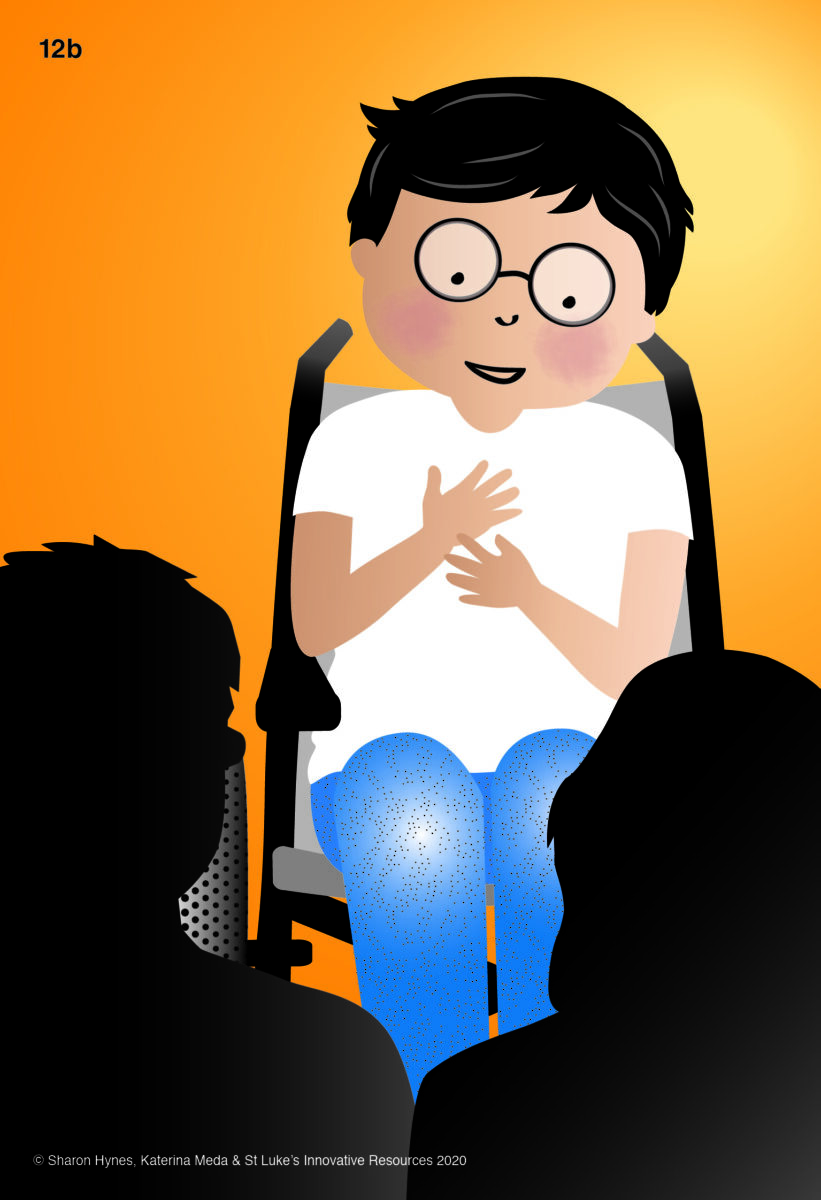 Sharon notes:
‘We wanted children to know that feelings are on a continuum. We didn’t want it all about unsafe and anxiety—feelings give feedback.’
To do this, they decided to create paired cards—there are 13 pairs in the set and 9 activity cards—that showed a child feeling safe and secure and the same child feeling unsafe. When having conversations, they start by inviting children to notice what it feels like in their bodies to feel safe, as this helps them create a ‘baseline’. Sharon says,
‘We’d usually start with safe — building up the children’s sense of being comfortable in the circle… it opens up conversation and lets them hear each other.’
Kat also noted that this helps built connection.
‘It puts children at ease to know they’re not alone in feeling those feelings.’
They also find that starting with the ‘safe’ cards is a great way to build a sense of safety and rapport in the classroom and doesn’t expose children to sharing or disclosing sensitive information in a setting that may not be appropriate.
Once the children develop an understanding of what ‘safe’ feels like in their bodies, whether that is a sense of calm, joy, connection, or comfort, they can then start to identify the body signals and sensations that are indicators that something may be not quite right.
Interestingly, when Kat was creating the cards, she found the ‘unsafe’ images much easier to create than the ‘safe’ images.
‘I found it really easy to connect with the unsafe cards because I could draw from my own experience. The challenging part was thinking, how do I get from A to B [unsafe to safe]? That was a big ‘aha’ moment for me. The whole process was quite therapeutic on a personal level.’
A focus on curiosity
This idea of feelings as feedback became central to the cards, as did the focus on being curious. When we understand feelings as being signposts or signals, rather than ‘real’ and unchangeable, we are more likely to be able to take a step back and be curious, Sharon says.
‘I think curiosity is a really important viewpoint. If you’re curious, you can learn and develop your awareness. You can develop social awareness. You can develop awareness of the self.
‘Coming into these discussions with the feeling of curiosity is a great learning tool. Being curious about our body signal helps us to take action because if we’re curious, we can think about what our body is telling us and then we can think about what we can do next.
‘I think curiosity is quite a hopeful word as well. When we’re curious, we’re always working towards… towards making things better, making the world a better place, making life better, making things better for each other. I use that word often when I’m teaching.’
As Kat notes, curiosity can also sometime be challenging.
‘You can be curious and anxious at the same time, can’t you, because something is different or unknown.
They both agree that this complexity and nuance is where the richness of conversation comes from. Sharon gives some examples of cards that she’s found lead to particularly deep conversations about how everyone experiences life differently.
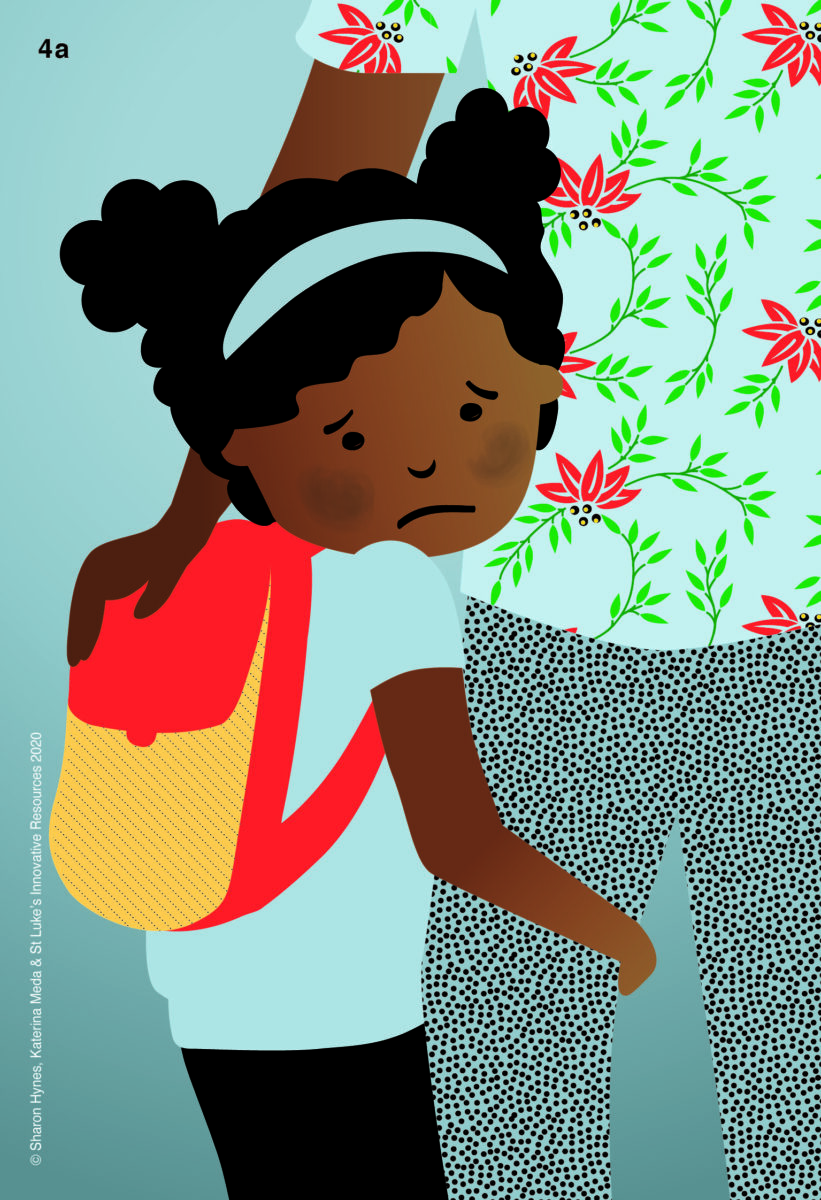 ‘I think a big one that I’ve used often is when children are a bit scared to leave home. If they’re a bit anxious to leave mum and dad, there is a card there with a little character with their backpack and they’re clinging to dad’s leg. The children really connect with that because at some point, most of them have felt that way.
‘For that one or two children who feel that every single day, that is such a source of comfort to hear that all of their friends have had that experience.
‘The matching card, where they’re playing happily, that’s a really big one for the child [who is experiencing separation anxiety]. When they start to feel worried about being at school and leaving mum or dad, they can think about that image of the slide and being with their friend and playing. And hopefully that will override the feeling of discomfort, of not wanting to leave home.’
Sharon says the spider card is also one that creates a big response.
‘Spider come up a lot. Kids really love them or really hate them, but they love talking about them.
‘And hearing some people say they’re curious about spiders and then others saying, “oh, they scare me so much. How can you be curious?”— helps them to be less rigid and a bit more flexible, and able to lean into being just a little bit curious. There are just so many different opportunities when we explore with curiosity. This curiosity around feelings and emotions is also important because then they’re not being owned by their feeling.’
Kat adds,
‘The spider really is symbolic of any fear. It could be spiders, but then it opens up the conversation to, “well, if you’re not afraid of spiders, what makes you scared? What makes you not want to leave the house?”’
Teaching Children how their brain works
Something both Sharon and Kat emphasise when it comes to helping children develop protective behaviours, is the importance of teaching them how their brains work. As Sharon says,
‘Teaching children that our brain is survival‑based helps them talk themselves through what they’re feeling… they can check in—”am I unsafe, or do I just feel unsafe?” Once children learn to recognise and name their body signals and feelings, they are much more skilled at assessing whether their feelings need to be acted upon or whether they’ve simply been triggered by an uncomfortable or unfamiliar situation.’
As the title suggests, the cards are also designed to help children identify the trusted adults in their life, who they can talk to if they realise something isn’t quite right, helping them feel less alone and more empowered if something does happen.
Connection and shared experience
Sharon and Kat decided to have no words on the cards because they wanted to make sure all children could use them, regardless of their knowledge of English, or their literacy levels. They also wanted children to feel safe to explore the cards in a group. Having no words also allows children to ascribe their own meaning to the cards.
They’ve found that using the cards in a classroom or group helps reinforce the idea that emotions are normal, and universal—everyone experiences a range of emotions at different times—which helps reduce isolation and shame, and increases understanding.
Sharon says that the characters also help children to share and connect.
‘Because the characters are so warm, friendly and non‑confrontational, the children can talk about their experiences through them. Even though they’re talking about the characters, they’re connecting with the characters and their own experiences.
‘I think it’s really lovely to for the children to have an experience of building empathy by listening to each other in a community.’
by Sue King-Smith
Tell A Trusted Adult can be purchased individually or as a package with 10 lesson plans.
